
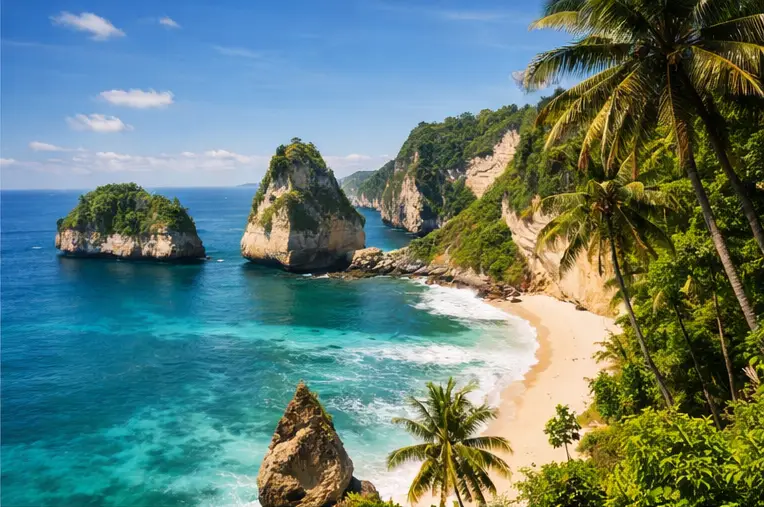
Bali: Paradise Found, Paradise Lost?
The beaches, the villas, the influencers, the freedom… and the darker truths behind the island everyone thinks they know
By Marina Zeelie
There is a certain hour in Bali — usually just after dawn — when the island seems to live up to every fantasy ever attached to it. The rice terraces glow green as wet silk. Incense drifts from temple courtyards. Infinity pools mirror the sky. The air feels expensive, even when almost nothing around you is.
It is easy, in those moments, to understand why Bali has become such a modern obsession.
For gap-year backpackers, it has long been a rite of passage. For Australians and New Zealanders, it is an easy tropical escape. For remote workers, it promises a better quality of life at a lower cost. For influencers, it has become a full-blown industry: villa breakfasts floating in pools, jungle swings, beach clubs at sunset, and an endless stream of content that makes followers believe paradise can be rented by the month.
And yet Bali has another face too.
Behind the palm trees and polished reels lies a far more complicated island: one with strict laws, real crime, visa crackdowns, exploitation, animal welfare issues, and a tourism economy that can tip from seductive to disturbing very quickly.
So is Bali still paradise? Yes — sometimes. But only if you understand what it is, what it is not, and what it can cost if you get it wrong.
Why Bali Seduces People So Easily
Bali is one of those rare destinations that seems to offer different fantasies to different people.
To some, it is spiritual. Ubud still sells the dream of healing, yoga, jungle air and self-reinvention. To others, it is sensual: beach clubs, massages, cocktails, villas with open-air bathrooms and warm nights scented with frangipani. To remote workers, it is practical. To influencers, it is profitable. To men looking for romance, or something more transactional, it can seem dangerously easy.
That is part of Bali’s power. It feels like many islands in one.
Canggu has become a content factory of surf cafés, co-working spaces and laptop entrepreneurs. Uluwatu is all cliffs, villas, stylish beach days and sunset dinners. Ubud remains the inland fantasy of greenery and self-improvement. Nusa Dua offers polished, manicured luxury. Nusa Penida delivers the dramatic postcard scenery people think of when they imagine an untouched island, even though it is no longer untouched at all.
Bali also benefits from what, to Western visitors, can feel like an almost impossible value proposition. You can rent beautiful accommodation, eat well, book treatments, hire transport and still spend less than you would on an ordinary week in parts of the UK.
That is why so many people come for a fortnight and begin wondering whether they could stay for a year.
The Bali Lifestyle Fantasy

The modern Bali fantasy is no longer just about holidays. It is about relocation.
For many Westerners, especially younger remote workers, Bali has become shorthand for escape: better weather, lower bills, more freedom, more beauty, more time. The promise is seductive. Why sit in a grey flat in Britain if you can answer emails beside a pool in Canggu?
And for some, that promise is real.
A basic monthly lifestyle can still be achieved for roughly £700 to £1,000 if you live simply, stay away from the flashiest hotspots and eat mostly local food. A more comfortable expat-style life with a private villa, gym membership, café lunches and occasional nights out can land in the £1,500 to £2,500 range. Beyond that, Bali becomes a luxury playground rather than a budget haven.
This is also why influencers flock there. The island photographs beautifully, aspirational content performs extremely well, and a relatively modest income can create a lifestyle that appears dramatically more glamorous online than it would elsewhere.
The danger, of course, is that Bali can start to feel like a set rather than a place.
What Bali Really Costs
Backpacker budget
On a backpacker budget, Bali can still be relatively cheap. Dorm beds, local food, scooters, simple guesthouses and casual beach life can keep daily spending in the £25 to £50 range.
Mid-range comfort
This is arguably Bali’s sweet spot. With around £60 to £120 per day, you can usually enjoy a very comfortable holiday: a decent hotel or villa room, good cafés, private transfers when needed, spa treatments and stylish but manageable dinners out.
Luxury travel
At £250 per day and up, Bali starts showing off. Private pool villas, high-end resorts, beach clubs, tasting menus, yacht charters and five-star service all become very easy to access.
That is one of Bali’s most powerful selling points. Luxury feels unusually available here.
Where to Stay in Bali
Canggu
Canggu is the island’s social media capital. Expect surf culture, smoothie bowls, co-working spaces, boutique gyms, beach clubs and a constant stream of Western creatives, founders, freelancers and influencers. Some people find it energising. Others find it exhausting.
Uluwatu
Uluwatu is more cinematic. The coastline is dramatic, the villas are beautiful, the mood is more elevated, and the sunsets can be absurdly pretty. It works especially well for couples, surf lovers and travellers seeking a more polished version of Bali.
Ubud
Ubud remains the spiritual heart of the island, even if parts of it now feel heavily curated for tourism. Come here for jungle scenery, temples, yoga, artisan culture and a slower inland rhythm.

Nusa Dua
If you want the cleanest, most controlled and family-friendly version of Bali, Nusa Dua is the answer. It is calm, groomed, resort-led and noticeably more contained than the rest of the island.
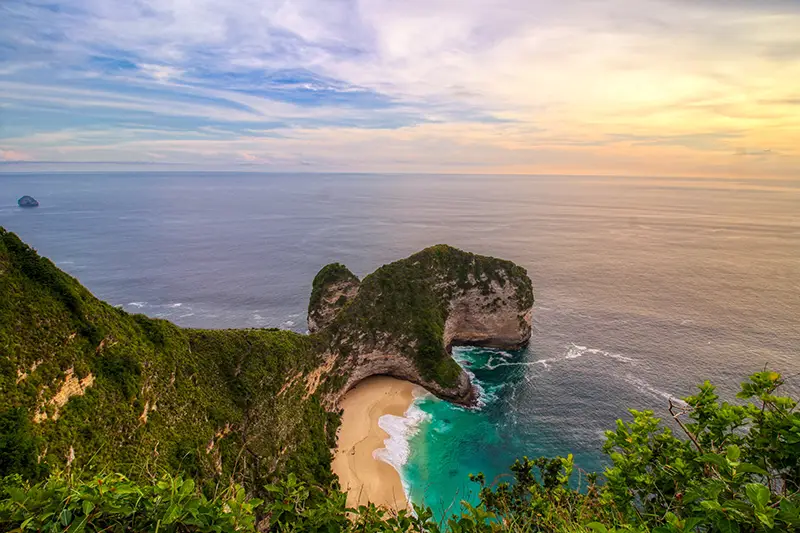
Nusa Penida
Nusa Penida is where many of Bali’s most famous viewpoints now live. It is more rugged, more dramatic and less polished. It can feel thrilling, but also far rougher around the edges.
The Best Beaches in Bali
Bali’s beach reputation is deserved, but it needs context. Not every beach is the same kind of beautiful.
Nusa Dua is for calm water, refined resorts and comfort. Seminyak is fashionable, social and polished. Canggu is more atmospheric than classically pretty, especially if you like black sand and a surf-town mood. Uluwatu is where the drama lives: coves, cliffs and some of the island’s most photogenic coastlines. Sanur is gentler and works well for families, early mornings and travellers who do not want the constant pulse of the west coast.
If you want the most visually spectacular coastal scenes, many travellers now day-trip to Nusa Penida, where the cliffs and turquoise water create those impossibly cinematic views that dominate social media.
Island Hopping and Yachting
Bali works particularly well when treated as a base rather than a single-stop holiday.
Short trips to Nusa Lembongan, Nusa Penida and Lombok are common, and ferries or speedboats make island hopping accessible. For travellers wanting a longer tropical journey, Bali can also be part of a broader Indonesian escape that includes Komodo or more exclusive sailing territory.
At the luxury end, private boat and yacht options range dramatically in price. Smaller day charters are within reach for groups sharing costs, while proper private luxury yacht experiences can quickly become serious money. Bali is one of those places where a day on the water can mean anything from a budget fast-boat excursion to full-blown floating glamour.
The Best Time of Year to Visit
The best times are usually May to June and September to October.
These months tend to give you a strong balance of sunshine, manageable humidity and slightly less crowded conditions. High season brings the best weather, but also heavier traffic, fuller resorts and a more obvious sense of overtourism. Wet-season Bali can still be beautiful, but it is stickier, stormier and more unpredictable.
If you are planning boat trips, island hopping or outdoor-heavy days, shoulder season is usually the smartest choice.
Is Bali Safe? The Honest Answer
Bali is one of those places that can feel safe until suddenly it does not.
Most visitors will not experience serious trouble. Many leave with nothing worse than a stomach upset, sunburn or a slightly overpriced taxi ride. But it would be naïve to pretend the risks are imaginary.
Drink spiking and sexual assault have been reported. Petty theft, phone snatching and bag theft happen in tourist areas. Scooter accidents are extremely common. Some travellers get into trouble through drunkenness, poor judgement, overconfidence or a mistaken belief that Bali operates like Ibiza with temples.
It does not.
As a general destination, Bali is usually manageable and enjoyable. But it rewards alert travellers, not careless ones.
Is Bali Safe for a Lone Female Backpacker?
With care, yes. Blindly, no.
A solo female traveller can absolutely enjoy Bali. Thousands do. There are yoga retreats, surf camps, wellness communities, hostels, cafés and local drivers used to dealing with women travelling alone. In many parts of the island, you will not feel conspicuous at all.
But the same rules apply here as anywhere — perhaps more so because Bali’s beauty encourages people to drop their guard.
Do not accept drinks casually from strangers. Do not leave drinks unattended. Avoid wandering alone late at night in quiet areas. Use trusted transport. Be especially cautious around men who mistake the island’s holiday culture for sexual availability. Bali can feel dreamy, but predators travel too.
The Legal Side Tourists Get Wrong
This is where many visitors make a dangerous mistake.
Bali looks relaxed. The dress codes can feel looser than elsewhere in Indonesia. The tourism zones are full of foreign faces. The beach club culture is hedonistic. But underneath all of that sits Indonesian law, and Indonesian law can be severe.
Drug offences are the most obvious example. Indonesia is notoriously hard-line, and even tourists carrying relatively small amounts can face devastating consequences. This is not the place to experiment, be casual, or trust someone else’s idea of what is “fine”.
Visa rules matter too. Overstays, illegal working, and the wrong visa category can lead to fines, detention or deportation. Bali has attracted so many digital nomads and content creators that authorities now watch foreign behaviour far more closely than many newcomers realise.
Then there is public conduct. Sacred sites, public decency, explicit content and disrespectful behaviour can all lead to consequences. Bali is not only a tourism destination; it is also a deeply spiritual island with firm boundaries.
The Laws and Social Rules People Misread Even More Easily
This is where Bali can really catch Western visitors out — not only because of the law itself, but because of the gap between what feels casual and what is actually wise.
Alcohol: legal, but not a free-for-all
Alcohol is widely available in Bali, and having a drink in a bar, restaurant, beach club or hotel is entirely normal. What tourists get wrong is assuming that because Bali sells beer and cocktails openly, they can drink anywhere and behave however they like.
I would not tell readers that quietly drinking a beer or glass of wine on an ordinary tourist beach will automatically get them arrested. But I also would not present public drinking as consequence-free. Local rules, venue rules and police attitudes can vary, and drunken or disorderly behaviour is far more likely to attract attention than the drink itself. Bali is relaxed in appearance, but not a place to become loudly intoxicated in public and assume everyone will shrug it off.
The bigger alcohol warning, frankly, is not a simple drink on the sand but drink spiking, methanol poisoning and bad judgement after heavy drinking.
Smoking: tolerated in some places, restricted in others
Tourists also tend to assume smoking is casual and unregulated. It is not that simple. Smoking is common in Indonesia, but there are restrictions in many public places and indoor spaces. In practical terms, the sensible rule is straightforward: do not assume you can smoke just because you are outdoors or on holiday. Check the venue, the signage and the setting.
A hotel may allow smoking on certain balconies or in designated areas, but not on others. Restaurants, lobbies, transport areas, public buildings and other shared spaces may have clear restrictions. If in doubt, ask rather than assume.
Littering: yes, that includes cigarette butts
Littering is not only disgusting on an island sold on beauty and spirituality, it is also one of the clearest ways for tourists to expose themselves as careless. And yes — throwing a cigarette butt on the ground counts as littering, just as it does in Britain.
I would not write that one cigarette butt routinely lands tourists in prison in Bali. That would be overstating it. But I also would not reassure people that it is harmless. You could face fines or local enforcement depending on the area and circumstances, and more importantly it is precisely the sort of filthy, disrespectful tourist behaviour Bali is increasingly trying to crack down on. For beaches, temple areas and places of natural beauty, it is especially poor form.
Gambling: do not treat Bali like Macau or Las Vegas
This is one many tourists overlook completely. Indonesia is not a casino culture in the legal sense visitors from the West may imagine. Do not expect to find lawful casino gambling in Bali in the way you would in Monaco, Las Vegas or parts of Asia set up for gaming tourism.
And no, that does not automatically make informal gambling safe. Playing poker with friends for money, running a private card game, using slot-style machines or joining any kind of cash gambling setup is not something I would advise presenting as harmless holiday fun. If money is involved, you are entering risky territory. Even if something appears low-key, private or “everyone does it”, that does not mean it is legal or wise.
Cannabis and other “soft drugs”: absolutely not
This is the point to make crystal clear.
There is no safe, casual, holiday version of cannabis in Bali.
Not on the beach.
Not on your hotel balcony.
Not in a villa.
Not because it is “only a joint”.
Not because it is legal somewhere else.
Indonesia’s drug laws are extremely serious, and tourists who treat cannabis as a soft, lifestyle drug can land themselves in very hard legal trouble. That includes smoking a joint, carrying cannabis, buying edibles, using hash, or assuming CBD or medicinal products will somehow be seen differently. Bali is not a place to experiment, improvise or rely on someone else telling you it is fine.
Public affection: there is a line
This is where culture matters as much as law.
Simple hand-holding is generally fine. A brief kiss in a tourist area is unlikely to trigger panic. But prolonged kissing, heavy public snogging, groping or overtly sexual behaviour in public is a very different matter. What may feel ordinary in parts of Europe can easily come across as disrespectful, indecent or offensive in Bali, especially outside the most tourist-heavy zones.
And around temples or sacred places, the standard is far stricter. Bali may be visually sensual, but that is not the same thing as socially permissive in the Western sense.
Public decency, explicit content and “content creator” behaviour
This is another area where people confuse aesthetics with permission. Bali is full of influencers, models and content creators, but that does not mean sexually explicit shoots, indecent public behaviour or provocative filming are treated casually by the authorities.
If the image, filming or behaviour crosses into public indecency, pornography or disrespect at sacred or public sites, the consequences can be very real. This is precisely why cases involving foreign content creators have caused so much trouble.
The simplest rule of all
If a behaviour would make a respectful local family uncomfortable, if it would look vulgar outside a temple, if it involves drugs, gambling, public sexual behaviour, drunken disruption, or treating the island like your private playground, do not do it.
Bali can feel dreamy and permissive. That is exactly why people misjudge it.
When Paradise Collides With Reality: Bonnie Blue in Bali
One of the clearest recent examples of this clash between Bali’s fantasy image and its real legal framework came with the arrest of Bonnie Blue.
Her case drew widespread attention precisely because it exposed a misunderstanding many foreigners still have about Bali. The island may look like an anything-goes content backdrop, but it is not. Activities tied to explicit content, pornography or sexually explicit material can cross into legal danger quickly under Indonesian law.
That is why the Bonnie Blue story matters in this article.
It is not gossip. It is a warning.
Bali has become so heavily associated online with freedom, sensuality and curated excess that some visitors behave as though the island exists mainly to stage their personal brand. But Bali is not a lawless tropical studio. It is still Indonesia. And Indonesia has lines you do not want to cross by accident — or arrogance.
For travellers, influencers and remote workers alike, the lesson is simple: do not mistake visual freedom for legal freedom.
Crime, Corruption and the Uneasy Edge of Tourism
Bali is not a war zone, and it is not one of the world’s most dangerous destinations. But tourism on this scale always creates shadows.
There have been highly publicised cases over the years involving assault, kidnapping, murder and robbery. There are also persistent worries about corruption, inconsistent policing and foreigners being targeted when they appear wealthy, intoxicated or vulnerable.
Tourists occasionally complain of bribe culture or murky police interactions, especially when traffic stops, nightlife incidents or immigration issues are involved. Not everyone encounters this, but enough people do for it to be part of the island’s reputation.
The deeper issue is this: Bali often feels soft and gentle on the surface, while the systems underneath can be far less forgiving.
The Sex Trade, Exploitation and the Things People Prefer Not to See
It would be dishonest to write about Bali’s darker side without addressing sexual exploitation.
Bali is not Thailand, and it does not carry exactly the same international reputation. But that does not mean the problems are absent. They are simply packaged differently.
There is a visible adult sex economy in some parts of Indonesian tourism, and Bali also has a documented history of child sexual exploitation, trafficking concerns and foreign predators targeting vulnerable children. Researchers and anti-trafficking organisations have raised serious concerns over the years, particularly around poverty, tourism demand and weak enforcement.
That matters because many travellers still consume destinations in fragments. A beautiful resort. A perfect breakfast. A cheap driver. A smiling child. A beach at sunset. It is all too easy to enjoy the image of paradise while ignoring the human cost that tourism can create around it.
Bali can be enchanting. It can also be exploitative. Both things can be true at once.
Animal Welfare: The Part of Bali That Breaks Your Heart
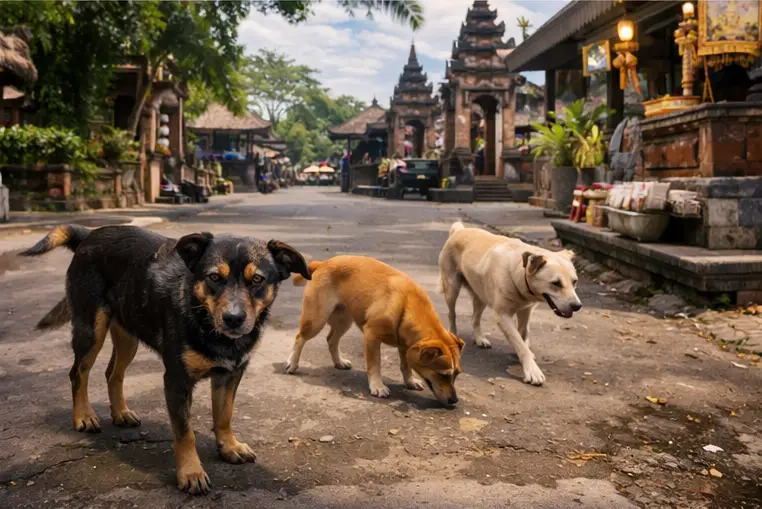
Animal welfare is one of the island’s most upsetting realities.
Yes, you do see stray dogs and cats. Not everywhere equally, and not all in poor condition, but enough to notice. Rabies has been a longstanding concern, and abandonment remains part of the problem. Animal charities work hard, but the scale of need can be distressing for visitors who are not prepared for it.
There has also been major concern over the dog meat trade, though authorities have cracked down in recent years. Animal rights groups have repeatedly warned that cruelty and neglect remain serious issues in parts of the island.
If you are an animal lover, Bali can be emotionally complicated. One moment you are in a five-star resort. The next, you are passing a thin street dog sleeping in the shade of a temple wall.
It is not the image sold on Instagram, but it is part of the truth.
Do They Eat Dogs in Bali?
This question makes many travellers uncomfortable, but it is fair to ask.
Bali has been linked to the dog meat trade, and animal welfare groups have repeatedly exposed cases involving cruelty, illegal sale and tourists unknowingly consuming dog meat sold as something else. There have been bans and crackdowns, but the issue has not vanished cleanly overnight.
So the short answer is: this has been a real concern, and one travellers should not dismiss as myth.
If that matters to you, eat at reputable places and avoid dubious roadside meat sources.
What About Sharks, Snakes, Spiders and Crocodiles?
In truth, most people are far too worried about the wrong things.
Bali is not a destination where crocodiles are stalking beachgoers or sharks are routinely attacking swimmers. Those fears are largely overblown in the main tourist zones.
The more realistic animal-related concerns are mosquitoes, occasional snakes, territorial dogs, monkey bites and the usual tropical nuisance creatures. Dengue deserves far more of your attention than sharks do. So do infected bites, poor road safety, and dehydration.
Can You Sunbathe Topless or Nude?

This is one of those simple questions with an even simpler answer.
No — not if you enjoy staying out of trouble.
Bali may look more relaxed than other parts of Indonesia, but topless sunbathing is not something to assume is acceptable, and nude behaviour or nude photos can create very real problems, particularly if sacred sites or culturally sensitive areas are involved.
Treat Bali as stylishly beachy, not sexually permissive in the European sense.
Bali vs Thailand: Similar Fantasy, Different Energy
People often compare Bali with Thailand because both sit in the same broad travel imagination: warm weather, cheap food, beaches, backpackers, parties, spiritual retreats, easy escapism.
But the atmosphere is different.
Thailand is bigger, more varied, and in many ways more developed as a tourism machine. Bali, by contrast, feels more concentrated and more aesthetic. It has a stronger wellness and influencer identity, more overt spiritual branding, and a slightly more bohemian tone in many of its famous areas.
Thailand often feels more openly hedonistic. Bali can feel more performatively mindful — even when the indulgence is still there underneath.
So yes, there is overlap. But Bali leans more jungle-chic, yoga-luxe and content-driven than Thailand’s broader, brasher travel culture.
What Bali Gets Right
For all of the caution in this piece, Bali still gets a great deal right.
It is visually extraordinary. It can be affordable. It offers real luxury at prices that feel almost surreal to British travellers. It has culture, beauty, atmosphere and genuine magic. The food scene is strong. The resort scene is world-class. The interior of the island is lush and calming. The coast can be glamorous or raw, depending on where you go. For many people, Bali genuinely does become one of the most memorable trips of their lives.
That is why the darker side matters so much.
It is precisely because Bali is so easy to fall for that travellers need to see it clearly.
Bali at a Glance
Best for
Luxury travel, wellness escapes, surfing, digital nomad life, beach holidays, culture, island hopping and high-end resorts.
Best time to visit
The driest and most comfortable months are generally May to June and September to October. These shoulder-season windows usually give you sunshine without the heaviest crowds.
Flight time from London
Expect a long-haul journey with a stopover, usually around 16 to 18 hours, depending on route and airline.
Typical return fares from London
Bargain fares can dip to around £424 to £475, while more convenient or peak-season flights are often higher.
Good for solo female travellers?
Generally yes — but only with sensible precautions. Bali is not the place to switch off your instincts entirely.
Top warning
Do not mistake Bali’s relaxed holiday look for relaxed laws. Indonesia is strict on drugs, pornography, visas and public behaviour.
Marina’s Verdict
Bali is still one of the most seductive destinations in the world — but it is not the soft-focus fantasy sold online.
Come for the jungle villas, the beach mornings, the temples, the beauty, the superb hotels and the intoxicating sense that life could be simpler and sunnier here. But come with your eyes open.
This is not a harmless paradise for the careless. It is a complex island where luxury and poverty, serenity and exploitation, freedom and strict law all sit side by side.
Treat Bali with respect, not entitlement, and it can be extraordinary.
Treat it like a cheap, lawless backdrop for your fantasies, and the island may remind you very quickly that paradise has rules.