
Dirty Rotten Scoundrels: The Riviera Fantasy Behind the Film
By Felicity Attwood
Lights, Camera, Check-In
Welcome to Lights, Camera, Check-In, Riviera Ready’s new regular dispatch from the world’s most seductive screen locations, infamous hotels and beautifully scandalous hideaways. And where better to begin than with Dirty Rotten Scoundrels — a glossy Riviera caper of conmen, grand hotels, polished terraces and old-money glamour?
Each week, we slip behind the velvet rope to explore one unforgettable location, hotel or theme tied to film, television, music and celebrity lore. For the truly fabulous addresses, the story won’t end there: selected locations will be explored in greater depth in the print and digital magazine, complete with exclusive editorials, insider detail and model shoots staged in the very places where fantasy and glamour meet.
Released in 1988, Dirty Rotten Scoundrels is a sun-drenched comedy directed by Frank Oz, produced by Bernard Williams, and starring Michael Caine, Steve Martin and Glenne Headly. A remake of the 1964 film Bedtime Story, it was shot largely on the French Riviera, with Beaulieu-sur-Mer, Cap-Ferrat, Antibes and Cannes standing in for the fictional Beaumont-sur-Mer, giving the film its irresistible air of elegant mischief.
Made for around $13 million, it was a solid commercial success, taking roughly $42 million at the box office, and was warmly received for the chemistry between Caine’s silkily polished conman and Martin’s gloriously vulgar fraudster, with the “Ruprecht” scenes becoming especially iconic.
Dirty Rotten Scoundrels Locations: The Real Secret Weapon
Yet the film’s real secret weapon is location. Dirty Rotten Scoundrels is one of the great Riviera fantasies: Michael Caine and Steve Martin swindling rich women in a world of terraces, linen and moral vacancy. The fictional Beaumont-sur-Mer is really Beaulieu-sur-Mer, and much of the film’s charm comes from very real Riviera opulence.
Beaumont-sur-Mer was really Beaulieu-sur-Mer
The film may invent its own elegant playground, but Beaumont-sur-Mer is essentially Beaulieu-sur-Mer in a slightly more wicked mood. The Riviera light, the polished facades and the easy air of inherited money give the story its deliciously decadent backdrop.
The “Grand Hotel” was the Grand-Hôtel du Cap-Ferrat
The film’s “Grand Hotel” is the Grand-Hôtel du Cap-Ferrat, now part of Four Seasons, all polished grandeur and old-money poise. It is exactly the sort of place where one might expect a conman in a cream suit to glide across the terrace with perfect confidence.
The casino and gallery were just as glamorous
The casino scenes were shot at the Rotonde Lenôtre, while the “art gallery” is the glorious Fondation Ephrussi de Rothschild. Both locations help give the film its air of Riviera excess, where every room seems designed for seduction, deception or both.
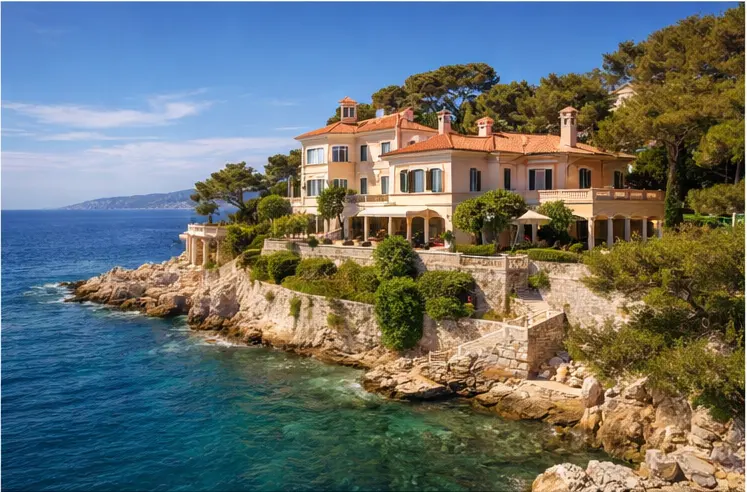
Lawrence Jamieson’s villa was Villa Hier
Lawrence Jamieson’s villa was Villa Hier on Cap d’Antibes — not, alas, somewhere one can casually book for a naughty long weekend. Still, it adds another layer of fantasy to a film already dripping in style.
When the French Riviera Is as Glamorous as Fiction
It is one of those rare films where the locations do not merely frame the action; they practically become accomplices. And it is one of those even rarer Riviera stories where the reality is somehow every bit as glamorous as the fantasy, only with fewer imposters and slightly more tasteful lighting.