
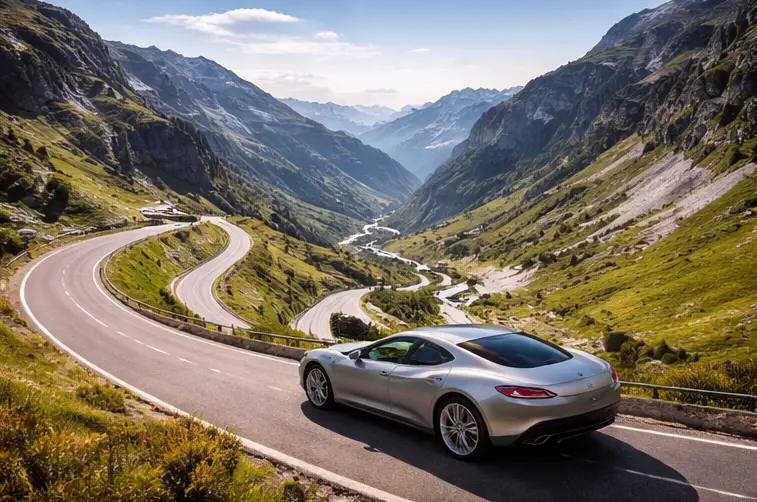
Supercar Road Trips in Italy: From the Alps to Amalfi in a Ferrari Roma
By Riviera Ready Magazine
The Ferrari Roma: A Grand Tourer Built for Supercar Road Trips
Supercar road trips are at their best when the route is as seductive as the machine — and few journeys feel more cinematic than driving a Ferrari Roma from the Alps to the Amalfi Coast.
Ferrari’s front‑engined grand‑tourer hides a 3.9‑litre twin‑turbocharged V8 under its bonnet that delivers 612 horsepower and 561 lb‑ft of torque through an eight‑speed dual‑clutch transmission. The Roma Spider launches from 0–60 mph in about 3.3 seconds and will press on to nearly 199 mph — more than enough performance for a winding mountain pass. Despite the power, it is a legitimate grand tourer, with a 10.3 cubic‑foot boot for luggage and a 2+2 layout. The digital cockpit looks like a fighter‑jet, with a 16 inch instrument cluster and an 8.4 inch central touchscreen, but the car retains a certain old‑school charm, especially if you pack a pair of classic driving gloves.
Driving gloves aren’t some anachronistic affectation; early motorists used them to improve grip on the steering wheel and to protect hands from heat or cold. Today they still make long drives more comfortable and, frankly, look excellent when clasping a leather‑trimmed wheel. Slip a pair of fine leather gloves into the centre console alongside your sunglasses and you’ll feel like Steve McQueen.
Stelvio Pass and the Dolomites: Alpine Supercar Road Trips
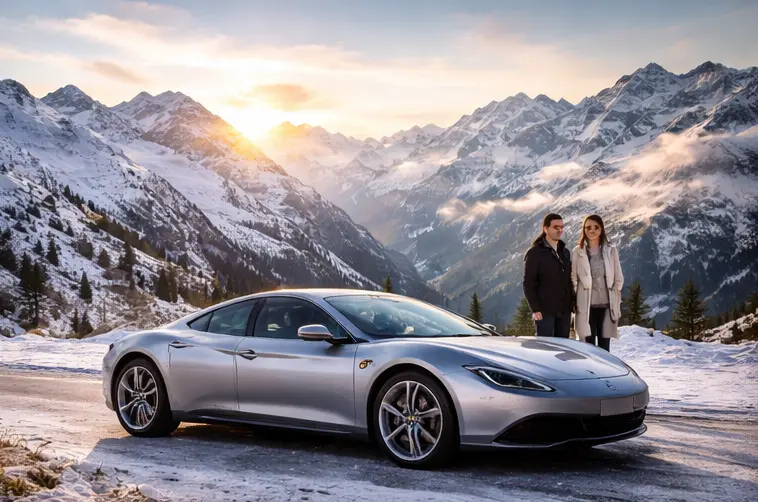
The route begins in Lombardy’s Stelvio Pass, an asphalt serpent that coils up to 2,757 metres (about 9,045 feet) and is the highest paved mountain pass in the Eastern Alps. With 48 hairpin bends carved into the mountainside, it is a driver’s rite of passage. The road climbs through conifer forests, past grazing cows and glacial torrents, the Roma’s V‑8 bellowing off the rock walls. Halfway up, hikers and motorcyclists waved from lay‑bys; in winter the road turns into a fairytale snowscape. At the summit, there’s time for bratwurst from a roadside hut and a shot of espresso before descending through alpine orchards.
Swing east and the Great Dolomite Road beckons. Starting from Bolzano and crossing Passo Pordoi and Passo Falzarego, this route combines sweeping straights and gentle curves. There is even the option to trade carbon-ceramic brakes or ski boots in Alta Badia, sliding down Corvara’s perfectly groomed pistes. Corvara sits at 1,568 metres (5,145 ft), and its 130 km of slopes link to over 1,100 km of runs across the Dolomiti Superski region. Even if you’re only intermediate, the gentle red runs funnel back into town. Check in to Hotel La Perla, a four‑star retreat with a pool and Finnish sauna. Alternatively, head to Madonna di Campiglio, a resort wedged between the Brenta Dolomites and the peaks of Adamello and Presanella where affluent Italian families flock for its car‑free centre, boutiques and glamorous cafés. Chalet del Sogno is an eco‑friendly hideaway built from sustainable timber—perfect for swapping stories of powder and petrol over grappa.
Beyond the pistes, San Cassiano offers sun‑soaked blue and red runs and the Hotel Fanes, a five‑star hotel perched on a sunny plateau. Val Gardena is 90 minutes from Innsbruck and boasts state‑of‑the‑art lifts and direct access to the Sella Ronda circuit; stay at Chalet Soldanella in Selva Gardena. For an intimate escape, Mi Chalet in La Villa offers a private retreat for two in Alta Badia.
Tuscany’s Via Chiantigiana: Convertibles and Chianti
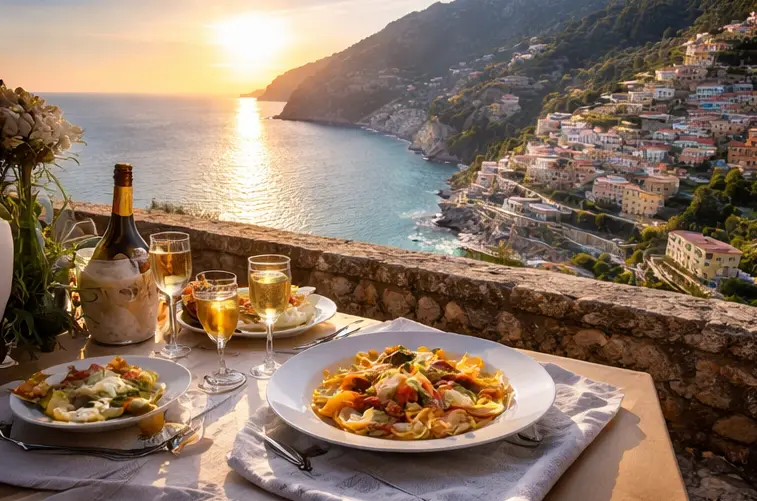
Leaving the Alps behind, From the Alps, point the Ferrari south towards Tuscany. The Via Chiantigiana between Florence and Siena is a ribbon of tarmac through rolling hills, vineyards and medieval villages. Here you drop the windows, inhale the scent of cypress trees and swap the roar of the engine for a more languid hum. The slower pace allows you to savour details: rows of vines fading into the horizon, arrow‑straight cypresses, winemakers waving from stone farmhouses. Pull into a cantina for a tasting of Chianti Classico with local pecorino and cured meats.
Base yourself at Castelfalfi in Montaione. Travel + Leisure readers crowned this medieval village surrounded by vineyards and olive groves their favourite resort in Italy for 2025. The estate offers a spa, fine‑dining restaurant La Rocca, a golf course (currently being redesigned), and even an adventure park with zip lines and climbing walls. You can practise your swing in the morning, sample truffle pasta at lunch and still make it to Siena’s Piazza del Campo by sunset.
Rome and the road south
From Chianti, head to Rome for a dose of automotive history and espresso. Park on the Janiculum Hill, take in the city’s domes and then retreat to the tranquillity of Villa d’Este on Lake Como—a detour north worth every mile. This 16th‑century palazzo became a hotel in 1873 and remains a benchmark for Italian hospitality, with sumptuous suites, lakeside gardens and even occasional private concerts by Andrea Bocelli. Don’t expect to pay less than a four‑figure nightly rate, but do expect to meet an ageing aristocrat at the breakfast buffet.
The Amalfi Coast: limoncello and hairpins
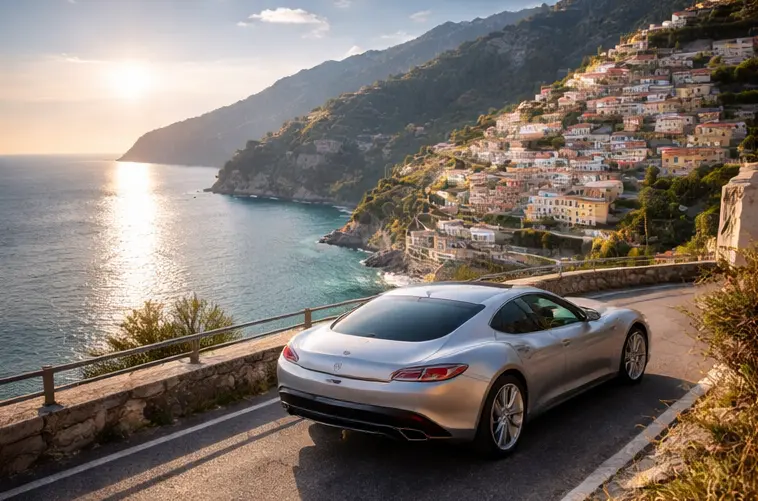
The Amalfi Coast road between Sorrento, Positano, Amalfi and Ravello is the antithesis of a motorway: a narrow, cliff‑hugging lane with sheer drops and views across the Tyrrhenian Sea. Every bend reveals another pastel‑painted village or terraced lemon grove. With a supercar, you’ll want to drive early in the morning before tourist buses choke the route. The drive offers tight curves and panoramic sea views. Stop in Positano for sfogliatella and a dip in the turquoise bay; taste limoncello in Amalfi; explore Ravello’s gardens at Villa Rufolo. End the day at Le Sirenuse, a family‑run hotel perched above Positano with Moorish arches and a candlelit bar, or at the Grand Hotel Excelsior Vittoria in Sorrento, which sits above the town’s marinas and has hosted everyone from Caruso to Hemingway. Alternatively, check into the Anantara Convento di Amalfi or the Grand Hotel Timeo in Taormina when you inevitably decide to continue your road trip to Sicily.
What to Pack for Supercar Road Trips
A supercar adventure requires more than just a set of keys. Besides a snazzy pair of driving gloves, bring practical safety gear. Katherine Bitner’s road‑trip checklist recommends carrying up‑to‑date licence, registration and insurance documents, a roadside emergency kit with a flashlight, road flares and reflective triangles, a first‑aid kit, jumper cables or a portable jump starter, a spare tyre with a jack, a portable tyre inflator and a headlamp. Cash is useful for remote petrol stations that don’t accept cards. Keep your charging cables and a power bank handy for phones and cameras.
Recommended gear and supplies
Fine leather driving gloves
Not strictly essential, but absolutely in the spirit of the thing. They give you better grip on long drives, feel superb on a leather wheel and make you look faintly like you know Stirling Moss personally.
Licence, registration and insurance
Keep all your paperwork together in one slim waterproof pouch in the glovebox. It is gloriously unsexy, but you will be extremely pleased with yourself if anyone official asks for it.
Roadside emergency kit
Pack a proper kit with a torch, reflective triangle, warning vest and basic breakdown essentials. Italian mountain roads are beautiful, but they are not where you want to discover you are wildly under-prepared.
First-aid kit
A compact first-aid kit is worth having for everything from blisters and grazes to the small indignities of travel. Nothing dramatic — just the basics done properly.
Jumper cables or a portable jump starter
A grand tourer with a flat battery is still a flat battery. A portable jump starter takes up little room and can save a very expensive-looking wait at the roadside.
Spare tyre and jack
Check what your car actually comes with before you leave. Many modern performance cars prioritise weight saving over practicalities, which is delightful until you are staring at a puncture in the middle of nowhere.
Portable tyre inflator
Perfect for topping up tyres after a long, hot run through the mountains, and invaluable if pressure drops unexpectedly. Think of it as cheap insurance for your schedule.
Headlamp
Far more useful than using your phone torch between your teeth. Ideal if you need both hands free after dark.
Cash
Keep a little folded cash tucked away for remote petrol stations, tolls, coffees and those small old-school places that still treat card machines as a personal affront.
Charging cables and a power bank
Between maps, playlists, hotel confirmations and shameless photography stops, your phone will work hard. Bring proper charging cables and a power bank that can survive a full day on the move.
At a Glance
Best for
Drivers who like their road trips with equal parts adrenaline, aperitivo and absurdly good views.
Dream route
Stelvio Pass and the Dolomites, through Tuscany, then south to the Amalfi Coast.
Ideal car
A Ferrari Roma is the fantasy, but any refined grand tourer with luggage space and real road manners will do the job beautifully.
Best time to go
Late spring to early autumn, when the high passes are open and the coastal roads feel cinematic rather than washed out.
Signature stops
Stelvio Pass, Alta Badia, Castelfalfi, Positano, Ravello and a long lazy lunch with a view you will bore people about for years.
Final thoughts
Driving a Ferrari Roma from the snowy passes of the Alps to the lemon‑scented terraces of the Amalfi Coast is more than a holiday — it’s a sensual odyssey. It’s the tang of cold air at 9,000 feet, the smell of hot brake pads on the Stelvio’s hairpins, the warmth of Tuscan sun on bare forearms and the salt spray on the Amalfi road. Along the way you’ll sample bratwurst at a mountain hut, sip Chianti under medieval arches and toast your arrival on the coast with a glass of limoncello. Pack the right gear, book the right hotels and, above all, take your time — because the journey, not the destination, is the true luxury.