
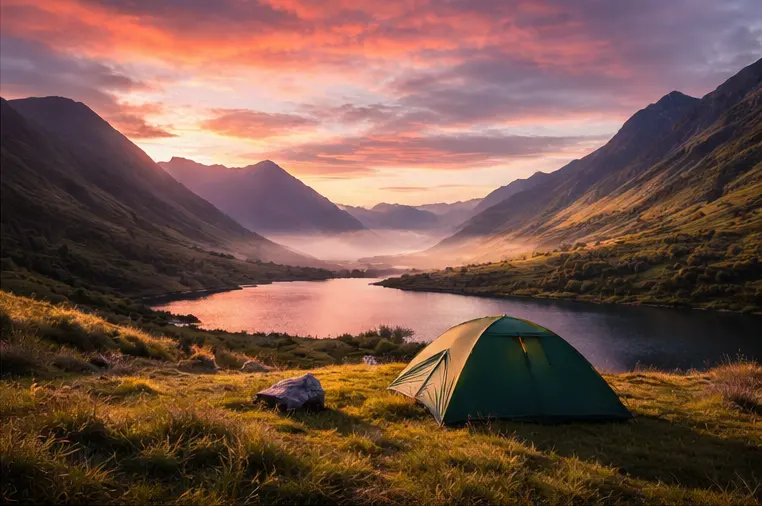
Legal Wild Camping: A Global Guide to Wild and Free Travel
By Marina Zeelie
Legal Wild Camping: Footloose Dreams and Real-World Rules
Legal wild camping still carries the romance of sleeping beneath open skies, but in 2026 that freedom depends on knowing where you can pitch lawfully, safely and responsibly.
When I open my faded copy of Jerome K. Jerome’s Three Men in a Boat, I still chuckle at the misadventures of three Victorian friends – and one fox‑terrier – as they row up the Thames and camp under the stars. Those early chapters capture a romantic longing: to drift away from London’s bustle, find an uninhabited island, and fall asleep to the whispers of willow branches and the splash of oars.
In 2026, that fantasy persists. Wild camping – pitching a tent or sleeping out on ground not part of a registered campsite – promises a sense of freedom that few modern experiences match. Yet the “free” in free camping often misleads; laws differ across countries, and the wrong riverbank could result in fines, eviction or worse. As the Riviera Ready Magazine’s travel specialist, I have spent months researching the best places to recreate that Four Men in a Boat spirit without breaking laws or compromising safety.
Below I take you on an immersive journey through Britain’s hidden islets, across Europe’s varied legal landscapes, and into the wilds of Africa, Australia, Asia and the Americas. Along the way we’ll talk candidly about the risks – from predators to human predators – and explore car‑based alternatives for those who want freedom without pitching a tent. The world is our campsite, but it pays to know where the campfire can legally burn.
Legal Wild Camping in the UK: River Islands, Moors and Mountains
Thames islands and the ghost of Jerome
In Jerome K. Jerome’s day it was possible to pull up at a deserted eyot (small island) on the Thames, tie the boat and unfurl canvas. Today the Thames Path National Trail tells a different story: camping anywhere along the Thames without permission is generally not permitted; landowners must approve and travellers should use designated campsites. Several islands like Magna Carta Island at Runnymede or Garrick’s Ait near Hampton are privately owned; others hold fragile habitats. Even if you find a sandy bank, overnighting could lead to trespass charges. Instead, consider Cookham Lock or Hurley Lock campsites where you can moor and pitch a small tent for a fee. With advanced permission, local canoe clubs occasionally organise “Four Men in a Boat” style camps on lesser‑known eyots near Old Windsor – they usually book through lock-keepers.
The Scottish highlands: legal freedom (with rules)
Head north and the laws soften. The Land Reform (Scotland) Act 2003 grants everyone the right to access most unenclosed land for recreation, including camping. Campers must be low‑impact: pitch small tents, stay off enclosed fields, and leave no trace. The Scottish Outdoor Access Code also warns that Loch Lomond and the Trossachs National Park operates seasonal camping byelaws; from 1 March to 30 September, camping and sleeping in vehicles are allowed only in designated permit areas.
A personal favourite is the Isle of Jura; I once set up my bivvy on a heather‑clad knoll overlooking the Sound of Islay. The Atlantic wind whistled and deer silhouetted against the fading light – magical. On the mainland, the Cairngorms offer windswept solitude, while the Quiraing on Skye blends Jurassic rock formations with glimpses of sea. But the freedom comes with responsibilities: pack out rubbish, bury human waste, and pitch away from houses.
Dartmoor: England’s last legal wild camp
England and Wales largely prohibit wild camping without landowner consent. An exception is Dartmoor National Park, where a tradition dating back centuries was challenged in court in early 2025. The UK Supreme Court upheld that camping falls under “open‑air recreation” on the commons; thus the public still has the right to backpack and camp on certain areas of Dartmoor. Always consult the park’s official map (updated after the verdict) as certain commons and farmland remain off-limits. If you long for granite tors and starlit moors, Dartmoor remains the only place south of the border where you can legally sleep under canvas without permission.
Islands of the coast
England’s southwest holds islands that evoke the dreamy isolation of Jerome’s boat. Brownsea Island in Poole Harbour allows camping from April to September; the National Trust sets up tree tents and pre‑pitched bell tents. Prices start at £22 per adult per night, £11 for children, and the tree tents cost an extra £30. You awake to red squirrels darting through pines and the chime of church bells drifting across the water. For wilder vibes, take the ferry to Isle of Rùm off Scotland’s west coast; the new Kinloch Campsite sits by the sea loch with showers and the occasional golden eagle overhead.
Continental Europe: rights of access and rigid bans
Spain and southern Europe: heavy fines, hidden options
Many travellers assume that the Mediterranean’s sun‑drenched beaches invite a free‑spirited sleepover. Reality bites: Spain has no unified wild camping law, and most autonomous regions ban camping outside designated sites. Vanever’s guide warns that camping on beaches is illegal; fines range from €30–€150, and lighting fires can incur penalties of thousands of euros. However, sleeping inside a legally parked vehicle is permitted if you do not extend awnings or set chairs outside. A separate news report notes that fines for illegal camping can reach €600 on the mainland and up to €1 500 in the Balearic Islands.
The implication: if you want to wild camp in Spain, consider investing in a stealth camper van or sleeping platform for your car (more on this later). Always check with local police, as rules vary by municipality. Free alternatives exist inland at rural aires (motorhome service areas) and town halls often provide designated overnight parking for camper vans.
Italy and Portugal adopt similar restrictions: wild camping is prohibited except in some remote mountain areas, and fines can be steep. Portugal’s Algarve introduced strict enforcement after crowds overwhelmed its cliffs; fines for illegal camping can exceed €200. Again, sleeping inside your vehicle while parked legally is generally tolerated.
Northern Europe: the gift of allemansrätten
In Scandinavia, ancient laws offer the freedom we dream of. Norway’s Right of Public Access (allemannsretten) allows you to camp on uncultivated land as long as you stay at least 150 metres from the nearest house and limit your stay to two nights in the same spot. You can also sleep in roadside pull‑outs with your motorhome, though local restrictions may apply. Campers are expected to respect nature, avoid disturbing wildlife and keep campfires small.
Sweden’s allemansrätt is similarly generous: you may walk, cycle and camp almost anywhere except private gardens, near homes or on cultivated land. Tent up beside a lake in Dalarna, fall asleep under the midnight sun and listen to the haunting call of the loon. The key word is responsibility – this right only survives if visitors take care not to damage flora or disturb animals.
In Finland, everyman’s rights also apply, though national parks often require you to use designated sites. Watch for mosquitoes in summer and for reindeer ambling through camp.
Ireland and the UK beyond
Ireland lacks a statutory right to wild camp; you technically need the landowner’s consent. However, remote areas like the Wicklow Mountains or Connemara often tolerate discrete overnighting provided you leave no trace. In Northern Ireland, wild camping is prohibited without permission, though the Causeway Coast has a handful of wild camping spots for self-contained motorhomes.
Africa: wilderness, wildlife and caution
Bush etiquette and risks
The African bush conjures images of campfires under baobab trees and hyenas cackling in the dark. Yet wild camping on the continent demands caution and local knowledge. Tracks4Africa, a trusted guide for overland travellers, stresses that travellers should camp only in designated areas, never near waterholes where animals drink, and always pay camping fees when bush camping in countries like Botswana. It advises using established fire pits, collecting only dead wood and carrying out all rubbish and toilet paper.
The wildlife itself is a hazard; a lion’s curiosity or an elephant’s rage are not to be taken lightly. A BornWild blog lists safety tips: stay inside your tent at night, keep it zipped up, avoid storing food inside (attracts hyenas and baboons), and call camp escorts if leaving after dark. Camps often have armed guards who keep watch while you sleep.
Favourite African free camps
Many national parks offer basic or community-run campsites for a modest fee. Among my favourites: Masuma Dam in Zimbabwe’s Hwange National Park, where elephants bathe metres away; Okaukeujo camp in Namibia’s Etosha National Park, with floodlit waterholes for night-time wildlife viewing; Pimbi Camp on Tanzania’s Serengeti plains, where the horizon seems endless; and Croc Valley Camp on the banks of Zambia’s Luangwa River. In Botswana, you can bush camp in the Kgalagadi Transfrontier Park but must pre-book permits; rangers will insist you arrive before sunset and leave no trace.
Solo women should join group tours or camps with professional guides. The risks of wild camping alone in Africa – from wildlife to crime – make going it alone unwise. African cultures emphasise community; embrace this by hiring local guides, supporting community camps and listening to their advice.
Australia, New Zealand and Asia: where to pitch?
Australia: designated free camps and varied laws
Australia exudes an image of boundless outback, yet free camping is only allowed in designated areas such as national parks, state forests and roadside rest areas. Most sites have time limits (24–72 hours), and sleeping in a campervan in city streets is illegal. In New South Wales, sleeping in your car is legal if parked legally, whereas in Queensland it is prohibited outside campgrounds and may incur fines. In Victoria it is technically legal but many councils have bylaws restricting it.
My preferred free camps include Lake McGregor in New South Wales and the Nullarbor’s roadhouse rest areas. Always check local council rules, respect indigenous lands and never camp near riverbanks during wet season – flash floods are deadly.
New Zealand: freedom camping under pressure
New Zealand’s freedom‑camping culture has been curtailed in recent years as popular spots near Queenstown and Wanaka have been overrun by vans and litter. A Queenstown Lakes District Council rule now restricts freedom camping to vehicles with certified self-contained toilets; fines for breaches of the Freedom Camping Act are NZ$400 and $800 under the Reserves Act. Designated sites fill quickly; book early or visit lesser‑known parts of the South Island.
Vietnam and Thailand: permission required
Asia’s tropical landscapes might tempt you to pitch your hammock anywhere, but caution is warranted. In Vietnam, there is no general right to wild camp; you need permission, especially in national parks, border zones and nature reserves. Foreigners must register every overnight location with local police; if caught camping illegally in forests, you could be fined or asked to move.
Thailand has a more welcoming system of campgrounds within national parks, such as Khao Yai where camping costs about 30 baht per night and includes access to showers. Wild camping outside those campsites is not allowed, and travellers must follow rules such as not making fires outside designated pits and registering at park offices.
The Americas: from BLM land to Canada’s crown
United States: the freedom of public lands
For free camping lovers, the United States is a paradise thanks to its network of Bureau of Land Management (BLM) lands and National Forests. Dispersed camping (camping outside developed campsites) is typically allowed for free for up to 14 days in a 28‑day period; travellers should stay on existing routes, use existing fire rings, collect only dead wood and pack out all waste. Cruise America summarises the rule: after staying 14 days within a 28‑day window, campers must move at least 25 miles to find a new site.
BLM lands are abundant across the West. I recall waking at dawn in Utah’s Valley of the Gods, the red rock spires glowing like embers, with not another soul in sight. In Arizona’s Sonoran Desert, however, rattlesnakes and scorpions require caution. Many national forests in Colorado, Oregon and Idaho also permit dispersed camping but check local ranger offices for fire bans during wildfire season.
Canada: crown land camping
In Ontario, residents may camp for free on most Crown land (public land) for up to 21 days per site per calendar year. Non‑residents need permits for camping north of the French and Mattawa rivers. The province’s rules specify that camping units may include tents, trailers or RVs and emphasise minimal impact. Across British Columbia and the Yukon, dispersed camping is common on forestry roads; be bear‑aware and store food in vehicles or bear lockers.
Elsewhere in Canada, each province has its own regulations. In Alberta, camping is free in Public Land Use Zones but requires a permit; in Quebec it’s illegal outside designated sites in parks. Make sure to register with local authorities where required.
Dangers and safety tips for lone campers
Wild camping is not only about land-use regulations; safety is paramount, especially for solo women. Here are common risks and strategies to mitigate them, drawn from both personal experience and expert advice:
Wildlife encounters
Wildlife changes the equation completely, especially in North America and Africa. Bears, wolves, elephants, hyenas and snakes are not abstract travel-writer drama; they are real considerations that affect where you camp, how you store food and whether leaving your tent after dark is sensible. In Africa, tents should be fully zipped, food kept well away from where you sleep, and camp escorts used at night where provided. In North America, use bear lockers or bear-proof containers where required, and never camp close to animal trails or water sources.
Crime and harassment
For solo women in particular, the greatest risk is often not nature but people. Most fellow travellers are perfectly harmless, but lone camping is not the moment to broadcast that you are by yourself. If someone asks too many questions, be vague; if somewhere feels wrong, leave. A personal alarm, a charged phone, and a habit of trusting your instincts early rather than late are often worth more than any fancy bit of gear.
Weather and environmental hazards
A beautiful view can turn hostile very quickly. Sudden storms, flash floods, extreme heat, falling temperatures and strong winds can make an exposed spot dangerous rather than romantic. Always check the forecast, avoid dry riverbeds and unstable cliff edges, and do not camp under dead branches or trees that look ready to give up in the night. In hot countries, carry more water than you think you need; in mountains, assume the temperature may drop sharply after sunset.
Legal risks
One of the least glamorous dangers is also one of the most common: breaking local camping laws without realising it. In places such as Spain, a casual beach camp can result in fines or being moved on in the middle of the night. In parts of Asia, permission and overnight registration rules can matter just as much as where you put the tent. If the legal position is murky, the safest option is to use an approved site or sleep discreetly in a vehicle where local law allows it.
Injury and getting lost
A twisted ankle, dead battery, poor signal or wrong turn can feel minor until you are alone and miles from help. Carry a map or offline navigation, a small first aid kit, a torch or headlamp, and let somebody know where you are planning to sleep and when you expect to return. If you are hiking into camp alone, simplicity is your friend: marked trails, modest distances and an exit plan.
Solo female camping: Marina’s rulebook
If you are camping alone as a woman, preparation matters more than bravado. Pack the essentials properly, tell a trusted person your route and overnight plan, and avoid posting your live location publicly. Never volunteer that you are alone, and do not be shy about inventing a companion who is “just behind” if somebody makes you uneasy. The outdoors should feel liberating, not like an endurance test in suppressing your instincts.
Solo women specific tips: A gear checklist from an outdoor blog emphasises planning, telling others your route, carrying essentials (water, shelter, knife, torch, first aid kit) and never revealing you’re alone. It advises telling inquiring strangers that your partner is “just behind” and leaving if you feel unsafe. I also carry a lightweight motion‑activated alarm for the tent and a whistle. In conservative countries, respect local dress codes and avoid isolated beaches.
Alternatives to pitching a tent: Van life and car camping
Stealth camper vans and sleeping platforms
If the idea of setting up a tent under the stars is daunting or illegal, a camper van or car sleeping platform can offer the freedom to roam while remaining within the law. In Spain, sleeping inside your vehicle is allowed as long as you are parked legally and do not display camping behaviour. Investing in a stealthy camper van means you can overnight discreetly in a supermarket car park or mountain lay‑by without raising eyebrows.
In the UK, companies like Campal in Kent manufacture modular camping boxes. Their Campal Slimline kit transforms an SUV or estate car into a micro-camper in under five minutes; the box clamps securely without removing seats and includes a double bed with an 8 cm foam mattress and a pull‑out table. The price ranges from about £900–£1 200 with a three‑year warranty. I tested one in a Volvo V60: the bed was surprisingly comfortable and the box fit neatly into my boot when not in use. There are cheaper DIY options too; a resourceful camper built a bed platform for her SUV using plywood and 2×4 timber for about $60 (~£45). She designed it for two people, with storage underneath and drop pins so it can be removed easily.
For those considering a van conversion, used Volkswagen Transporters and Ford Transit Customs remain popular bases; budget £8 000–£12 000 for a high-mileage van plus conversion costs. Many travellers recoup some of the investment by renting out the van when not in use.
Micro‑RVs and rooftop tents
Rooftop tents, which attach to roof bars and unfold like origami, offer another compromise. Brands such as iKamper and James Baroud sell models that sleep two to four people and take seconds to deploy. Expect to pay £2 000–£3 500. Remember that the added height can make parking garages inaccessible and may affect fuel economy.
Beyond the price tag: The real allure of free camping
Free camping is not purely about saving money. It’s about waking up to the cry of a curlew rather than a neighbour’s snoring, about independence from rigid check‑in times and the thrill of navigating by the North Star. Campsites can be wonderful – many have hot showers and friendly communal campfires – but they are often crowded, noisy and regimented. Wild camping reawakens a primal connection to the land.
I still remember a night on Norway’s Hardangervidda plateau when aurora curtains fluttered across the sky and my only companions were reindeer. Or sleeping on a granite slab in Dartmoor and listening to skylarks at dawn. These moments cost nothing yet are priceless.
Freedom requires respect. If travellers disregard laws, litter or light fires in dry forests, governments will tighten restrictions. The future of wild camping depends on responsible behaviour and advocacy. Join local groups that lobby for greater access; support charities like Right to Roam in the UK. The more we demonstrate that wild camping and environmental stewardship can coexist, the more likely our grandchildren will experience their own “Four Men in a Boat” adventures.
Conclusion: Choose your adventure
Free camping is both simpler and more complicated than it appears. It offers a way to reconnect with nature, but it demands research, respect and common sense. Begin close to home – perhaps on Dartmoor’s moors or on a permit-only site beside the River Thames – then graduate to Scandinavia’s lakes or BLM lands in the American West. Whether you pitch a tent, sleep in your car, or convert a van, the real luxury is the ability to choose your own horizon.
Like Jerome’s companions on the Thames, you may struggle with malfunctioning stoves or row in circles. You may even get rained on. But you will also share stories with strangers, hear owls hoot in the night, and wake to a world that feels like yours alone. In the end, that sense of belonging to the landscape is worth more than any hotel suite.