How to Get a Six‑Pack That Isn’t a Fantasy
By Riviera Ready Magazine
Can every man have visible abs?
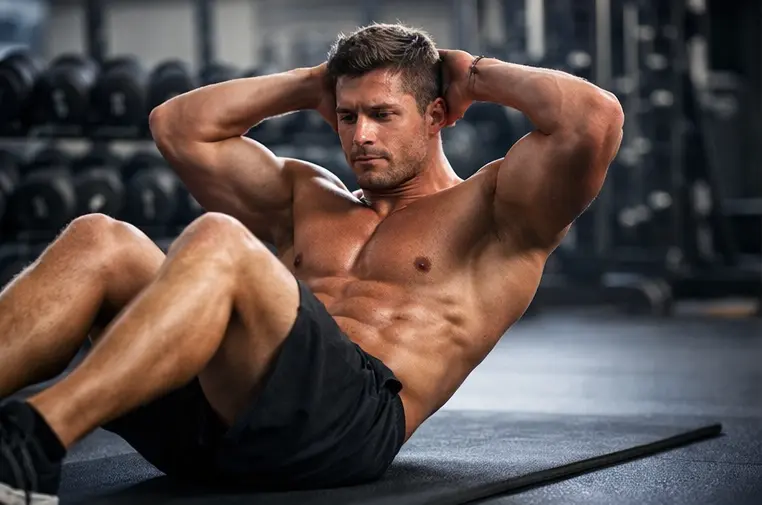
Getting a defined mid‑section isn’t about buying an ab machine or endlessly doing sit‑ups. We all have a rectus abdominis (the six‑pack muscle) and obliques, but whether they show depends on body fat levels and genetics. Research on spot reduction explains that training a specific muscle group doesn’t reduce the fat above it – the burning sensation in a muscle is caused by lactic acid build‑up, not fat burning. Studies on tennis players found that the dominant arm was more muscular than the non‑dominant arm, yet the amount of subcutaneous fat around the muscle was the same. In another trial, people who added seven abdominal exercises to their routine for six weeks improved core endurance but didn’t lose abdominal fat. Fat loss occurs across the whole body, not in the area you’re training.
Genetics and body type dictate how easily you store fat and where you tend to carry it. People with more fat around the waist (endomorphs) often have a “slower metabolism”, while leaner ectomorphs burn calories faster. Basal metabolic rate (BMR) – the energy your body uses at rest – accounts for roughly 70 % of daily calorie expenditure. Roughly 62 % of the variation in BMR comes from differences in fat‑free mass, with fat mass and age explaining only small amounts. BMR declines by 1–2 % per decade after the age of 20 due to loss of lean tissue. Men who have more muscle will have a higher BMR, so they burn more calories even at rest. However, BMR equations like the Harris–Benedict or Mifflin–St Jeor formulas are based on total body mass and don’t distinguish between lean mass and fat. Devices that estimate metabolism (smart scales or wrist‑worn trackers) rely on these equations and bioelectrical impedance analysis. They can give you a ball‑park figure, but they aren’t precise. Accurate metabolic testing uses indirect calorimetry – measuring oxygen uptake and carbon dioxide production at rest – but it requires lab equipment and strict conditions.
Training principles that actually work
- Don’t chase spot reduction. Ab‑specific exercises build endurance and strength but won’t strip belly fat. Focus on total‑body strength training and intensive cardio to reduce overall body fat.
- Prioritise compound lifts. Exercises like squats, deadlifts, lunges, presses and pull‑ups recruit large muscle groups, boosting muscle mass and BMR. Supplement them with core work – planks, hanging leg raises, Pallof presses and rotational movements – to strengthen the trunk without over‑developing the obliques.
- Use high‑intensity intervals. High‑intensity interval training (HIIT) alternates bursts of near‑maximal effort with short recovery periods. HIIT sessions typically last under 30 minutes and recruit anaerobic energy systems. Research shows that HIIT improves athletic capacity and glucose metabolism and reduces body‑fat mass similarly to longer moderate‑intensity cardio. Short, hard sessions are ideal for busy men.
- Lift heavy (but smart). Weighted ab exercises such as cable crunches or weighted planks build thicker abdominals, but they won’t make your waist “bulky”. The core muscles are relatively small; a thick waist is usually the result of fat, not muscle. Use moderate loads (10–15 reps) for stimulus without compromising posture. Avoid excessive side‑bend loading that can widen the waist.
- Move more outside the gym. Non‑exercise activity thermogenesis (NEAT) – walking, taking the stairs, playing with kids – contributes significantly to daily energy expenditure. Small habits help maintain a caloric deficit without grinding through endless cardio.
Sample weekly programmes
Below are example routines you can adapt to your body type, recovery and schedule. Each session should take roughly 45 to 60 minutes. Start with a 5 to 10 minute warm-up and finish with light stretching or mobility work.
4-Day Balanced Plan
Best for: Men with an average metabolism, or anyone wanting a solid all-round plan.
Day 1: Upper-body strength
Bench press, bent-over rows, pull-ups, overhead press, planks.
Day 2: Lower-body strength + core
Squats, lunges, Romanian deadlifts, calf raises, hanging leg raises.
Day 3: HIIT + mobility
10 rounds of 30-second hard sprints on a bike or rower, with 60 seconds of recovery between rounds. Finish with mobility work.
Day 4: Full-body circuit
Kettlebell swings, push-ups, goblet squats, inverted rows, mountain climbers.
3-Day Strength-Dominant Plan
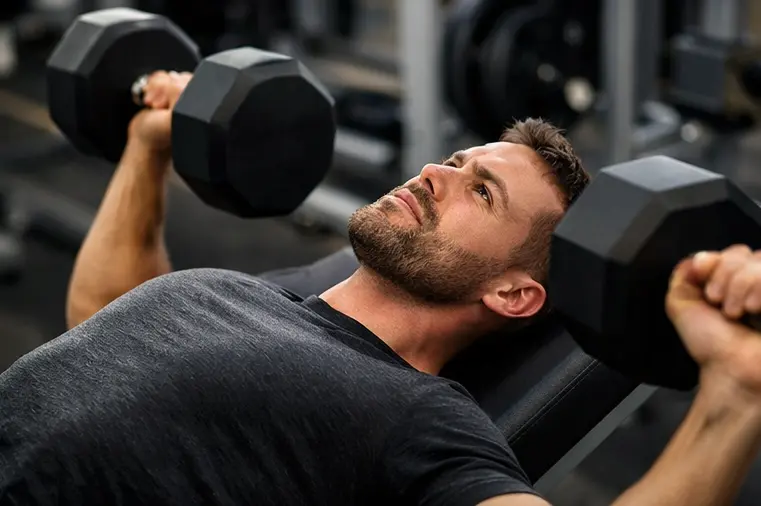
Dumbbell incline press
Best for: Leaner men who struggle to gain muscle and do not want to overdo cardio.
Day 1: Push + core
Bench press, dumbbell incline press, dips, overhead triceps extensions, plank variations.
Day 2: Pull + legs
Deadlifts, pull-ups, barbell rows, leg press, farmer’s carries.
Day 3: Hybrid strength session
Power cleans, front squats, military press, renegade rows, ab-wheel roll-outs.
Optional extra session:
One steady-state cardio session of 20 to 30 minutes, such as a brisk walk, swim or easy cycle.
5-Day Fat-Loss Plan
Best for: Men with a slower metabolism, desk jobs, or a tendency to store more fat around the waist.
Day 1: Upper-body strength
Heavy compound lifts in the 6 to 10 rep range.
Day 2: HIIT
20 minutes of sprint intervals, circuits or a Tabata-style session.
Day 3: Lower-body strength
Squats, lunges, deadlift variations and core work.
Day 4: Moderate-intensity cardio
30 to 45 minutes of running, cycling, swimming or incline walking.
Day 5: Total-body circuit
Push-ups, lunges, kettlebell swings, TRX rows, medicine-ball slams.
Core work to add on strength days:
Anti-rotation presses, side planks, hollow holds, hanging knee raises.
How to choose the right plan
If you are new to lifting, start with the 4-day balanced plan.
If you are naturally lean and want more muscle, use the 3-day strength-dominant plan.
If you are carrying more body fat and want faster visible definition, use the 5-day fat-loss plan.
Important adjustment rule
Do not judge the plan by how shattered you feel after one week. Judge it by whether you can recover, progress and stay consistent over several months.
FAQ: How to get a six-pack realistically
Can everyone get a six-pack?
Most people can build stronger abdominal muscles, but not everyone will show a sharply defined six-pack to the same degree. Genetics, body-fat distribution, muscle shape, age, hormones and lifestyle all play a part.
Can you target belly fat with ab exercises?
No. You can strengthen and build your abs, but you cannot choose where your body loses fat first. Fat loss happens across the body as a whole.
Do weighted ab exercises make your stomach bigger?
They can make the abdominal muscles thicker, but they do not usually create a large waist on their own. In most cases, a thicker midsection is more about body fat than ab muscle.
What body-fat level do men usually need to see abs?
Visible abs often start to show when body fat is relatively low, though the exact point varies from man to man depending on genetics and where he stores fat.
Do vibration belts or ice belts burn belly fat?
Not in any meaningful way. They may create sensation, mild muscle contraction or temporary firmness, but they do not replace a calorie deficit, proper training and recovery.
What matters more for a six-pack: diet or exercise?
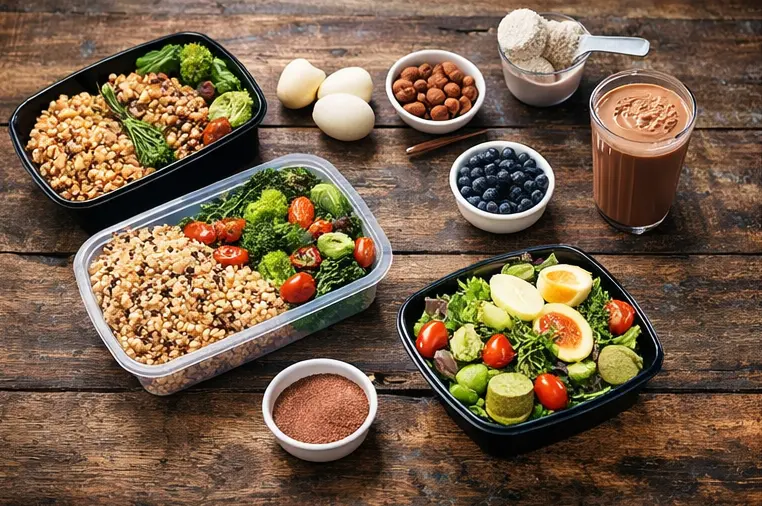
Both matter, but diet is usually the deciding factor in making abs visible. Exercise builds the muscle; nutrition helps uncover it.
Do Gadgets Like Ice Belts or Vibrating Belts Burn Belly Fat?
1. ❄️ Ice Belts / Cooling Belts
- These are based on the idea of “cold thermogenesis”, where cold exposure may stimulate brown fat activity and potentially increase calorie burn.
- However, any fat loss from cold exposure is minimal and not localised.
- Clinical cryolipolysis (e.g. CoolSculpting) does reduce fat in targeted areas, but that’s a medical procedure done under controlled conditions, not something you can DIY with a strap from Amazon.
- ❗ Verdict: No meaningful fat loss from wearable cold belts. Best case, slightly uncomfortable. Worst case, frostbite or skin damage if misused.
2. ⚡ Vibrating / EMS Belts
- These use electrical impulses to make abdominal muscles contract.
- Studies show minor improvements in muscle tone, similar to doing a few basic contractions—but not enough to build abs or reduce fat.
- No evidence supports targeted fat loss through vibration. Again: you can’t spot-reduce.
- ❗ Verdict: May help tone if used alongside proper training, but won’t burn belly fat alone.
Bottom Line:
These gadgets are mostly marketing hype. They might help very slightly with muscle engagement or blood flow, but if you’re not in a calorie deficit, not sleeping enough, and not training consistently, they’ll do nothing.
If you’re already lean and disciplined, EMS might give a 1% edge in muscle tone—but it won’t reveal abs if they’re buried under fat.