
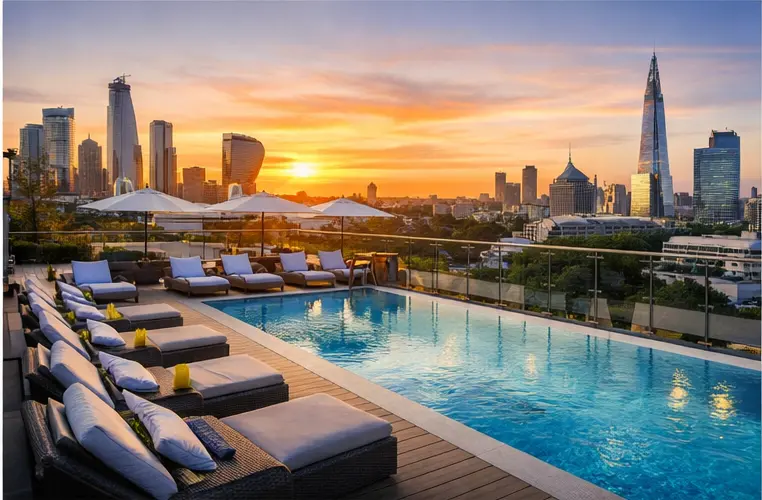
Exclusive Clubs in London for Business Networking
By Riviera Ready Magazine
Exclusive Clubs in London: Where Influence Still Has a Door Policy
Exclusive clubs in London occupy a parallel universe to the bustle of the Tube: a world of whispering porters, polished brass, deep carpets, baroque ballrooms and conversations that still happen better over lunch than on LinkedIn. From gentlemen’s societies founded when the British Empire was at its zenith to modern creative hubs that pair cocktails with co-working desks, the private members’ club remains one of the capital’s most enduring theatres of influence.
There is still a particular frisson to walking through the discreet doors of Mayfair, St James’s and Pall Mall. London clubland has its own altitude: rarefied, expensive, faintly absurd and occasionally very useful. Some rooms trade on history, some on glamour, some on celebrity, and some on the simple fact that business still changes when the right people keep seeing one another in the same place.
This is not simply a guide to where to drink a better martini. It is a guide to London’s top private clubs for business networking — the rooms where financiers, founders, actors, politicians, collectors, lawyers, media people and old-money ghosts still circulate. Some are useful because of who you meet. Some because of what they represent. Some because the wrong lunch invitation, in the right room, can still change the direction of a career.
A Brief History of London Clubland
London’s clubland began in the 18th century, when gentlemen’s clubs such as White’s and Brooks’s provided discreet spaces for political plotting, gambling, gossip and the rituals of power. These were not “networking spaces” in the modern sense. They were private worlds, built around class, gender, money and access. Membership depended less on what you had achieved than on who already recognised you as one of their own.
The model spread across the British Empire. Colonial towns acquired their own clubs, gymkhanas, polo lawns and riverfront verandas, where administrators and businessmen gathered far from home to dine, drink, flirt, grumble and preserve the architecture of hierarchy. The London originals remained the blueprint: formal, male, selective and often ruthlessly excluding.
Alongside this world sat fraternal organisations such as the Freemasons, whose rituals and secrecy have long invited fascination. The reality is less cinematic than the conspiracy theories suggest: Freemasonry is largely a social, charitable and ritualised mutual-benefit society, not a hidden boardroom controlling the globe. The same is true of the Illuminati, that endlessly recycled symbol of imagined control. The Bavarian Illuminati was an 18th-century society, suppressed long ago; its afterlife belongs more to pop culture than practical networking.
London’s private clubs may resemble dens of influence, but most are not plotting world domination. They are doing something more prosaic and, in business terms, often more powerful: creating rooms where access, trust and repeated social contact make introductions easier.
The Rumoured Wimbledon Club — and the Reality
Urban legend speaks of a semi-secret golf club in Wimbledon with eye-watering joining fees, a private railway platform and a membership list of royals, politicians and business titans. Like all good London rumours, it contains just enough truth to survive.
The closest real-world match is Royal Wimbledon Golf Club, founded in 1865 and still one of the more traditional golfing addresses in the capital. Candidates must be proposed and seconded by existing members, and the application process is not designed for impulse joiners. It is not a private railway fantasy, but it is the sort of manicured heathland setting where senior professionals, wealthy locals and old-school dealmakers can meet in an environment far more relaxed than a Mayfair dining room.
For business networking, golf remains one of the most underrated technologies ever invented. Four hours, no escape route, mutual embarrassment and a clubhouse afterwards: Silicon Valley wishes it had built something as sticky.
The Grande Dames of St James’s and Pall Mall
White’s Club
White’s is London’s oldest and most mythologised gentlemen’s club, founded in 1693 and still occupying the upper atmosphere of St James’s exclusivity. Membership is not merely expensive; it is structurally unavailable to most people. The club’s own public-facing position is that membership is not currently being offered and the waiting list is closed, subject to annual review.
Its networking value lies in old political, aristocratic and establishment circles. This is not the place for start-up founders in trainers or creative directors discussing brand activations. White’s belongs to a different London: one of club ties, inherited familiarity, private jokes and power that prefers not to announce itself.
Best for: Aristocratic, political and traditional establishment networks.
Access: Closed or extremely restricted.
Typical scene: Jacket, tie, discretion and long institutional memory.
Riviera Ready view: Fascinating, formidable and largely irrelevant unless you already belong to the world it serves.
The East India Club
The East India Club sits in the heart of St James’s and remains one of the most traditional private members’ clubs in London. Its roots lie in the world of the East India Company and commissioned officers, but today it attracts younger professionals as well as older traditionalists. It is especially notable for having a large number of younger members compared with many classic clubs.
Fees vary by age and category, with 2026 town-member subscriptions rising by age band and the entrance fee broadly equivalent to a year’s subscription, subject to a minimum. It remains formal, male and unmistakably clubland in tone.
Best for: Traditionalists, financiers, lawyers, military connections and younger men who want access to classic clubland.
Access: Application process with proposers and club approval.
Typical scene: Jacket and tie, dining rooms, reciprocal clubs and St James’s formality.
Riviera Ready view: One of the more practical ways into traditional London club life if the formality suits you.
Royal Automobile Club
The Royal Automobile Club is not just for petrolheads. Its Pall Mall clubhouse offers restaurants, lounges, bedrooms, sports facilities, a business centre, squash courts, a gym and the historic Turkish Baths, while Woodcote Park adds a country estate dimension. It is part club, part institution, part old-world business hotel.
For networking, the RAC works because it gives members multiple contexts: breakfast, dinner, sport, overnight stays, motoring events and country-club weekends. It is less theatrical than Annabel’s, less secretive than 5 Hertford Street and more functional than many older clubs.
Best for: Senior executives, motoring enthusiasts, lawyers, financiers and members who want both London and country-estate utility.
Access: Formal membership process and fees by age/category.
Typical scene: Pall Mall polish, Woodcote Park leisure, business entertaining and traditional service.
Riviera Ready view: A quietly powerful option for people who want facilities as much as status.
The Athenaeum Club
The Athenaeum is the intellectual’s club: founded in 1824, historically associated with scientists, writers, clergy, academics, artists and senior public figures. It is less about flash and more about seriousness. If Annabel’s is theatre, the Athenaeum is a library with influence.
Its business-networking value depends on what business you are in. For finance bros hunting celebrity adjacency, it is the wrong address. For academics, authors, policy people, cultural leaders and institutional figures, it has a subtler kind of power.
Best for: Academics, writers, scientists, clergy, senior civil servants and policy-adjacent professionals.
Access: Proposers, seconder and committee approval.
Typical scene: Books, conversation, seriousness and intellectual prestige.
Riviera Ready view: Not glamorous in the Mayfair sense, but deeply useful if your world runs on ideas.
The Caledonian Club
The Caledonian Club in Belgravia offers Scottish heritage, elegant rooms and a gentler atmosphere than some of St James’s more severe addresses. Its appeal lies partly in tone: traditional without being quite as forbidding, sociable without becoming frantic.
It is also notable for reciprocal arrangements, including limited access to other prestigious clubs. For anyone with Scottish connections, or who wants a more approachable version of classic London club life, it can be a clever choice.
Best for: Scottish heritage connections, discreet lunches, senior professionals and gentler traditional networking.
Access: Membership process and annual subscription.
Typical scene: Belgravia elegance, tartan accents, dinners, whisky and reciprocity.
Riviera Ready view: Less headline-grabbing than White’s or the RAC, but potentially more usable.
Mayfair Glamour and Celebrity Power
Annabel’s
Annabel’s is less a club than a stage set for wealth. Founded in the 1960s and reborn in a spectacular Berkeley Square townhouse, it is one of the most globally famous private members’ clubs in London. Its rooms are theatrical, its reputation glittering, and its guest ecology a mixture of fashion, finance, celebrities, aristocracy, serious money and people who know precisely how to be seen without appearing to try.
Membership is selective, requires recommendation and is priced accordingly. Recent public reporting has placed full membership in the several-thousand-pound-a-year bracket, with joining fees on top. It is not cheap, but cheap is not the point.
Best for: Mayfair glamour, elite entertaining, hedge-fund energy, celebrities, luxury brands and high-value social positioning.
Access: Selective application, member recommendation and waiting-list culture.
Typical scene: Maximalist interiors, dinner, late nights, polished guests and strictly managed exclusivity.
Riviera Ready view: Not the most efficient club for quiet business work, but one of the most powerful for social theatre.
5 Hertford Street
5 Hertford Street is the opposite of noisy branding. It is famous partly because it appears to prefer not to be famous at all. Tucked into Mayfair, with Loulou’s downstairs and a reputation for political, aristocratic and celebrity traffic, it has become one of London’s most whispered-about power addresses.
Reported fees vary because the club is deliberately discreet, but access depends far more on who proposes you than what you can pay. It is a room for people who understand that privacy itself is a luxury product.
Best for: Political gossip, celebrity adjacency, ultra-private entertaining and old/new money overlap.
Access: Proposer, seconder, letters and serious social filtering.
Typical scene: Moroccan-tinged glamour, cigar culture, late dinners, quiet deals and famous faces pretending not to be noticed.
Riviera Ready view: Perhaps the purest expression of modern Mayfair discretion: less visible than Annabel’s, arguably more powerful.
The Arts Club
Founded in 1863, The Arts Club on Dover Street bridges heritage and contemporary culture. Its founding circle included figures such as Charles Dickens, and its modern identity mixes art, performance, dining, music and luxury hospitality.
For business networking, it is strongest where culture meets capital: art collectors, gallerists, patrons, fashion people, luxury-brand executives and creative investors. It has more polish than bohemian chaos, and more cultural credibility than pure party clubs.
Best for: Art collectors, gallerists, patrons, fashion, luxury-brand circles and culturally minded investors.
Access: Selective membership process and annual fees.
Typical scene: Dover Street polish, exhibitions, performances, stylish dining and serious cultural money.
Riviera Ready view: One of the better choices if your business depends on taste as much as turnover.
67 Pall Mall
67 Pall Mall is a private club built around wine, but its appeal reaches far beyond oenophiles. It offers a St James’s address, a remarkable wine list, serious dining and a businesslike atmosphere that makes client entertaining feel elegant rather than showy.
The club publishes clear London membership fees, including annual membership and joining fee information, with under-30 and wine-professional categories. That transparency is refreshing in a world where many clubs cultivate mystery as part of the product.
Best for: Wine lovers, bankers, collectors, client entertaining and discreet business conversations.
Access: Application with proposer and seconder, though the club can help prospective members identify sponsors.
Typical scene: Wine tastings, polished lunches, collector conversations and St James’s refinement.
Riviera Ready view: One of the most genuinely useful clubs for business entertaining: the wine gives every meeting a reason to exist.
Creative, Media and Entrepreneurial Clubs
Soho House
Soho House changed the London members’ club conversation by making creativity the organising principle rather than lineage. What began above Café Boheme in Soho became a global network of houses, bedrooms, rooftops, workspaces and restaurants for people in film, television, music, fashion, design, media, hospitality and the wider creative economy.
Its critics call it too crowded, too influencer-heavy or too corporate. Its defenders point out that it remains one of the most useful networks in the world if your business is creative, social and international. Both views can be true.
Best for: Film, TV, fashion, design, media, music, tech-adjacent creatives and frequent travellers.
Access: Application judged around creative identity and community fit.
Typical scene: Laptops by day, picantes by night, rooftop pools, screenings and cross-city networking.
Riviera Ready view: Less exclusive than the old Mayfair palaces, but far more useful for many modern careers.
The Groucho Club
The Groucho Club was founded in Soho in 1985 as an antidote to old-school clubland. It became the haunt of writers, actors, agents, broadcasters, publishers, comedians and musicians — a place where creative disorder was not merely tolerated but expected.
Its value is not grandeur. It is density. If your business depends on scripts, books, deals, productions, publicity or ideas, Groucho has historically been one of London’s most useful rooms.
Best for: Film, television, publishing, music, comedy, agents, producers and media people.
Access: Proposed and seconded by members; creative credentials matter.
Typical scene: Soho irreverence, media gossip, strong drinks and people pretending not to pitch.
Riviera Ready view: Still one of the classic creative-business rooms, provided you prefer wit to wallpaper.
The Ivy Club
The Ivy Club sits above one of London’s most famous restaurants, with a discreet entrance and an Art Deco mood that suits the West End beautifully. Its official membership rates are refreshingly clear, with individual, under-35, joint, country, overseas and corporate categories, plus joining fees.
For business networking, its value lies in entertainment, publishing, theatre, restaurants, publicity and the soft-power economy of London culture. It is less intimidating than Mayfair and more elegant than many Soho options.
Best for: West End, theatre, publishing, restaurants, PR, media lunches and cultural networking.
Access: Application and membership fee.
Typical scene: Art Deco interiors, discreet lunches, live music, cocktails and Covent Garden convenience.
Riviera Ready view: A highly usable club for people whose business day often turns into dinner.
Home House and Home Grown
Home House in Marylebone is grand, eccentric and less rule-bound than many older London clubs. Its current public membership information starts from limited-access options around the lower four figures and rises for fuller access. It is sociable, stylish and famously more permissive in spirit than the traditional St James’s institutions.
Home Grown, its entrepreneurial sister, adds a more business-focused layer: founders, investors, scale-up people and members who want introductions with less velvet-rope theatre. Together, they offer a useful bridge between party, hospitality and professional networking.
Best for: Founders, investors, fashion people, social networkers and members who want business with a hedonistic edge.
Access: Membership application and annual fees by access level.
Typical scene: Marylebone townhouse glamour, dinners, events, bedrooms, parties and entrepreneurial overlap.
Riviera Ready view: One of the stronger modern options if you want business introductions without surrendering the fun.
12 Hay Hill
12 Hay Hill is explicitly designed for business. Set in Mayfair, it combines private members’ club atmosphere with offices, meeting rooms, lounges, dining, events and a premium business address. It is less about theatrical nightlife and more about having somewhere polished to work, meet, entertain and impress.
For entrepreneurs, investors and professional-services firms, that matters. A club that lets you take a serious meeting, host a client lunch and then remain for drinks has practical value beyond mere status.
Best for: Entrepreneurs, investors, consultants, founders, finance professionals and small teams needing a Mayfair base.
Access: Membership tiers and corporate arrangements.
Typical scene: Business lounges, meeting rooms, dining, terrace drinks and sharply dressed professionals.
Riviera Ready view: Not the sexiest club in London, but possibly one of the most practically useful for actual business.
Mortimer House
Mortimer House in Fitzrovia blurs the line between members’ club, wellness space, co-working address and modern social hub. It is aimed at people who want somewhere to work, train, meet and dine without the stiffness of Pall Mall or the full performance of Mayfair nightlife.
For freelancers, start-up founders and creative independents, that informality is the advantage. It is less about inherited status and more about productive proximity.
Best for: Start-up founders, freelancers, creative independents and members who want work-life club access.
Access: Membership tiers by usage.
Typical scene: Co-working, fitness, rooftop dining, events and relaxed professional community.
Riviera Ready view: A modern working club for people who need useful rooms more than ancient rituals.
Wellness, Adventure and Specialist Clubs
South Kensington Club
South Kensington Club presents itself as a wellness sanctuary, with gym, spa, hammam, banya and health-focused facilities. Its distinctive edge is the blend of urban club and adventure-minded programming, including travel and expedition-style experiences.
For business networking, it works best for wellness entrepreneurs, luxury travel people, lifestyle founders, fitness professionals and anyone who would rather bond over recovery than cigars.
Best for: Wellness entrepreneurs, luxury travellers, fitness-minded founders and adventure-networking types.
Access: Membership application and annual fee.
Typical scene: Spa, hammam, training, health rituals, global travel talk and polished South Kensington calm.
Riviera Ready view: A more interesting networking environment than another predictable bar, especially if your business lives in health, travel or lifestyle.
The Hurlingham Club
The Hurlingham Club in Fulham is a green oasis of tradition, set on 42 acres by the Thames. It is less central than the Pall Mall institutions, but that is precisely part of the charm. It feels almost like a country estate smuggled into London.
Membership is famously difficult, with waiting-list culture and priority often favouring existing club families. For those inside, it offers sport, dining, events and a social world that is discreet, affluent and highly networked.
Best for: Old-money families, senior executives, sports-minded members and discreet social networking.
Access: Extremely restricted and famously difficult.
Typical scene: Lawns, croquet, tennis, swimming, formal events and country-estate calm.
Riviera Ready view: Less useful as an application target, more interesting as a symbol of how London exclusivity really works.
Chelsea Arts Club
Chelsea Arts Club is bohemian, artist-led and almost defiantly uninterested in polished corporate networking. That is exactly why it matters. Not every useful room looks like a boardroom. Some look like a bar where phones are discouraged and half the people have paint on their sleeves.
Its membership is heavily linked to the arts, and applicants need serious creative credentials and existing-member support. For certain worlds — fine art, performance, design, criticism, collecting — that can be far more valuable than a Mayfair address.
Best for: Artists, writers, performers, designers, critics and serious bohemians.
Access: Proposed and seconded; practising artists strongly represented.
Typical scene: Bohemian dinners, art-world gossip, creative parties and anti-corporate spirit.
Riviera Ready view: Not a conventional business club, but a useful reminder that influence sometimes wears paint-stained shoes.
London Clubs at a Glance
Best for Old Establishment Power
Clubs to consider: White’s, East India Club, Athenaeum, RAC, Caledonian Club.
Why they matter: These clubs trade in continuity, trust, tradition and institutional memory. They are not designed to feel accessible, and that is part of their mystique.
Networking style: Formal lunches, quiet introductions, reciprocal club access, old professional circles and slow-burn trust.
Best suited to: Lawyers, financiers, politicians, military connections, diplomats, senior executives and traditionalists.
Riviera Ready verdict: Powerful if you fit the world; faintly absurd if you do not.
Best for Mayfair Glamour
Clubs to consider: Annabel’s, 5 Hertford Street, The Arts Club, 67 Pall Mall.
Why they matter: These are rooms where money, fashion, culture, celebrity and power overlap. The networking is social first, professional second — which is often why it works.
Networking style: Dinners, parties, wine tastings, late-night conversations, client entertaining and reputation by association.
Best suited to: Investors, luxury-brand people, hedge-fund managers, art collectors, celebrities, fashion figures and high-net-worth social operators.
Riviera Ready verdict: Expensive, theatrical and often very effective.
Best for Creative Industries
Clubs to consider: Soho House, Groucho Club, The Ivy Club, Chelsea Arts Club.
Why they matter: Film, TV, theatre, publishing, music and fashion still run on relationships. These clubs put people with overlapping creative ambitions in the same room.
Networking style: Casual lunches, screenings, book deals, production gossip, agents, editors, actors, producers and “accidental” introductions.
Best suited to: Media professionals, writers, performers, photographers, producers, publicists, designers and brand creatives.
Riviera Ready verdict: Less polished than Mayfair, but often much more useful if your business depends on ideas.
Best for Entrepreneurs and Business Practicality
Clubs to consider: 12 Hay Hill, Home House and Home Grown, Mortimer House, Soho House.
Why they matter: These clubs understand that modern networking often happens between laptop sessions, investor calls, events, dinners and travel.
Networking style: Co-working, panels, founder dinners, investor introductions, casual drinks and workspace-as-status.
Best suited to: Founders, consultants, investors, scale-up teams, freelancers and digitally mobile professionals.
Riviera Ready verdict: The most useful category for people who actually need somewhere to work as well as somewhere to be seen.
Best for Wellness, Sport and Lifestyle Networking
Clubs to consider: Hurlingham Club, South Kensington Club, Royal Wimbledon Golf Club, RAC Woodcote Park.
Why they matter: Some of the best business conversations happen away from the table: on golf courses, tennis courts, terraces, spa lounges and long walks between facilities.
Networking style: Sport, wellness, travel, family networks, weekend socialising and informal conversations that build trust.
Best suited to: Senior executives, family offices, wellness entrepreneurs, sports-minded professionals and luxury-travel people.
Riviera Ready verdict: Less immediate than a business club, but often more durable.
Should You Join a Private Members’ Club in London?
In an age when LinkedIn connections can be made from a sofa and Zoom calls can reach Singapore before breakfast, the allure of London’s private clubs may seem irrational. Why pay thousands of pounds a year for rooms, rituals and gatekeepers when the modern world is supposedly frictionless?
Because friction is sometimes the point.
A private club slows the relationship down. It gives people somewhere to return to, somewhere to recognise one another, somewhere to move from polite introduction to actual familiarity. That is still difficult to replicate online. The value is not the wallpaper or the martini. It is repeated proximity to people whose trust may be worth more than their business card.
But the wrong club is an expensive mistake. If you are building a tech start-up, White’s is probably useless. If you are raising money in fashion, Annabel’s or Soho House may be more fertile. If you need a Mayfair base with meeting rooms, 12 Hay Hill is more practical than a purely social club. If you host clients over wine, 67 Pall Mall makes immediate sense. If your world is film, publishing or television, Groucho or The Ivy Club may be far more useful than the grandest room in St James’s.
The best test is simple: would you still use the club if nobody was impressed that you belonged to it?
If the answer is yes, it may be worth joining.
Riviera Ready Business Musts & Must-Nots
Must: choose the room before the reputation
The most famous club is not always the most useful. Pick the room where your clients, collaborators or future investors are actually likely to be.
Must-not: join for status alone
Status fades quickly when the annual invoice arrives. A club should serve your life, your business or your social world — ideally all three.
Must: understand the rhythm
Some clubs are breakfast-and-laptop spaces. Some are lunch rooms. Some only come alive after 10pm. Join the wrong rhythm and you will always feel slightly out of place.
Must-not: confuse exclusivity with quality
A closed door does not automatically make a room useful. Some exclusive clubs are powerful. Others are just expensive rooms full of people avoiding their families.
Must: respect discretion
London clubland still runs on restraint. Do not photograph everything, name-drop everyone or treat a private room like a content studio.
Must: calculate the real cost
Membership is only the entry ticket. Add joining fees, meals, drinks, guests, events, transport, wardrobe and the occasional “quick” dinner that becomes ruinous.
Final Musings
London’s private members’ clubs survive because they satisfy an old human appetite: the desire to belong somewhere slightly difficult to enter. That desire is not always noble, but it is undeniably powerful.
The old clubs offer continuity, ritual and the soft authority of institutions that have outlived governments. The new clubs offer energy, creativity, wellness, mobility and a sense that business no longer has to happen in grey rooms under fluorescent light. Between them lies the real story of London networking: money still wants discretion, creativity still wants company, and influence still prefers a room with a good door.
Whether you choose White’s or Soho House, Annabel’s or 12 Hay Hill, 67 Pall Mall or the RAC, the essential question is not whether a club is exclusive. It is whether its particular form of exclusivity opens the right doors for you.
After all, you are not really paying for cocktails, carpets or clever lighting.
You are paying for proximity — to conversations, introductions, confidences and possibilities that may never appear on a screen. In London, that remains one of the oldest luxuries of all.