
Wearable Tech is reshaping personal fitness
By Riviera Ready Magazine
Once a niche defined by simple pedometers, wearable technology has exploded into a luxury‑tech ecosystem that marries fashion, science and Silicon Valley ingenuity. In 2026 we’re not just counting steps; we’re strapping on AI‑powered exoskeletons, discreet smart rings and haptic yoga leggings that vibrate to correct our downward dog. From sunlight‑filtering swimwear to biometric earbuds, the landscape has never been richer or more bewildering. Below, we explore how wearables are remaking personal fitness – and which devices are simply conversation pieces.
The rise of the smart ring
Pebble Index 01 – Smart rings hit the mainstream at CES 2026 when Pebble introduced the Index 01. The £60 (£74 including shipping) aluminium ring includes a microphone and a single click‑button for capturing voice memos; it transcribes them on your phone and can be configured to trigger tasks such as sending a text or opening an app. Pebble claims a “weeks‑long” battery life and water‑resistant design.
Oura Ring 4 – For deeper insights, Oura’s fourth‑generation ring measures heart‑rate variability, skin temperature and movement to provide sleep quality and readiness scores. It is comfortable enough to wear 24/7 and requires charging only every five to eight days. The £349 ring (plus £5.99/month subscription) is widely used in academic research, but it lacks GPS and is not ideal for tracking workouts.
RingConn Gen 3 – Another 2026 highlight is RingConn’s third‑generation ring, which introduces tactile feedback and daily “productivity scores” similar to Oura’s readiness metric. The ring promises 13‑day battery life and advanced blood‑pressure insights.
Luxury twist – Gucci × Oura – For those who value runway over readiness, Gucci collaborated with Oura to create a £760 limited‑edition ring. Wrapped in black synthetic corundum with 18‑karat yellow‑gold braided detailing, the Gucci x Oura ring provides the same 24/7 heart‑rate monitoring, temperature sensing and sleep analysis as the standard Oura, but its accompanying app offers curated meditations and breath work. You’re paying primarily for the interlocking‑G monogram
Smart Rings at a Glance
Pebble Index 01
Best for: Voice notes and quick reminders, not full fitness tracking.
Key features: A simple button-and-microphone ring designed to capture voice memos, reminders and fleeting thoughts without reaching for your phone.
Battery life: Designed for long-term use without regular charging; recording time is limited by its non-rechargeable battery.
Price: Approx. £60–£80, depending on exchange rate and availability.
Where to buy: pebble.io / repebble.com
Riviera Ready view: Clever, cheap and refreshingly focused — but this is more “external memory” than fitness tracker.
Oura Ring 4
Best for: Sleep, readiness, recovery and discreet everyday health tracking.
Key features: Sleep and readiness scores, activity tracking, heart-rate data, temperature trends and a polished app experience.
Battery life: Around 5–8 days.
Price: From approx. £349–£399, plus an ongoing membership fee.
Where to buy: ouraring.com, Argos and selected retailers.
Riviera Ready view: Still the most recognisable smart ring in the wellness world: elegant, discreet and data-rich, but the subscription model will not appeal to everyone.
RingConn Gen 3
Best for: Longer battery life and subscription-free health tracking.
Key features: Sleep, activity and recovery tracking, vibration alerts, vascular-health insights and blood-pressure trend features.
Battery life: Around 11–14 days, depending on use.
Price: Approx. £260–£300, depending on size, finish and offer.
Where to buy: ringconn.com
Riviera Ready view: A strong Oura alternative for readers who want longer battery life, useful health insights and no monthly subscription.
Gucci × Oura
Best for: Luxury design and collector appeal.
Key features: Oura health metrics wrapped in Gucci design, with 18K gold detailing and a more jewellery-led finish.
Battery life: Around 7 days.
Price: Originally around £760; availability may now be limited or archive-only.
Where to buy: Gucci, resale or archive luxury channels, subject to availability.
Riviera Ready view: Less “fitness gadget”, more luxury wellness jewellery — beautiful, expensive and very much a style statement.
Ear‑worn biometrics and “earables”
Researchers have begun using the ear as a gateway to our physiology. The Medical Futurist reports that sales of wrist‑worn trackers fell 6 % from 2024‑2025, while interest in smart rings and “earables” is rising. The ear’s proximity to the brain and major blood vessels makes it ideal for measuring brainwaves, cardiovascular signals and temperature.
Sennheiser Momentum Sport – These earbuds integrate heart‑rate and body‑temperature sensors and connect to Polar’s sports ecosystem. A semi‑open design reduces occlusion, and tap controls are built into the ear fins for easy operation while exercising. UK pricing starts around £279, often discounted to about £130.
MindMics – Start‑up MindMics uses tiny sensors to detect physiological vibrations in the ear canal. According to The Medical Futurist, these sensors may bypass the limitations of light‑based wrist‑worn wearables and provide more accurate cardiovascular insights. Expect commercial products within the next few years.
EarEEG – Samsung’s research prototype wraps an EEG array around the ear to monitor brainwaves unobtrusively. Early results suggest accuracy comparable to clinical‑grade scalp EEG.
Smart clothing and tech textiles
The biggest innovations are happening in our wardrobes. Smart fabrics have evolved from basic moisture‑wicking to garments that harvest energy and sense our movements.
Nadi X yoga leggings – Wearable X’s biometric leggings use multi‑node haptic sensors sewn into the hips, knees and ankles to guide your yoga practice. They connect to an app via Bluetooth and vibrate gently when your alignment is off. At about £140 (US $180), the leggings are a novel way to get personal instruction at home. They look like normal high‑end yoga pants, but you will need to hand‑wash or remove the power module before laundering.
SunSelect tan‑through fabric – SunSelect swimwear uses micro‑porous fabric that allows enough UVA rays to pass for tanning while blocking most UVB radiation, meaning you can achieve an even tan without baring all. The technology is woven into the fabric (no coatings), so the protection doesn’t wash out. The suits are breathable and quick‑drying, and the brand claims they help avoid tan lines. A two‑piece typically costs around £70.

Bite‑resistant wetsuits – Researchers have incorporated Kevlar and polyethylene nanofibers into neoprene to produce wetsuits that withstand shark bites. Tests show that these fabrics prevent deep puncture wounds and reduce the likelihood of fatal blood loss compared with standard neoprene. The suits aren’t bite‑proof – crushing injuries are still possible – but they’re a significant safety upgrade for surfers and divers; expect to pay around £350.
Tech racing swimsuits – Competitive swimmers have long used high‑tech suits made of water‑repellent carbon‑fiber fabrics. Studies show these suits reduce drag by 4.4–6.2 %, reduce energy expenditure by 4.5–5.5 % and improve performance by roughly 3.2 %. Expect to pay £200–£300 for a FINA‑approved “tech suit.”
Heated vests – Modern heated vests, such as Ororo’s Lightweight Heated Vest, use thin carbon‑fiber wires powered by rechargeable batteries. Good Housekeeping notes that Ororo’s vest provides adjustable heat zones (collar, back, pockets), heats up quickly and doubles as a USB power bank. Prices start at £150 for men’s and women’s styles.
Conductive and energy‑harvesting fabrics – Smart clothing now employs conductive yarns coated with silver or graphene to integrate heart‑rate and respiration sensors directly into garments. Energy‑harvesting textiles using thermoelectric and triboelectric generators convert body heat and motion into electrical power. Haptic actuators can even deliver vibrations to correct posture or provide navigation cues. These fabrics are still in development but could power sensors without external batteries.
Exoskeletons and foot sensors
Ascentiz H1 Pro hip exoskeleton – This Kickstarter‑backed device uses AI to analyse your stride and provide natural movement assistance. Weighing only 2 kg (4.4 lb) and capable of offsetting up to 30 kg (66 lb) of load, the H1 Pro helps runners and hikers maintain speed up to 28 km/h (17.4 mph). Range is 50 km (31 mi), and the battery lasts up to 10 hours. Pricing starts at around £820 for the hip module; a modular knee‑unit (K1 Pro) can offset 98 kg (216 lb) and costs extra.
Solar‑powered smart insoles – A research team at Ohio State University developed a flexible insole with 22 pressure sensors powered by miniature solar panels. The system monitors gait in real time and can detect conditions such as plantar fasciitis or even early signs of Parkinson’s disease. Data are transmitted via Bluetooth to an app. The insoles endured 180,000 compression cycles without degradation. The product is not yet commercially available but hints at the next generation of discreet health monitoring.
Diet and sleep: internal analytics
Abbott Lingo continuous glucose monitor (CGM) – Lingo’s biosensor attaches to the back of your upper arm and provides minute‑by‑minute glucose readings via an app. Plans include a 2‑week starter pack (£38), 4‑week (£69) and 12‑week subscription (£195). The sensor lasts up to 14 days but isn’t intended to diagnose disease. The service helps users see how foods impact their blood sugar and encourages “metabolic fitness.”
Somnee Smart Sleep Headband – Sleep might be the new workout. Somnee’s second‑generation headband uses EEG sensors to map your brain and then delivers 15‑minute personalised transcranial alternating current stimulation (tACS) sessions to promote sleep. It connects to an app that tracks sleep trends and provides readiness scores. The device costs about £330 (US $429) and requires a membership that supplies replaceable hydrogel electrodes. Reviews note that it improved the time to fall asleep but required daily charging and could leave marks on the forehead.
Conclusion – where function meets fashion
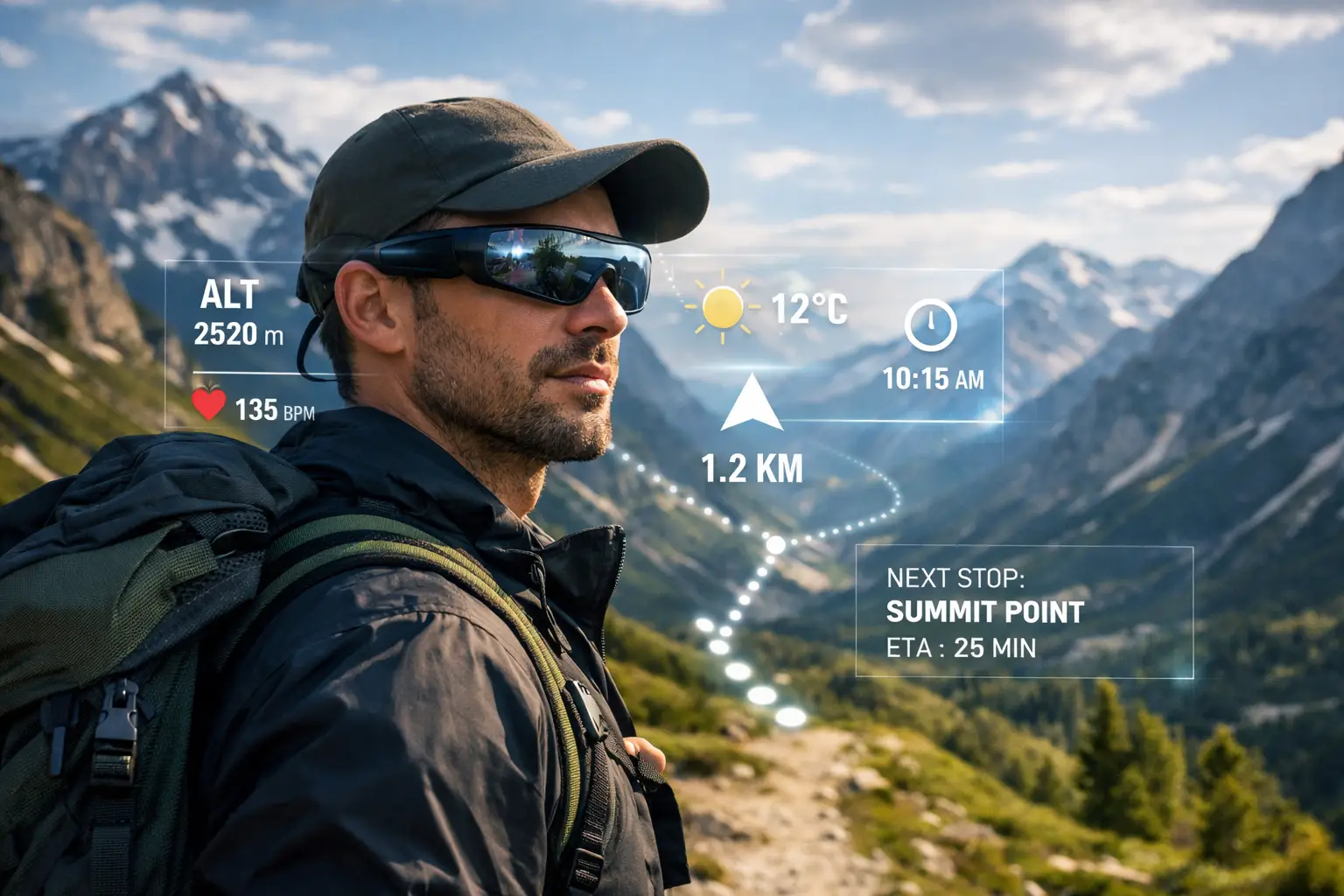
Personal fitness is no longer limited to counting steps or logging miles. Today’s wearables extend from our fingertips to our foreheads, from the clothes we swim in to the glasses we navigate with. Smart rings capture audio notes and interpret our heart‑rate variability; smart glasses translate trailside signs in Tokyo; earbuds measure our body temperature while pumping tunes; and high‑tech fabrics harvest our kinetic energy and vibrate to correct our yoga poses.
This explosion of devices offers unprecedented self‑knowledge and, with it, the possibility of better health. Yet it also raises questions about data privacy, subscription fatigue and the line between useful innovation and ostentatious gadgetry. The Gucci × Oura ring and Louis Vuitton Tambour Horizon watch prove that luxury houses can turn wearable tech into jewellery, while research prototypes like solar‑powered insoles hint at a future where sensors disappear into our clothing altogether. Whatever form it takes, wearable tech is rewriting what it means to get “Riviera ready.”