

15 Summer Myths We Need to Stop Repeating
By Riviera Ready Magazine
Summer myths are the little rules that follow us from childhood to beach clubs, hotel pools, heatwaves, picnics and villa holidays — usually delivered with absolute confidence by someone holding a warm drink and ruining the mood.
Do not swim after lunch. Hot tea cools you down. Cold drinks make you hotter. A base tan protects you. Pee on a jellyfish sting. Do not wear sun cream because you need the vitamin D. If you have wet feet, you will catch a cold. A swim in the sea will cure a hangover.
Some of these are harmless. Some are partly right. Some are nonsense with a tan. And a few contain just enough science to keep the argument alive for another summer.
The most irritating ones are not always the wildest. They are the ones that sound clever, get repeated endlessly, and make ordinary people doubt their own perfectly sensible experience. Especially the old favourite: “You should drink hot tea in hot weather. It cools you down.”
Let us begin there.
The Smuggest Summer Myth: “A Hot Drink Will Cool You Down”
Of all the summer myths, this is the one most likely to start an argument before anyone has even ordered lunch.
The claim usually comes in two forms. The first is the familiar line that people in hot countries drink tea, therefore hot drinks must cool you down. The second sounds more scientific, which makes it even more irritating: if you drink a cold drink, your body has to burn energy to warm it back up to 37°C, or 98.6°F, and that means your body “actually gets hotter”.
It sounds plausible for about three seconds. Then it falls apart.
Yes, the body has to warm a cold drink once it enters you. But that does not mean the cold drink has heated you up. The cold drink has taken heat from your body as it warms. That is one reason it feels cooling. Any energy involved in bringing it towards body temperature is tiny in normal drinking terms and does not magically turn iced water into a heater.
By the same logic, a car radiator should remove its cooling system because the engine has to “work” with cool water. In winter, you would drink ice water to warm up and hot tea to cool down. Nobody sensible behaves like that, because the idea confuses thermoregulation with a clever-sounding party trick.
There is a separate grain of truth in the hot-drink argument. A hot drink can trigger sweating. If that sweat fully evaporates, evaporative cooling may offset the heat added by the drink. That is most plausible in dry air, good ventilation, exposed skin, enough hydration and conditions where sweat can actually evaporate.
But most summer situations are not a neat laboratory test. They are humid terraces, crowded cafés, still hotel rooms, beach clubs with no breeze, city streets radiating heat, sunloungers, synthetic clothes, traffic, hangovers, and already-damp skin. If the sweat does not evaporate efficiently, it does not cool you properly. It just makes you hotter, stickier and more irritated.
This is why the myth is so maddening. People repeat the clever-sounding version and ignore the conditions that make any of it work.
If you drink hot tea in July and instantly feel hot, flushed and sweaty, you are not imagining it. Your body has just received more heat and has been pushed into sweating. Unless that sweat evaporates well, you may feel worse, not better.
The NHS advice for hot weather is far more practical: have cold food and regular cold drinks, drink extra fluids, and avoid alcohol, caffeine and hot drinks during hot spells. That is not as romantic as desert tea folklore, but it is much more useful for normal life.
Verdict: Technically possible in narrow conditions, but badly over-applied — and the “cold drinks make you hotter” version is nonsense.
What to do instead: If you like hot tea, drink it. But do not pretend it is the superior summer cooling strategy. For most people in most hot-weather situations, cold drinks are the better choice for comfort, hydration and immediate relief.
So, Should You Drink Hot Tea or Cold Water in Hot Weather?
For ordinary summer life, choose the cold drink.
The hot-drink argument belongs to a narrow thermoregulation point: if a hot drink makes you sweat more, and that sweat evaporates fully, your body may lose heat. But that does not automatically mean you will feel better. It also does not prove that hot drinks are better summer drinks for people sitting in humid, sticky, badly ventilated heat.
Cold drinks do not “make you hotter”. They give immediate relief, help hydration, and can support the body’s ability to sweat and regulate temperature. Cold water and ice-based drinks are also widely studied as practical cooling strategies in sport and heat exposure.
There is a useful distinction here:
Body heat storage: In a dry, well-ventilated setting, a hot drink may sometimes reduce heat storage through extra sweating.
Thermal comfort: Cold drinks usually feel better.
Practical advice: During real heatwaves, official guidance generally points towards cold drinks, hydration, shade, loose clothing and reducing heat exposure — not forcing down hot tea to prove a point.
If someone insists cold drinks make you hotter because your body has to warm them up, ask whether they also drink iced water in winter to keep warm.
Hot tea may win a thermoregulation footnote. Cold drinks win summer.
There is a cousin of this myth: the idea that a woolly jumper can keep you cool in a heatwave because it works like a thermos flask. Gyles Brandreth famously made a version of this argument on This Morning during a UK heatwave, using the thermos analogy while defending a woolly jumper.

The problem is that people are not thermos flasks. A flask is sealed. A human body is constantly producing heat and trying to lose it through sweating, airflow, radiation and evaporation. Wool can insulate, and fine, breathable wool can manage moisture better than some fabrics, but a thick jumper in a heatwave is not a cooling device. Extra clothing can trap heat and interfere with sweat evaporation, especially indoors or in humid weather.
So, as with hot tea, the irritating part is not that there is no physics at all. It is that a narrow idea gets turned into smug general advice. In real hot weather, public-health guidance still points people towards loose, light-coloured, breathable clothing — not novelty knitwear as personal air-conditioning.

“Spicy Food Cools You Down”
This one sits in the same family as the hot tea myth: not completely mad, but far too smugly repeated.
Spicy food can trigger sweating. If that sweat evaporates, it can help cool the body. That is why hot climates often have spicy cuisines, though the reasons are also cultural, historical, agricultural and culinary — not just biological air-conditioning.
But again, the word “if” is doing a lot of work.

If you are somewhere dry, breezy and lightly dressed, a spicy dish may help trigger a cooling sweat. If you are in still, humid heat, eating curry in tight clothes, already sweating through lunch, the “cooling” effect may feel more like facial fire and regret.
There is also the simple fact of comfort. Feeling hotter, sweatier and thirstier is not the same as being meaningfully cooled.
Verdict: Partly right in specific circumstances, but badly over-applied.
What to do instead: Eat spicy food because you enjoy it, not because someone has convinced you it is better than shade, water and a breeze.
“You Must Wait an Hour After Eating Before Swimming”
This is one of the great childhood beach commandments. Eat a sandwich, and suddenly the sea becomes a death trap until an adult checks their watch.
The fear is that digestion pulls blood away from the muscles, causing cramps so severe that you drown. It sounds dramatic. It is also not supported by modern water-safety guidance.
The American Red Cross says swimming within one hour of eating does not increase drowning risk. A huge meal may make you feel sluggish, uncomfortable or mildly crampy, especially if you launch into hard swimming straight afterwards, but that is not the same as a deadly rule.
The sensible version is far less theatrical: if you feel full and uncomfortable, wait a bit. If you feel fine, gentle swimming is fine. The real drowning risks are poor supervision, alcohol, exhaustion, currents, overconfidence and lack of water safety — not the exact timing of lunch.
Verdict: Mostly false.
What to do instead: Swim when you feel comfortable. Watch children closely. Respect the water. Do not turn a sandwich into a maritime emergency.
“A Base Tan Protects You”
This myth has a glamorous little lie at its centre. It pretends that skin damage can become skin protection if you do it early enough.
A tan is not armour. It is a sign that your skin has responded to UV exposure. It may offer a tiny amount of extra protection, but nothing close to proper sun protection. It is not a shield. It is evidence that the skin has already been pushed into defence mode.
In Britain and northern Europe, the “base tan” myth often has a more dangerous version: the pre-holiday sunbed. Before flying to Spain, Greece, the Balearics or the Riviera, people book a few sessions under artificial UV because they think it will stop them burning when they arrive. It will not. Sunbeds use concentrated UV radiation, and health authorities warn that they increase the risk of skin cancer, premature skin ageing, sunburn and eye irritation.
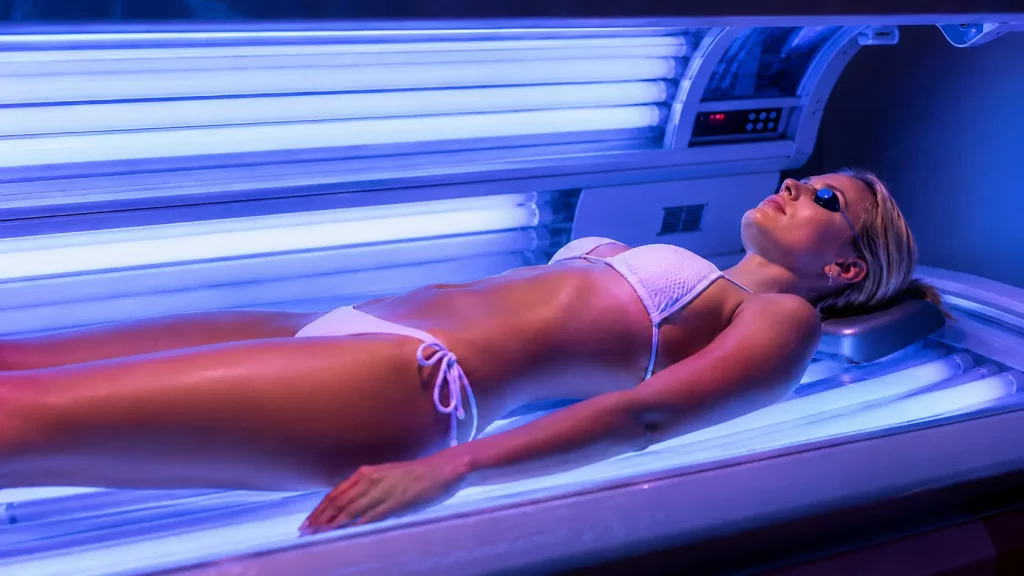
The ageing point is not vanity. UV exposure breaks down skin structure over time. The holiday glow may last a few days; the damage can show up years later as leathery texture, pigmentation, wrinkles and increased cancer risk. A sunbed “base tan” is not preparation. It is extra UV damage before the holiday has even started.
Fake tan and spray tan are different. They can make skin look bronzed without UV exposure, and Cancer Research UK says fake or spray tan is safer than sunbathing or using sunbeds. But they are cosmetic only. They do not protect you from sunburn, and you still need SPF, shade, hats and cover-ups.
Tanning pills are more complicated and much less appealing. Some use carotenoid-style colourants or other ingredients to tint the skin from the inside, but they do not create real UV protection. Canthaxanthin tanning pills, in particular, have been associated with orange skin, digestive problems, liver concerns and eye damage. If the aim is to avoid looking pale by the hotel pool, a carefully chosen fake tan is a far better idea than swallowing questionable pills or cooking yourself under UV tubes.
Verdict: True only in a tiny, misleading sense — and dangerous when used as an excuse for sunbeds.
What to do instead: Skip the strategic burning and avoid sunbeds. Use SPF, shade, hats, sunglasses and cover-ups. If you want colour, use a fake tan or spray tan carefully, keep it natural, and remember: bronze make-up is not sun protection.
“You Can’t Burn on a Cloudy Day”
This myth is especially dangerous in Britain, where grey skies make people strangely brave.
UV radiation is not the same as heat or brightness. You can burn when the air feels cool. You can burn under cloud. You can burn while sitting in a breeze feeling smugly safe.
Cancer Research UK warns that skin-damaging UV rays can pass through clouds, and that people should check the UV index even when the weather looks unimpressive. If the UV index is 3 or above, protection matters.
The beach version is even worse because water, sand and pale surfaces can reflect UV. That means the day that feels “not that sunny” can still end with pink shoulders, sore noses and the classic holiday line: “I didn’t think I needed sun cream.”
Verdict: False.
What to do instead: Check the UV index, not just the sky. If UV is moderate or high, protect exposed skin.
“Do Not Wear Sun Cream Because You Need Vitamin D”
This is one of the more fashionable modern myths. It usually arrives dressed as wellness advice.
Vitamin D matters. Sunlight helps the body make vitamin D. Sunscreen reduces UVB exposure in theory. So the myth says: skip sun cream or you will not get enough vitamin D.

But real life is not that simple. Most people do not apply sunscreen perfectly, thickly and repeatedly enough to block every trace of UVB. Studies and dermatology guidance have not found that normal sunscreen use causes widespread vitamin D deficiency. The British Association of Dermatologists has said sunscreen application does not prevent vitamin D production in the majority of people.
More importantly, intentional unprotected UV exposure is a bad bargain. UV damage is a known skin-cancer risk. If you are worried about vitamin D, the safer route is food, supplements where appropriate, and sensible medical advice — not roasting yourself on purpose.
In the UK especially, vitamin D advice is seasonal. Many people are advised to consider supplements during autumn and winter, when sunlight is weaker. That is very different from using summer sunburn as a health plan.
Verdict: Misleading.
What to do instead: Use sun protection when UV is strong. If vitamin D is a concern, consider diet, supplements and medical advice rather than deliberate skin damage.
“Sun Cream Chemicals Cause Cancer”
This one is not just irritating. It is potentially dangerous.
The claim usually collapses several different issues into one scary sentence: chemical filters, mineral filters, recalls, contamination, allergies, hormones, reefs, “toxins” and cancer. By the time it reaches social media, the message becomes: sunscreen causes cancer.
That is not what the evidence says.
The established cancer risk is UV radiation. Sunscreen is designed to reduce UV damage. Dermatology and cancer organisations continue to support sunscreen as part of sun protection.
There have been legitimate concerns around specific products, ingredients, irritation, allergy, environmental impact and contamination incidents such as benzene found in some sunscreen batches. But contamination is not the same as sunscreen doing what it is designed to do. A recalled product is not proof that all sun cream causes cancer.
Some people may prefer mineral sunscreens, especially if they have sensitive skin. That is a reasonable preference. What is not reasonable is using a broad fear of “chemicals” as an excuse to spend hours in strong sun unprotected.
Verdict: Mostly false, with some legitimate product-quality and sensitivity caveats.
What to do instead: Use a reputable broad-spectrum sunscreen, apply enough, reapply regularly, and combine it with shade, clothing and sunglasses.
“Pee on a Jellyfish Sting”
This is the myth that refuses to die, despite being disgusting, unhelpful and often wrong.
NHS guidance is clear: do not pee on a jellyfish sting. It advises rinsing the affected area with seawater, removing spines or tentacles with tweezers, and soaking the area in warm water. Fresh water, rubbing, ice and urine can make matters worse depending on the sting.
The confusion comes partly from the fact that jellyfish first aid can vary by species and location. In some tropical places, vinegar may be advised for specific jellyfish. In UK-style general advice, seawater and warm water are the safer headline message.
But the important point is simple: urine is not beach medicine.
Verdict: False.
What to do instead: Rinse with seawater, remove tentacles carefully, use warm water for pain relief, and seek help if symptoms are severe.
“Wet Hair or Feet Give You a Cold”
The boring answer is: colds are caused by viruses, not wet hair or feet.
The more interesting answer is: wet feet and getting chilled may not create a cold, but they might help symptoms appear if a virus is already around.
That makes this myth more nuanced than the usual school-science correction. Research from Cardiff University’s Common Cold Centre found that acute chilling of the feet was followed by cold symptoms in some subjects. The theory is that chilling may affect local defences in the nose and upper airways, possibly helping a lurking infection become noticeable.
So your grandmother was wrong if she meant wet feet magically manufacture a virus. But she may not have been completely wrong that getting cold and damp can make you more vulnerable at the wrong moment.
Wet hair is probably less convincing than genuinely chilled feet or damp clothes because the issue is not water itself; it is body cooling and how the upper-airway defences respond.
Verdict: False literally, biologically plausible in a narrower sense.
What to do instead: Do not panic about wet hair after a swim. But if you are cold, damp and shivering, dry off and warm up. It is sensible, even if it is not magic.
“A Dip in the Sea Cures a Hangover”
This one is wonderfully believable because it can feel true.
You wake up with the damage: dry mouth, dull headache, heavy eyes, too much sun from yesterday, too little sleep, and one more rosé than wisdom allowed. Then you walk into the sea. For a few minutes, everything improves.
It does not have to be an icy plunge. A Mediterranean dip can still feel miraculous because the water is cooler than your body, the buoyancy takes pressure off you, the glare softens, your nervous system gets a reset, and your attention shifts away from the hangover. The sea can temporarily reduce discomfort, especially if heat and dehydration are making everything feel worse.
But it has not cured the hangover.
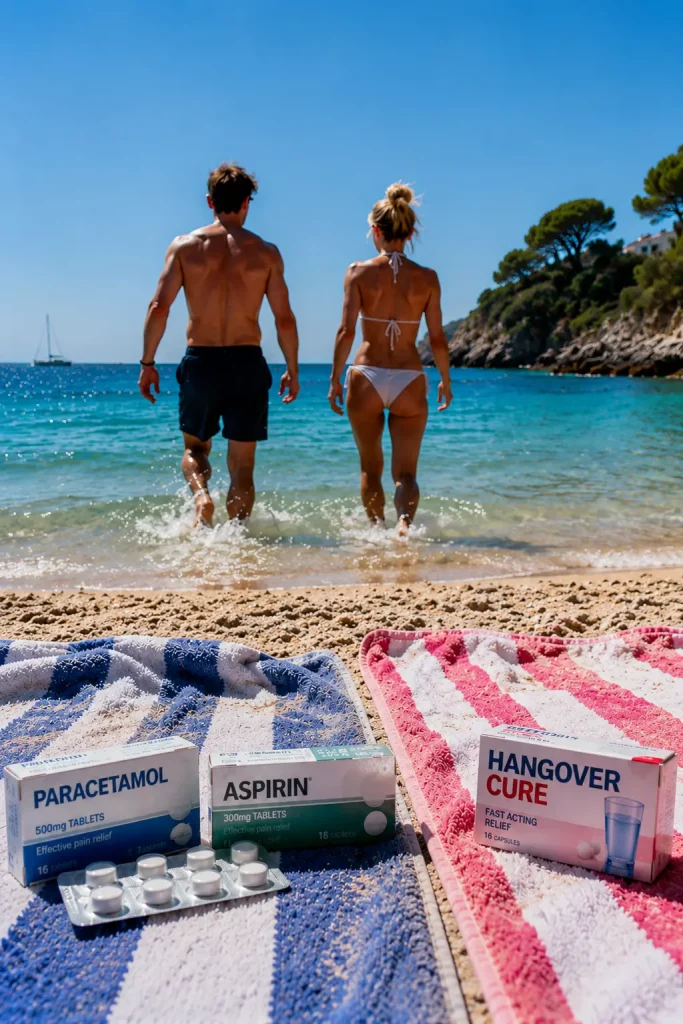
Hangovers are driven by a mix of dehydration, poor sleep, stomach irritation, inflammation, alcohol metabolites and the body recovering from alcohol. The US National Institute on Alcohol Abuse and Alcoholism is blunt: there is no cure for a hangover except time.
The danger is when the temporary relief makes people overconfident. Alcohol and water are a bad combination. Even the morning after, judgement, balance, hydration and reaction time may not be normal. The RNLI and RLSS both warn against entering the water after drinking.
Verdict: False, but emotionally understandable.
What to do instead: Hydrate, rest, eat gently, avoid more alcohol, and do not swim if you are still drunk, dizzy, weak, alone or in unsafe conditions.
The Mediterranean may forgive you while you are floating in it. Your liver has not.
“Mayonnaise Causes Picnic Food Poisoning”
Mayonnaise has been framed for crimes usually committed by time and temperature.

Commercial mayonnaise is acidic and usually not the villain on its own. The real problem is perishable food sitting too long in warm conditions: eggs, potatoes, chicken, seafood, rice, pasta, dairy, cut fruit, and anything handled badly or cross-contaminated.
Important: homemade mayonnaise is different. Commercial mayonnaise is not the same as homemade mayonnaise, aioli or restaurant-made sauces using raw egg. Homemade mayo may contain fresh raw egg and may not have the same controlled acidity, pasteurised ingredients or preservatives as a supermarket jar. In the UK, eggs produced under recognised safety schemes such as British Lion or Laid in Britain are considered very low risk when eaten raw or lightly cooked, but that does not turn a bowl of homemade mayo into a heatproof picnic food. If it contains raw egg, treat it as perishable: keep it chilled, use clean utensils, avoid double-dipping, and do not let it sit around on a hot terrace or beach table.
The CDC and FDA use the familiar food-safety rule: refrigerate perishable food within two hours, or within one hour if temperatures are above 90°F, about 32°C. Shade helps with comfort, but shade is not a fridge.
So the potato salad is not dangerous because it has mayonnaise. It becomes dangerous when it spends the afternoon gently warming beside the rosé.
Verdict: Mostly false.
What to do instead: Keep cold food cold, hot food hot, use clean utensils, avoid cross-contamination and do not let perishables lounge around in the heat.
“Alcohol Cools You Down”
A cold beer may feel refreshing. That does not mean alcohol is helping your body cope with heat.
Alcohol can impair judgement, increase fluid loss, worsen dehydration and make people less sensible around sun, swimming, driving, balconies, boats and long lunches. It also makes it easier to ignore early signs that you are getting too hot.
This is one of those myths where the feeling and the physiology part company. The first sip may feel cooling. The next few hours may not.
Verdict: False.
What to do instead: Alternate alcoholic drinks with water, avoid heavy drinking in direct sun, and keep alcohol away from swimming decisions.
“Fans Always Cool You Down”
Fans feel cooling because they move air across the skin and help sweat evaporate. In normal summer heat, that can be genuinely useful.
But fans do not lower the temperature of the air. In very high heat, especially if the air is hot and humid, a fan may not be enough. It can move hot air around without giving the body proper relief. Public-health guidance usually recommends fans as one tool, not a full heatwave strategy.
The best use of a fan is alongside other measures: shade, closed curtains during the hottest part of the day, cooler night air when safe, light clothing, cool water on the skin, and proper hydration.
Verdict: Context-dependent.
What to do instead: Use fans intelligently. If the room is dangerously hot, seek a cooler space rather than relying on a fan alone.
“Air Conditioning Makes You Ill”
Air conditioning does not create viruses. It does not magically give you a cold.
What it can do is make you feel dried out, chilled or irritated if it is blasting too cold, badly maintained or circulating dust and allergens. Poor maintenance can cause problems. Extreme temperature swings can feel uncomfortable. But that is not the same as AC being a disease machine.
In serious heat, air conditioning can be protective. It helps people avoid heat exhaustion and dangerous overheating, especially older adults, children, pregnant women and people with health conditions.
Verdict: Mostly false.
What to do instead: Use AC sensibly. Keep it comfortable rather than Arctic, clean filters, and do not sit directly under a freezing blast for hours.
“Mosquitoes Bite You Because You Have Sweet Blood”
This one is not quite as simple as the old phrase makes it sound.
Mosquitoes are not attracted to “sweet blood” in the fairy-tale sense. They find people through a mix of signals: carbon dioxide from breath, body heat, sweat, skin odour, skin bacteria, humidity around the body, clothing colour and movement.
There is some research suggesting that mosquitoes may land more often on people with type O blood than some other blood groups, especially in small studies involving particular mosquito species. But the evidence is not strong enough to say that blood type is the main reason someone gets bitten. Some experts argue that smell, heat and skin chemistry matter far more than whether someone is type A, B, AB or O.
There is also no good reason to separate O negative from O positive for this myth. The research usually concerns the ABO blood group, not the Rh factor.
So if mosquitoes love you, your blood type may be one small piece of the puzzle — but it is not the whole story, and it is definitely not because your blood is “sweet”.
Verdict: Partly plausible, but usually overstated.
What to do instead: Use proper repellent, cover exposed skin at dusk, avoid dark clothing when mosquitoes are active, use fans or screens where possible, and remove standing water around terraces, gardens and villas.
Riviera Ready Intelligence
Drink cold when you want to feel cooler.
Hot tea has a narrow scientific defence, but cold drinks are the better practical choice for most real summer situations.
Check UV, not vibes.
Cloudy, breezy and “not that hot” are not sun-protection categories. The UV index is the useful number.
Do not make sunscreen ideological.
Vitamin D matters. So does skin cancer prevention. Sunscreen, shade, clothing and sensible supplementation can coexist.
Respect water after alcohol.
The sea can feel like a miracle when you are hungover, but it is not a cure. If you are still impaired, dizzy or weak, stay out.
Treat shade as comfort, not refrigeration.
Food in the shade can still spoil. Cool boxes exist for a reason.
Keep the old wisdom that still works.
Dry off if you are chilled. Drink water before you are desperate. Avoid the midday blaze. Watch children near water. Some traditional advice survives because it is sensible, not because it is dramatic.
Further Reading
Battle of the Balearics: Ibiza, Mallorca, Menorca or Formentera?
NHS: Heatwave — How to Cope in Hot Weather
UK Government: Beat the Heat — Staying Safe in Hot Weather
BBC Science Focus: Do You Really Need to Wait After Eating Before Swimming?
International Life Saving Federation: Eating Before Swimming Evidence Review
Cancer Research UK: Sun Safety Myths Debunked
Cancer Research UK: Fake Tan, Melanotan and Sunbeds
British Association of Dermatologists: Sunscreen Information
IMDb: Friends — The One with the Jellyfish
NHS: Jellyfish and Other Sea Creature Stings
CDC: Food Safety and Food Poisoning Prevention
National Institute on Alcohol Abuse and Alcoholism: Hangovers