
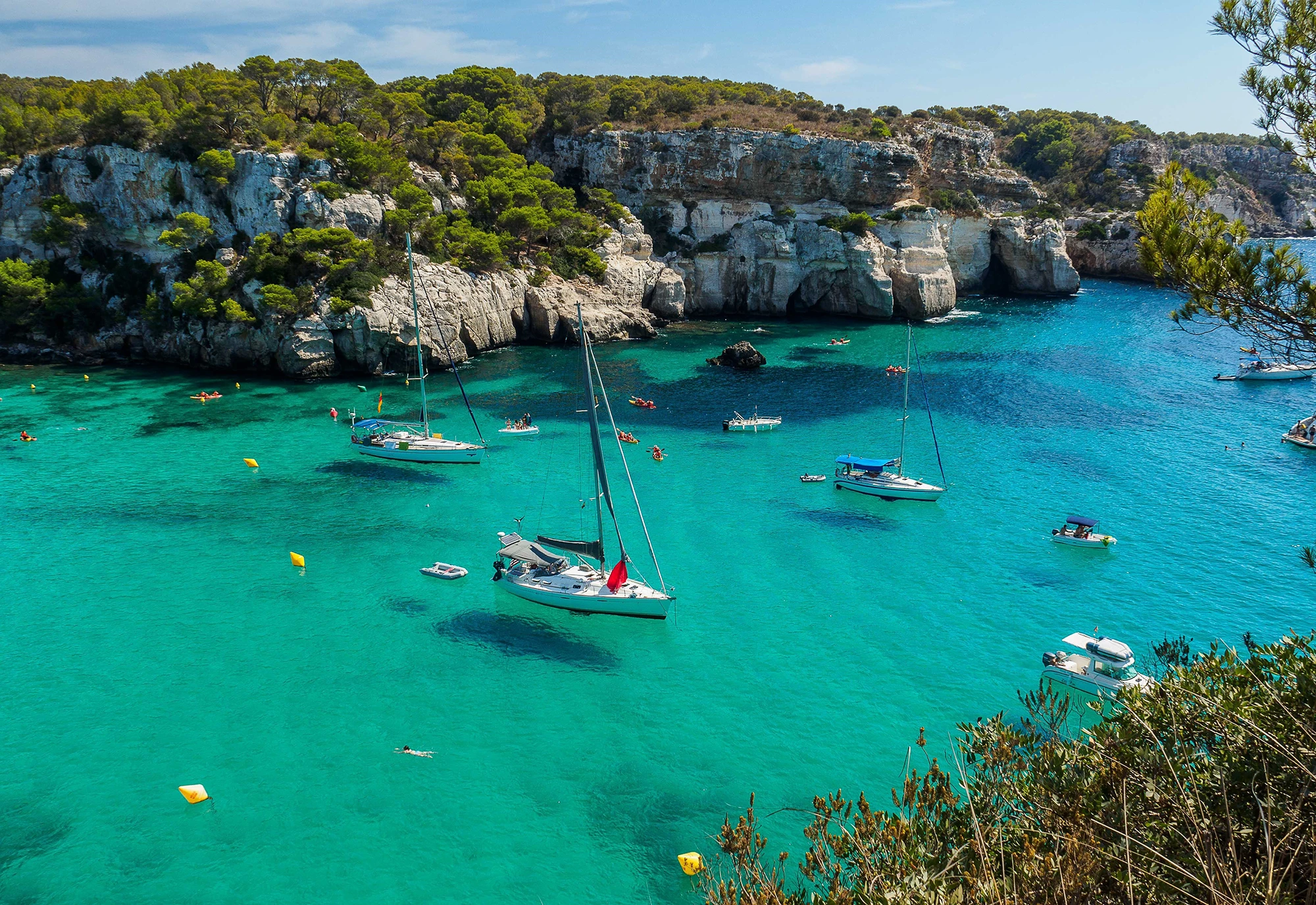
Balearic Islands Guide: Battle of the Balearics — Mallorca, Menorca, Ibiza & Formentera
By Marina Zeelie
TThis Balearic Islands guide is for travellers who want more than a generic fly-and-flop escape. Mallorca, Menorca, Ibiza and Formentera may share the same Mediterranean light, but each island has its own rhythm: the beaches, yes, but also the food, the island character, the quieter corners, the social-media sweet spots and the local intelligence that make the difference between a holiday and a story worth telling.
The Balearic Islands — Mallorca, Menorca, Ibiza and Formentera — offer a sun-kissed Mediterranean escape that feels a world apart from mainland Spain and even from their Atlantic cousins, the Canary Islands. Unlike mainland Spain, which spans diverse climates and cultures, these islands share a laid-back, insular charm and Catalan-tinged heritage. You’ll hear local dialects of Catalan — Mallorquí, Menorquí and Eivissenc among them — alongside Spanish, and life moves at a slower, softer “island time” pace.
Geographically, the Balearics sit in the warm Mediterranean Sea just off Spain’s east coast — a far cry from the Canary Islands, which lie in the Atlantic near Africa. Compared to the Canaries, the Balearics have a more classic Mediterranean feel: think golden and white sand beaches lapped by turquoise water, versus the Canaries’ dramatic black volcanic sands and towering volcanoes. The climate here is distinctly Mediterranean too, with hot summers and mild winters, whereas the Canaries enjoy more of an “eternal spring” year-round. For UK travellers, the Balearics are also much closer — about a 2 to 2.5 hour flight, versus 4+ hours to Tenerife — making them an easy holiday choice.
In short, these islands deliver a slice of Spain with their own unique flavour: a blend of beach bliss, local tradition and fun-loving spirit you won’t find on the mainland or anywhere else. The question is not whether to go. The question is which island gets your heart first.
Mallorca — The All-Rounder Island
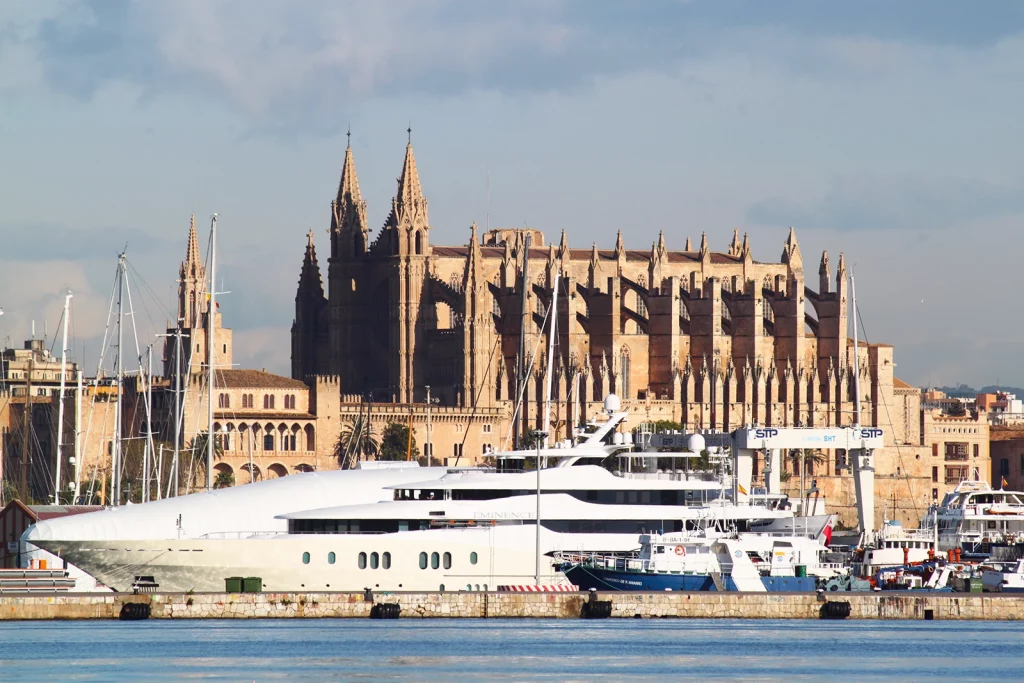
Mallorca is the largest of the Balearics and truly has something for everyone. It boasts a remarkably varied landscape — from the serrated peaks of the Serra de Tramuntana in the north-west to flat fertile plains in the interior, and of course more than 200 beaches ringing its coast. In one day you can explore mountain villages like Valldemossa or Deià, then be back in the capital Palma de Mallorca to enjoy its cosmopolitan nightlife or waterfront tapas bars.
Mallorca combines the cultural depth of a historical capital city with the resort appeal of a beach haven. Palma itself is a gem: don’t miss the Gothic Cathedral, La Seu, towering over the harbour, or the quaint old town with its citrus-tree-filled courtyards and modern art museums. Yet venture beyond Palma and you find rural tranquillity — almond groves, wineries and rustic fincas — as well as upscale marinas and golf courses. Mallorca’s diversity and size make it feel like a miniature Spain in one island, distinguishing it from its smaller sisters and from any mainland province.
Beaches in Mallorca
Beaches in Mallorca are famously idyllic, and the island virtually invented the classic Mediterranean beach holiday. You’ll find long family-friendly sands with shallow waters — for example, Platja de Alcúdia and Playa de Muro in the north-east, the latter proudly flying a Blue Flag for its cleanliness. There are also dozens of secluded cala coves tucked beneath pine-clad cliffs.
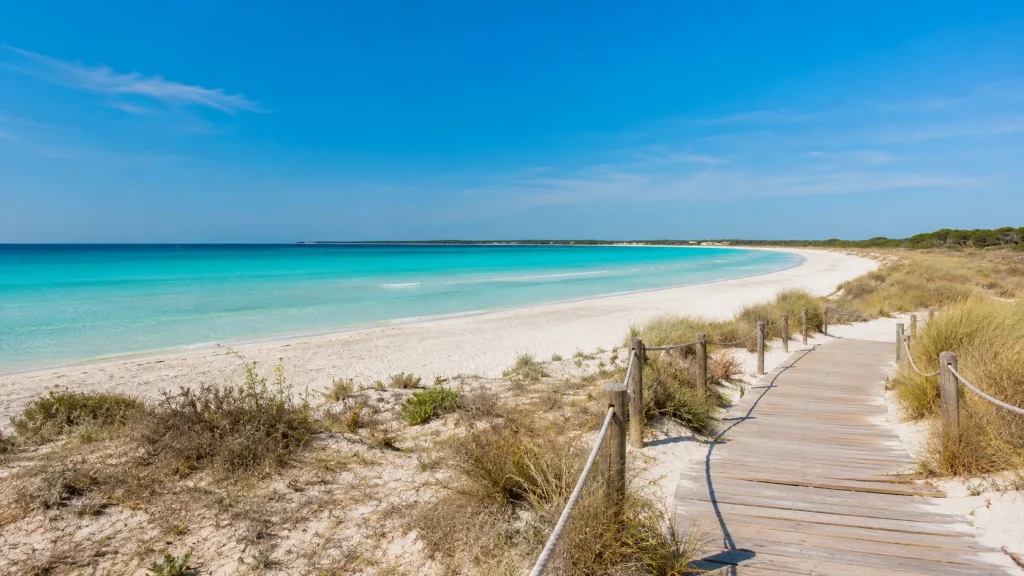
Es Trenc on the south coast is often touted as Mallorca’s most beautiful beach: a kilometre of undeveloped white sand backed by dunes and salt flats. It feels wonderfully wild, especially at sunrise or sunset. In the south-east, Cala Mondragó in a nature park offers a mix of natural beauty and convenience — turquoise water, golden sand and even a little beach bar in case you fancy a cold drink. If you’re up for an adventure, seek out more hidden gems like Caló des Moro, a tiny cove with unreal electric-blue water, or Cala Tuent, a pebble bay beneath the Tramuntana mountains.
Mallorca doesn’t really do the 24/7 party beaches of Ibiza. Daytime here is more about relaxation and family fun, maybe with a bit of watersports or a chilled beach club vibe. There are even a few strands popular with naturists, though overall Mallorca’s beach scene is a touch tamer and more spread out than Ibiza’s. The key is to visit early or late in the day during peak summer, as Mallorca’s fame means July and August beaches can get very crowded. In shoulder seasons — May, June and September — you’ll have much more space to spread your towel.
One practical update: beach prices vary by municipality and concession. In Palma, recent 2026 tariffs have put a standard sunbed at around €10 and a parasol at around €10, with premium beach furniture costing more. Elsewhere, prices may differ, and beach clubs are a separate universe entirely. My rule is simple: check the board before you settle in, and don’t assume the polished white daybed is the same price as a municipal lounger.
Things to Do in Mallorca
Beyond the beaches, Mallorca offers plenty to do. History buffs will enjoy wandering the medieval streets of Palma’s Old Town, touring the royal Almudaina Palace or the Castell de Bellver, and visiting monasteries like Lluc in the mountains. For active travellers, the options are superb: drive or cycle the hairpin roads of the Tramuntana — the views are worth the white knuckles — or tackle hikes such as the path to Castell d’Alaró or down the dramatic Torrent de Pareis gorge.
In spring, the island is a mecca for cyclists and hikers, with mild weather and blooming wildflowers. The Serra de Tramuntana is a UNESCO World Heritage site for its cultural landscape — terraces, dry-stone walls and mountain villages — and it provides a stunning backdrop for outdoor pursuits. Water sports are popular too; you can go sailing around Palma Bay, paddle-board in calm coves or scuba dive in marine reserves.
After working up an appetite, indulge in Mallorca’s culinary treats. The island’s cuisine is hearty Mediterranean with unique twists. Don’t leave without trying an ensaïmada — Mallorca’s signature pastry — a fluffy, spiral sweet bread dusted with powdered sugar. It’s bliss with a café con leche in the morning. For a savoury bite, spread some sobrassada, a soft cured paprika-rich sausage, on crusty bread — this rich pork spread is a local speciality and protected delicacy.
Mallorcans also pride themselves on dishes like tumbet, a baked vegetable medley similar to ratatouille, and pa amb oli, country bread rubbed with tomato and olive oil, often topped with cheese or ham. Simple, yes, but divine. If you have a sweet tooth, try the gató d’ametlla, an almond cake typically served with almond ice cream — a truly Mallorcan dessert. And of course, sample local Mallorcan wine from Binissalem or Pla i Llevant, or a chilled glass of hierbas Mallorquinas after dinner.
Mallorca being the largest island also means the widest range of dining and nightlife: you’ll find everything from humble seaside chiringuitos, grilling fresh fish, to Michelin-starred restaurants in Palma. Nightlife is vibrant in pockets — Magaluf and parts of Palma offer clubs and bars — but overall, Mallorca’s evening scene is more low-key and family-friendly than Ibiza’s famed party circuit. This balance of culture, nature, relaxation and fun makes Mallorca a fantastic all-round destination.
Best Time to Visit Mallorca
Mallorca has a typical Mediterranean climate — blazing hot in July and August, when the beaches and resorts are at capacity; pleasantly warm in late spring and early autumn; and mild but wetter in winter. For beachgoers, June and September are ideal, with warm sea and fewer crowds. April, May and October can be lovely for outdoor activities like hiking or cycling, with comfortable temperatures and green landscapes, though do expect some rain showers by late autumn.
Winter, from November to February, is low season. Many tourist resorts partially shut, but Palma remains lively year-round and you can enjoy sightseeing without the masses. Some brave souls even swim on sunny winter days, though the sea is brisk. From the UK, package holidays and flights ramp up from Easter through October, with dozens of direct flights to Palma. In winter, direct flights are fewer but still available from major cities.
Where to Stay and Eat in Mallorca
Budget: For budget-conscious travellers, look for family-run guesthouses or hostels in Palma and smaller inland towns. You can find simple pensions and apartments a short walk from the beach in resorts like Palmanova or Alcúdia — great value outside peak summer. For cheap eats, hit the mercat, or local market, in towns for affordable tapas, empanadas and fresh fruit, or grab a bocadillo from a bakery. Many beach areas have casual chiringuitos where you can enjoy a sandwich, salad or paella on a budget.
Mid-range: Mallorca has lots of mid-range hotels and aparthotels in beach resorts and Palma, often with pools and half-board deals. Consider staying in an agroturismo, a rural farmhouse B&B, in the countryside for a charming, mid-priced retreat. Dining-wise, traditional Mallorcan restaurants offer menus del día, fixed-price lunches that are very good value — you might feast on fresh fish or tumbet for a reasonable price. Tapas bars in Palma’s Santa Catalina or La Lonja districts are also great for a mid-budget night out.
Luxury: The island does luxury very well. There are five-star seafront resorts with spas, especially in areas like Port de Sóller or near Andratx, and chic boutique hotels in Palma’s old town and upscale enclaves like Deià. Expect infinity pools overlooking the Med and plush suites in converted manor houses. For high-end dining, Mallorca boasts a handful of Michelin-starred restaurants, as well as gourmet beach clubs. You can savour inventive Mediterranean cuisine — local prawns, citrus-infused desserts, garden vegetables and fine island wines — with top-notch service and romantic ambience. Mallorca’s diversity ensures options for every budget, both in accommodation and food.
Menorca — Tranquil Nature and Tradition
In contrast to bustling Mallorca, Menorca offers a quieter, more untouched feel. It’s often called the “sleepy” or “unspoiled” Balearic island, and I mean that as a compliment. Menorca is smaller and far less developed, with strict building regulations that have preserved its pristine character. In fact, the entire island was declared a UNESCO Biosphere Reserve in 1993 for its exceptional biodiversity and conservation of traditional lifestyles.
This status reflects Menorca’s commitment to sustainable tourism — you won’t find high-rise hotels dominating the coast here. Instead, green rolling hills, wildflower meadows and dry-stone walls define the landscape, along with hidden coves and wetlands teeming with birdlife. Menorca’s pace of life is deliciously slow and relaxing. Locals still take an afternoon siesta, and outside the modest resort towns, much of the island feels like stepping back in time.
What makes Menorca different from its sisters? For one, its peaceful ambience. If Ibiza is a party and Mallorca is a crowd-pleaser, Menorca is the quiet escape. It’s a place for nature walks, sailing, family downtime and discovering authentic Balearic culture unmarred by mass tourism. Architecturally, Menorca bears intriguing traces of its history under British rule in the 18th century: you’ll spot Georgian-style buildings in the capital Maó, or Mahón, and an enduring tradition of gin-making introduced by the Brits. Overall, Menorca charms visitors with its small-town feel, remarkably clear waters and strong local identity.
Beaches and Coves in Menorca
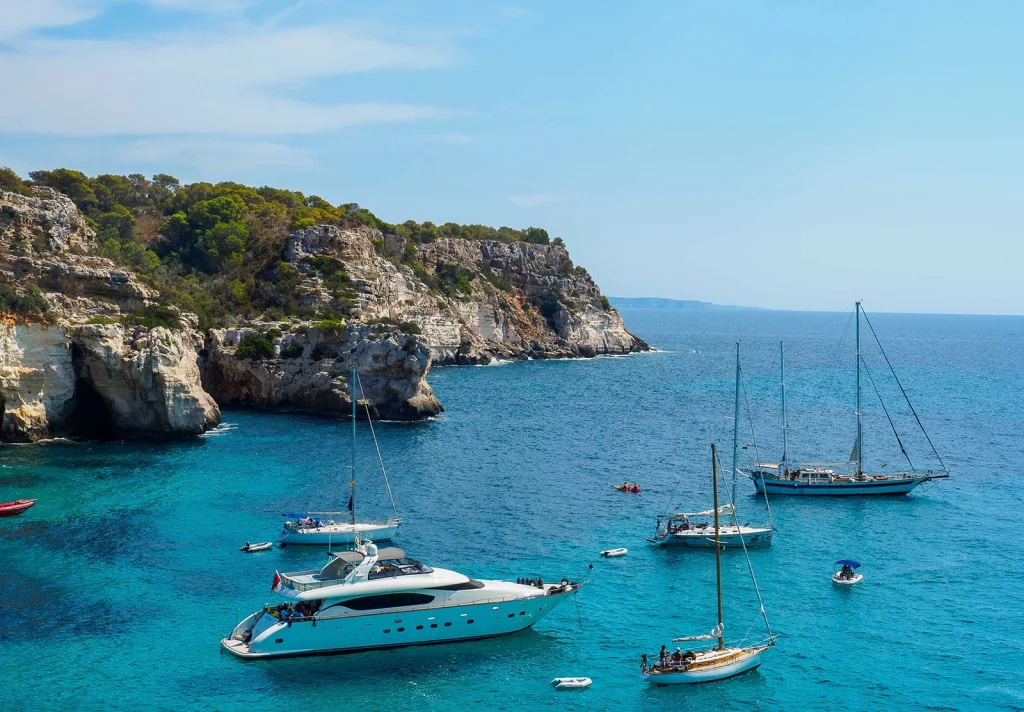
Menorca is blessed with scores of incredible beaches, from broad sandy bays to tiny turquoise coves that look straight off a postcard. Many visitors come specifically for the beaches, which are often cited as the best in the Balearics. The southern coast has famously picturesque calas with fine white sand and glowing aquamarine water, framed by limestone cliffs and pine trees.
Highlights include Cala Macarella and Cala Macarelleta, a duo of coves so stunning they grace many travel brochures — soft sand, unreal blue sea and pine-scented hills behind. In peak summer you’ll need to take a shuttle bus or walk a fair bit to reach them, as parking is limited to protect the area, but it’s worth every effort. Nearby, Cala Mitjana and Cala Turqueta are similarly dreamy coves with shallow crystalline waters ideal for snorkelling. On the south coast you’ll also find Son Bou, the island’s longest beach, and Binibèquer with its pretty whitewashed fishing village next door.
Meanwhile, the north coast of Menorca offers a dramatic contrast — wilder, with red-tinted sands and rugged landscapes owing to different geology. Cala Pregonda, for example, has reddish-gold sand and pink rocks, giving it a Martian beauty, and it’s a bit of a hike so you may find relative solitude even in summer. Platja de Cavalleria is another northern gem — a large bay with rusty-coloured sand and clear water, where some people enjoy applying the natural clay as a skin mask.
Whether north or south, Menorca’s sea is famously transparent and the snorkelling is top-notch. You might spot fish, sea stars, even the odd octopus among the Posidonia seagrass meadows. Importantly, Menorca’s beaches are notably less crowded than those of Mallorca or Ibiza in high season — partly due to fewer tourists, and partly because there are simply so many coves to choose from. Some have no facilities at all, so pack water and snacks, adding to the wild charm.
One useful tip: follow the locals’ lead and consult the wind direction each day. Because the island is small, a north wind can make northern bays choppy while the south coast stays calm, and vice versa. You can almost always find a sheltered beach if you’re willing to drive to the other side. Two beaches have developed resort towns — Cala Galdana on the south, a scenic horseshoe bay backed by hotels, with water sports and family facilities, and Arenal d’en Castell on the north — but even these feel low-key compared to Mallorca’s mega-resorts. In short, if your paradise is a quiet cove with clear water, Menorca is your island.
Things to Do in Menorca
While Menorca is best known for relaxation and nature, there are cultural and active pursuits aplenty. Exploring the port towns is a must. Maó, or Mahón, the capital on the eastern end, has one of the world’s largest natural harbours — a stunning six-kilometre inlet dotted with fortresses and islets. The British influence is evident in Mahón’s Georgian townhouses and even in the local cuisine; this is famously linked to the story of mayonnaise, named after Mahón.
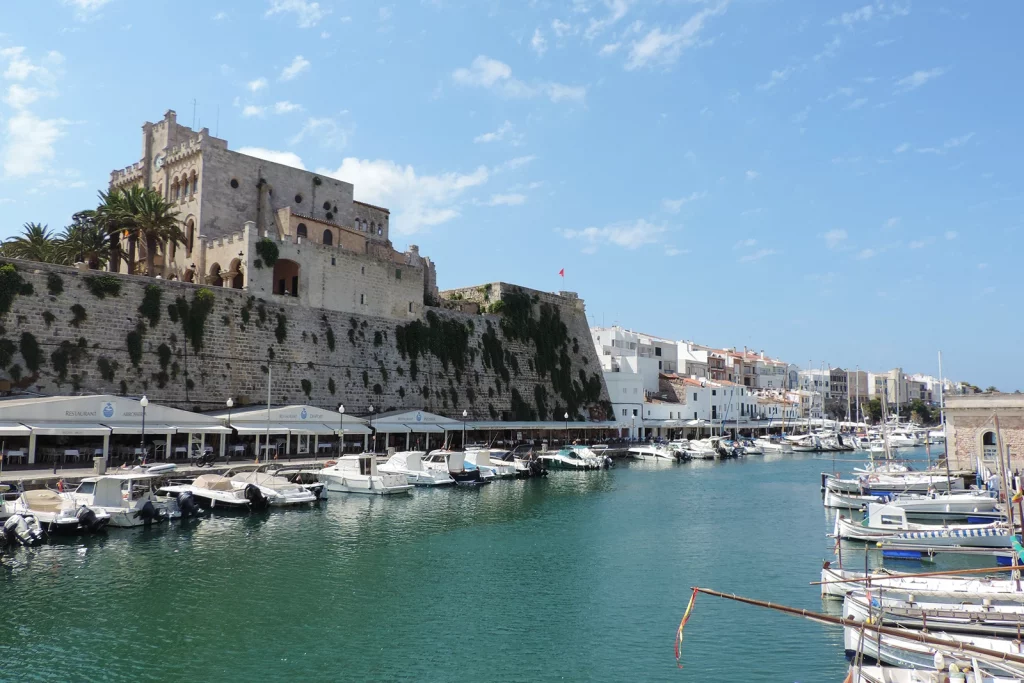
Stroll the waterfront, visit the Museum of Menorca in an old convent, and tour the Gin Xoriguer distillery by the harbour, where they’ve made gin since the 1700s — complete with tastings of gin and local liqueurs. On the opposite end of the island, Ciutadella, the former capital, is utterly charming: a historic old town of sandstone mansions, Baroque churches and a tiny picturesque harbour. Ciutadella’s vibe is elegant yet unhurried; enjoy a coffee in a plaça or explore the weekly market. It’s especially atmospheric in the evenings, when locals gather in outdoor cafés and the medieval streets are lit up.
Aside from towns, Menorca’s countryside holds surprises like ancient Talayotic sites. The island is dotted with Bronze Age megaliths, stone taulas and navetas, including the famous Naveta d’es Tudons. Visiting these archaeological sites gives insight into a pre-Roman culture unique to Menorca.
For nature lovers, Menorca is criss-crossed by the Camí de Cavalls, a 185 km historic bridle path encircling the island. This trail has been restored for hiking, cycling or horseback riding, letting you explore remote coastlines and rural interiors at your own pace. You can do just a section — popular slices are from Cala Galdana to Macarella, or around Favàritx lighthouse in the north — or, if feeling ambitious, the whole loop.
The island’s small size also makes boating a great activity. Consider a day sailing trip or renting a kayak to access hidden coves and sea caves. Off the water, other activities include birdwatching in the wetlands, visiting vineyards and attending local festes if you time it right. The summer Fiestas de Sant Joan in Ciutadella are legendary, featuring Menorca’s iconic black horses galloping through cheering crowds — an exhilarating display of tradition.
Generally, Menorca’s nightlife is quiet. Evenings are about lingering over dinner or enjoying a drink under the stars. There are a handful of nightclubs and late bars, mainly in Mahón and Ciutadella, but nothing on the scale of Ibiza. This is truly an island to unwind with nature and culture rather than to party.
Local Flavours in Menorca
Menorca has a proud gastronomic identity. A top product is Mahón cheese, a tangy cow’s milk cheese with an orange rind rubbed in paprika and oil — delicious in a simple sandwich or as part of tapas, and protected with a D.O. status.
Seafood is of course a staple, and Menorca is famous for caldereta de llagosta, a lobster stew traditionally associated with the port of Fornells. However, I’m not going to recommend lobster as a “must-eat” indulgence here. The dish is part of Menorca’s culinary history, but if the idea of boiling lobsters alive makes you uncomfortable, skip it without a second thought. Menorca has more than enough flavour without turning dinner into a moral dilemma.
Look instead for simpler local fare: raola de moll, fried red mullet cakes; vegetable dishes; local cheeses; seasonal salads; fresh bread; pastries; and hearty stews. Menorca’s bakery culture is especially rich. The island’s signature pastry is the coca bamba — essentially the Menorcan ensaïmada — a fluffy, yeast-based cake traditionally eaten at festivals, often dunked in hot chocolate. Unlike the Mallorca version, Menorca’s ensaïmada is usually plain, with no filling, and has a higher, bouncier texture. It is absolutely delightful fresh from a local bakery.
Menorcans also adore pastissets, little star-shaped cookies dusted with icing sugar, and carquinyols, crunchy almond biscuits — perfect with coffee or tea. And we must mention the gin: Gin Xoriguer, distilled in Mahón, is a smooth gin often enjoyed with cloudy lemonade to make a pomada, Menorca’s favourite cocktail, especially during summer fiestas. Lastly, save room for formatjades, savoury mini pies traditionally made at Easter, and a glass of herbes de Menorca or frigola after dinner. Dining on Menorca is generally casual and traditional — harbourside taverns, family-run restaurants in town squares, local ingredients and hearty portions.
Best Time to Visit Menorca
Menorca’s high season mirrors the other islands. July and August bring hot weather and the most visitors, though Menorca never feels too crowded except perhaps in Ciutadella during fiesta time. June and September are fantastic for beach days with slightly cooler weather and a calmer atmosphere. May and October can be ideal for hiking, biking and exploring the island’s natural side, with warm days and cooler nights.
The winter off-season, from November to March, is very quiet. Many hotels and restaurants close, and flights from the UK are limited, often connecting via Barcelona. But if you don’t mind the peacefulness and some rain, you’ll have the beaches and trails largely to yourself and can witness island life without tourists. Menorca can be windy — it’s nicknamed “the windy island” — which keeps it a touch cooler than Mallorca in peak summer and is also why it’s so lush and green. Whenever you go, pack comfortable shoes; even a beach day here might involve a little walk through nature to reach that perfect cove.
Where to Stay and Eat in Menorca
Budget: Accommodation in Menorca tends towards smaller apartments and family-run hotels, which can be quite affordable outside peak season. Budget travellers can consider simple guesthouses in Mahón or Ciutadella, or camping options for an even closer-to-nature experience. To save on meals, hit local bakeries and markets — Mahón cheese, bread and fruit make a perfect beach picnic. Many Menorcan towns have inexpensive cafés where you can get a menú del día for under €15.
Mid-range: Menorca has lovely mid-range resorts and boutique inns, especially in beach areas like Cala Galdana, Son Bou or Es Castell. These often include breakfast and have pools without breaking the bank. There are also agroturismos in the countryside offering half-board and a taste of traditional island life. For dining, mid-range budgets stretch to most restaurants on Menorca, since upscale fine dining is rare. A local tip: try vermouth and tapas at a local bar in late afternoon — Menorcans love their pre-dinner vermouth with olives or cheese, and it’s an inexpensive pleasure.
Luxury: While Menorca is not about bling, it does have high-end options for those seeking them. Exclusive boutique hotels in historic fincas offer secluded luxury with gardens and gourmet food. A few five-star resorts exist, often blending into the landscape, with infinity pools over remote coves and spa services focusing on wellness. Fine dining on Menorca might mean a chic restaurant in Ciutadella’s old town serving modern takes on Menorcan cuisine, or an upscale wine tasting at one of the island’s wineries. Overall, Menorca’s luxury is understated — privacy, nature and quality are the selling points — and the island remains refreshingly unflashy even at the top end.
Ibiza — The Party and Bohemian Soul of the Med
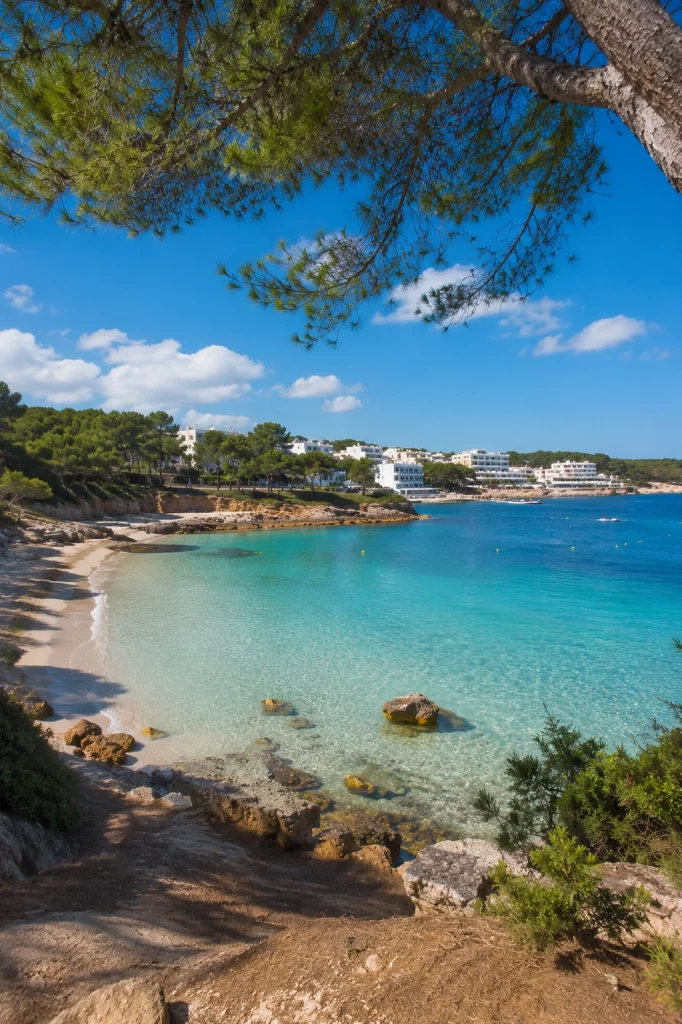
Ah, Ibiza. The name alone conjures images of world-famous DJs, superclubs and sunset beach parties. Indeed, Ibiza gained international fame as the nightlife capital of Europe, and if dancing till dawn is your thing, this island will not disappoint. But there’s so much more to Ibiza than parties — it has a dual personality that few first-timers expect.
On one hand, you have the glitzy clubbing scene centred around Playa d’en Bossa, San Antonio and Ibiza Town’s marina, where VIP clubs, chic beach clubs and cocktail bars draw celebrities and fun-seekers all summer. On the other hand, Ibiza has a tranquil, spiritual side rooted in its history as a hippie haven in the 1960s. Tucked away from the tourist strips are quiet whitewashed villages, yoga retreats, bohemian markets and rustic farmsteads.
It’s this fusion of hedonism and hippie chill-out that makes Ibiza truly unique among the Balearics, or anywhere. Ibiza is often called La Isla Blanca, the White Island, for its white architecture and perhaps also the white light of its sun. It’s smaller than Mallorca but more populated than Menorca, and it has its own Catalan dialect, Eivissenc, and proud identity.
What sets Ibiza apart too is its international vibe. Over decades it has attracted artists, musicians and free spirits, giving it a cosmopolitan openness. As a traveller, you can easily tailor your Ibiza experience: it can be about glamorous beach clubs and all-night dancing, or about finding a hidden cove to doze by the waves and meditate at sunset — or a bit of both. No wonder Ibiza draws a diverse crowd from young clubbers to wellness enthusiasts to families. Yes, families enjoy Ibiza’s quieter parts. It’s an island of contrast and energy.
A serene afternoon view of Es Vedrà, the mystical limestone islet off Ibiza’s west coast, is one of the island’s defining images. This craggy rock rises dramatically from the sea and is steeped in myth and legend — some claim it emits a special energy or even attracts UFOs. Whether or not you buy the legends, it’s one of Ibiza’s iconic sights, especially spectacular during sunset.
Beaches in Ibiza
Ibiza’s coastline is as dynamic as its nightlife. There are around 80 beaches, locally called platges or calas, ranging from broad sandy bays to secret rocky coves. In the popular imagination, Ibiza’s beaches are associated with daytime parties — and yes, at spots like Playa d’en Bossa or Salines Beach, the music from beach clubs and bars might be thumping by afternoon.
Las Salinas, or Ses Salines, in the south is a long, beautiful beach in a natural park, famous for its scene: DJs at trendy beach bars, a mix of bronzed bodies, some topless or nude at the far ends, celebrity sightings and a generally hedonistic vibe. Yet even Las Salinas has crystal-clear water and a backdrop of pine forests and salt flats, reminding you of Ibiza’s natural beauty.
Over on the west coast near San Antonio, Cala Comte, or Cala Conta, is often named one of Ibiza’s most beautiful beaches, with transparent turquoise water and views of islets, plus legendary sunsets. It does get busy, and even has a tiny nudist cove tucked on one side, Cala Escondida, but the spectacle of the sun melting into the sea here is unforgettable.
The north and north-east coasts hide many tranquil calas far removed from the party crowd. Benirrás is a gorgeous north-westerly bay where hippies famously gather on Sundays for drumming at sunset. Lately it’s become more of a tourist show, but the setting is lovely. Cala Xarraca and Cala d’en Serra in the north offer clear waters for snorkelling and a peaceful setting. Families tend to prefer calmer resort beaches like Cala Llonga, a wide bay with shallow water, playgrounds and cafés, or Portinatx in the north, which has sheltered sandy coves ideal for kids.
For those seeking natural beauty, Aigües Blanques on the east coast is a scenic unspoilt beach beneath clay cliffs. It’s officially nudist-friendly and even has natural clay mud that people slather on for a DIY spa treatment. In fact, Ibiza has several nudist beaches or sections, like Es Cavallet, part of Salines, which is also Ibiza’s LGBTQ-friendly beach, reflecting the island’s tolerant and free-spirited ethos.
What’s great about Ibiza is that you can find a beach to suit your mood: party beaches, quiet beaches, hippie beaches, family beaches. They tend to be smaller than Mallorca’s, and in summer you’ll want to arrive early to claim a good spot or a sunbed. Also, Ibiza’s west coast is renowned for its sunsets — spots like Kumharas at Cala de Bou, Café del Mar in San Antonio, or simply sitting on the rocks at Punta Galera are popular ways to toast the day’s end. With a drink in hand and the sky turning pink-orange over the Med, it’s pure Ibiza magic.
North Ibiza: Cala d’en Serra and Portinatx
The north of Ibiza deserves more attention than it often gets, and this is where I would gently nudge anyone who thinks Ibiza is only basslines, bottle service and bleary-eyed breakfasts. The Portinatx side of the island feels different: greener, quieter, more family-friendly and more restorative. The roads curl through pine-scented hills; the sea feels clearer somehow; and the atmosphere is still recognisably Ibiza, but softer around the edges.
Cala d’en Serra is one of the loveliest examples. Set between Port de Portinatx and Punta d’en Gat, at the foot of Puig de Sa Caperulla, it is bordered by cliffs crowned with pines and shrubs. From the sea, rocky promontories wrap around a small cove with a seabed of rocks, sand and Posidonia — the kind of place where you instinctively reach for diving goggles. It has a family character in summer, with hammocks, sun loungers and a small beach bar for cold drinks, but it still feels intimate compared with Ibiza’s more obvious headline beaches. Parking is close to the beach, which makes it practical, but the cove’s small scale keeps it from feeling overdeveloped.
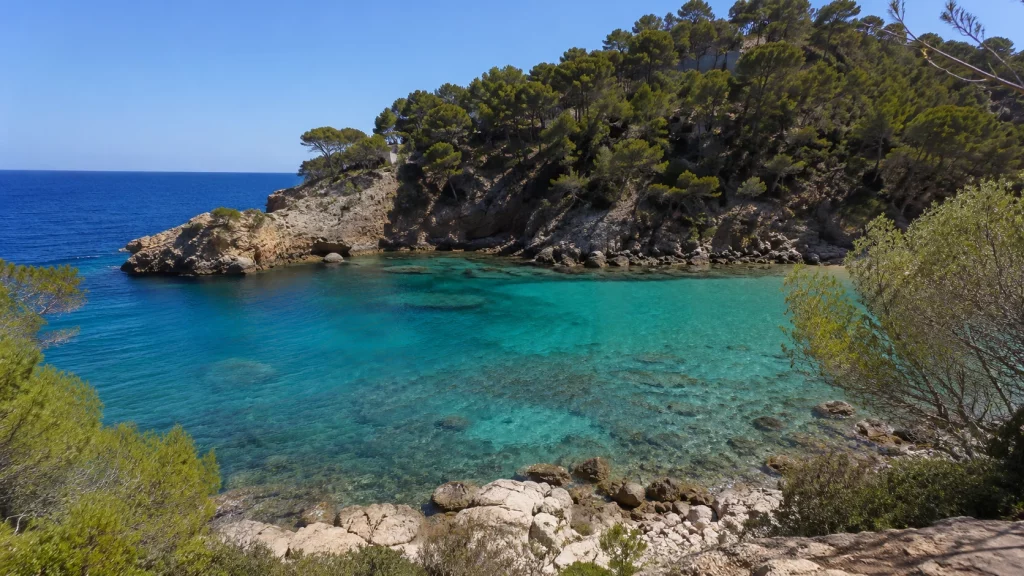
For social-media purposes, Cala d’en Serra is best treated gently. The shot is not the clichéd arms-in-the-air influencer leap. The shot is the cove from above before you walk down, the rock-and-water texture, the towel-on-stone detail, the quiet swim, the book beside a straw hat. North Ibiza rewards restraint.
Portinatx, just along the coast, is one of the small tourist centres in the north of Ibiza and makes a wonderful base if you want the island without committing to the full clubbing orbit. It has an imposing, craggy coastal setting, pine-crowned cliffs, sheltered coves and a natural port. The Portinatx beaches are ideal for family tourism, snorkelling and watersports, with services such as showers, sun loungers and pedal boats in season. The three sandy beaches — S’Arenal Gros, S’Arenal Petit and Playa Porto — make it easy to spend a full day moving between swims, lunch, snorkelling and a sunset wander.
This is the Ibiza I find myself thinking about afterwards. Yes, the glamour is thrilling, and yes, there is a certain electricity in hearing a world-class DJ as the night opens up around you. But the north has a quieter seduction. It is where Ibiza exhales.
Activities and Culture in Ibiza
It might surprise some, but Ibiza has a rich history and plenty beyond beaches. The old town of Ibiza City, called Eivissa or Dalt Vila, is a UNESCO World Heritage Site — an impressive fortified town on a hill, encircled by Renaissance city walls. Strolling up the cobbled lanes of Dalt Vila, past white houses and up to the cathedral and castle, is like travelling centuries back, except now galleries and boutiques occupy some of those ancient buildings. The views from the ramparts over the harbour are fantastic.
Ibiza Town also has charming plazas, fashionable shops and a vibrant harbourfront at night. It’s great for people-watching, as club promoters, street performers and stylish travellers converge. On the cultural side, Ibiza’s hippie heritage is a big draw. In the 1960s and 70s, hippies from around the world made Ibiza a counterculture hub, and echoes of that remain in today’s hippie markets and communities.
The most famous market is Las Dalias in Sant Carles every Saturday, and the Punta Arabí market in Es Canar on Wednesdays. Visiting these is a feast for the senses — stalls brimming with handcrafted jewellery, tie-dye clothes, local artwork and exotic imports, plus live music, tarot readers and food stands. It’s touristy but still fun and captures Ibiza’s boho spirit.
There are also yoga and wellness retreats tucked around the island, as Ibiza has reinvented itself as a wellness destination too. You can join a yoga class with a sea view, attend a meditation session, or even experience a sound-healing or cacao ceremony if that’s your thing. For nature lovers, Ibiza has scenic hikes such as climbing Sa Talaia, the highest point on the island, for panoramic views, or walking to Torre des Savinar, the Pirate Tower, to gaze at Es Vedrà. The setting is spectacular, especially at sunset.
One can also take boat trips — a catamaran cruise around Ibiza’s coastline, a ferry to Formentera, or even a snorkelling excursion to explore underwater Posidonia meadows and maybe see octopuses and barracuda. Watersports like paddle-boarding, jet-skiing and parasailing are widely available at the main resorts.
If you rent a car, don’t miss driving into the Ibiza countryside. You’ll find vineyards, almond groves and delightful villages like Santa Gertrudis or Sant Josep where time moves slower. These villages have lovely local restaurants and craft shops — a nice antidote to Ibiza’s busier spots.
And of course, we can’t talk Ibiza without nightlife. The island’s clubs are truly legendary. From superclubs that hold thousands of revellers to tiny sunset bars, Ibiza’s night entertainment is unrivalled. Major clubs have opening parties in May and close in late September or early October, featuring globally renowned DJs and elaborate productions. Tickets and drinks are expensive, but people flock from everywhere for the experience. If big clubs aren’t your scene, Ibiza Town offers smaller late-night bars, and San Antonio has the famous sunset strip bars. Even a quiet evening out can turn into dancing under the stars at some beach bar — the island’s infectious energy finds you sooner or later.
Despite its party reputation, Ibiza can be family-friendly and mellow if you stick to the right areas, generally the north and some east coast spots. It’s this ability to cater to multiple types of holidays that keeps Ibiza so popular.
Hippie Communes and Legends
While there isn’t a formal commune today, Ibiza’s west is home to some legendary hippie spots. One such place is Atlantis, or Sa Pedrera, near Cala d’Hort. It is not an actual Atlantis, but the nickname for an old sandstone quarry by the sea. In the 1960s, Ibiza’s hippie community “rediscovered” this surreal cove with geometric rock formations and adopted it as a sacred hideaway. They carved mystical symbols into the rocks and treated it as a sort of secret retreat, accessible only by a challenging cliffside hike.
Atlantis isn’t signposted on maps, keeping with its secret aura, but intrepid travellers still seek it out to see the carvings, natural pools and to feel the supposed spiritual energy of the place. It’s about as hippie-trippy as Ibiza gets.
Another enduring hippie tradition is the drum circle at Benirrás Beach every Sunday at sunset. What started as an impromptu gathering of drummers celebrating the sunset has become a famous event. Nowadays you’ll find plenty of tourists, but also genuine hippie drummers keeping the rhythm alive as the sun sinks — it’s a wonderful vibe to experience, just expect crowds in summer.
Essentially, Ibiza’s bohemian spirit is alive and well. You encounter it in flea markets, organic farm cafés, art installations and the general sense of freedom the island nurtures. In writing this as Marina, I must admit I gravitate to that other side of Ibiza. I’ve done the big club nights in my younger days — dancing till sunrise at Pacha and feeling the bass thump in my chest — but on my latest visit I was more intrigued by the quiet, spiritual Ibiza I’d heard whispers of.
And I found it: in the pine-scented trails leading to secret coves, in a clifftop meditation session with locals, and in chatting with an ageing hippie selling handmade necklaces at Las Dalias about “the good old days”. Ibiza truly can feed your soul in various ways.
Now, I have to share a personal milestone from Ibiza that also ties into its free-spirited culture: my first time on a nudist beach. Despite all my travels, I’d always been a bit nervous about shedding it all in public. But Ibiza’s anything-goes attitude gave me a confidence boost — perhaps it was those bohemian vibes, or just the July heat. I ventured to Es Cavallet, a beautiful stretch within Las Salinas known for its naturist-friendly section.
At first, I was incredibly anxious — heart pounding, towel clutched around me tightly as I scouted a spot among the already unclothed sunbathers. It’s funny how quickly those nerves dissolved. As I disrobed and lay down, I realised no one was staring or judging; everyone was simply enjoying the sun and sea without a care. The feeling of the warm breeze and saltwater on bare skin was oddly liberating. After the initial “eek, I’m naked outside!” moment, it felt natural and even exhilarating.
I took a dip in the ocean and it was one of the most sensory swimming experiences I’ve had — the water against skin unimpeded by swimwear, the sunshine everywhere, truly feeling part of nature. I won’t lie, part of me was giggling internally at the situation, and I did keep a healthy layer of sunscreen on, of course. But lying there on the sand, I felt a mix of freedom and body-positivity I hadn’t expected. It helped me understand why in places like Ibiza and Formentera, nudism isn’t a big deal. It’s just personal choice, and the culture is very accepting of it.
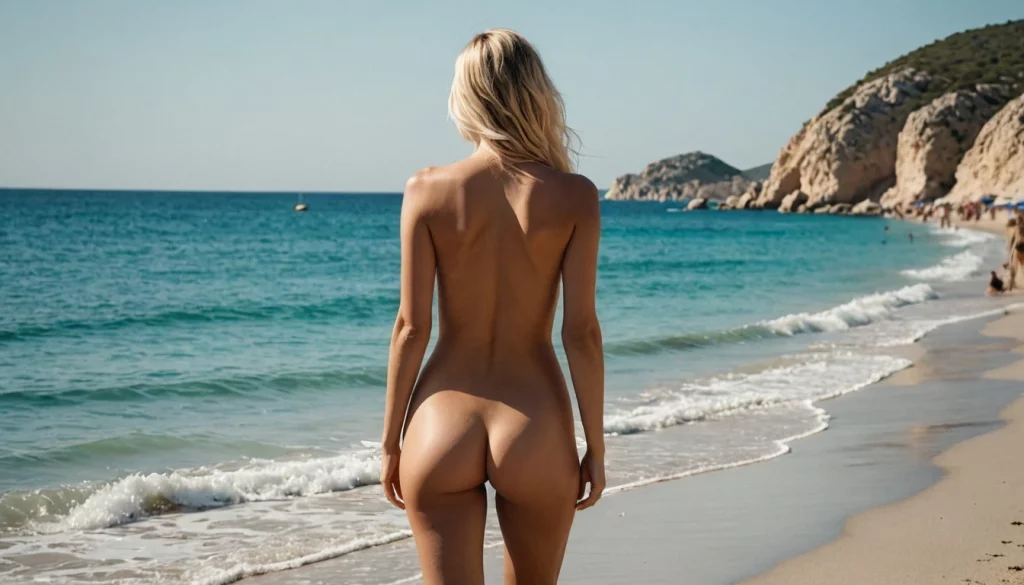
By the time I wrapped my sarong around me to head out, I was grinning ear to ear, proud that I’d let go of my insecurities for an afternoon. It may sound silly, but trying a nudist beach was a little personal victory — and where better than Ibiza, where being “free” is practically the island’s motto? Now I’m not saying you must sunbathe nude on your trip, but if you’re ever curious, the Balearics, especially Formentera, are some of the most relaxed places to do so.
Local Food and Drink in Ibiza
After all that beach and dancing, one needs nourishment, and Ibiza has its own culinary delights. The island’s cuisine is similar to mainland Spanish and Mallorcan food but with a few specialities. A notable dish is bullit de peix, a hearty fish stew with potatoes and alioli that’s very typical in Ibiza. Traditionally, they serve the fish first, then use the broth to cook a savoury rice, arroz a banda, as a second course — so it’s like two meals in one. It’s a must-try for seafood lovers.
Ibiza also shares the Balearic love for sobrassada and ensaïmadas, and you’ll find tapas and paella at most tourist eateries. But save room for dessert: flaó is Ibiza’s most iconic sweet — a delightful cheesecake tart flavoured with mint. It sounds unusual, mint and cheese, but it tastes creamy, fresh and absolutely delicious, especially when homemade by a village bakery. Another dessert is greixonera, a kind of bread pudding made from leftover ensaïmadas, cinnamon, eggs and milk — very comforting, and a great example of Ibizan thrifty cooking.
To drink, Ibizans often recommend Hierbas Ibicencas, an aniseed and herb liqueur that’s usually enjoyed as a digestif. Different families and restaurants have their own secret herb mixtures steeped in anise liqueur; it’s sweet and herbal. I found it reminiscent of fennel, rosemary, thyme and a field of wildflowers all at once. They say it aids digestion after a big meal — at the very least, it gives a pleasant little buzz.
If you prefer non-alcoholic, freshly squeezed orange juice in Ibiza is fantastic. The island grows oranges and lemons in its interior, so a morning glass of zumo is wonderful. And do try Café Caleta if you get a chance — it’s a coffee liqueur drink made with coffee, sugar, cinnamon, lemon and local brandy, traditionally brewed on the beach by fishermen. It’ll put hair on your chest, as my grandfather would say.
Dining in Ibiza can be an adventure: you have ultra-trendy restaurants with fusion cuisine and celebrity chefs, but also humble beach eateries serving grilled sardines and salads. For an authentic touch, seek out a local tapas bar in Ibiza Town’s old quarter or in a village like Sant Carles. You might find grandmotherly cooks in the kitchen dishing out aubergine fritters, garlic prawns or sofrit pagès, a traditional Ibizan meat and potato dish with sobrassada.
The mix of international influences means you can find everything from Thai to Italian to vegan raw food on Ibiza now, especially in high season. But I always gravitate back to the Spanish-Ibizan staples — they just taste like sunshine and sea.
Best Time to Visit Ibiza
Ibiza is hopping from late May through September. If you’re coming for nightlife, the club opening parties in May and June and closing parties in late September are major events. July and August are peak season for both partying and family holidays, meaning the island is very crowded — traffic jams are not uncommon — and prices are at their highest.
If you prefer it a bit calmer, June and September are fabulous: still lively but slightly less hectic, and the weather is reliably hot and sunny. May and October are shoulder months: many clubs either haven’t opened yet in May or have just closed by mid-October, but the island’s natural beauty and towns are enjoyable with far fewer tourists. I once visited in late October and experienced a different Ibiza — quiet beaches, warm sea from the summer heat stored up, and I could stroll Dalt Vila without jostling anyone. Some restaurants and smaller hotels close by then, but plenty remain.
Winter in Ibiza is very low-key. Aside from some resident expat community events, you’ll find a tranquil island with mild days and cool nights. It’s off-season for sure — great for walkers, cyclists or writers seeking inspiration. Increasingly, wellness retreats run in spring and autumn when the weather isn’t too intense. So optimal times depend on your goals: for clubbing, high summer; for beaches with some space, June or September; for exploring and relaxing, April, May or October. Keep in mind, Ibiza’s prices drop significantly outside peak season, while July and August carry a serious premium for accommodation and car hire.
Where to Stay and Eat in Ibiza
Budget: Ibiza isn’t the cheapest destination, but you can make it work. Budget hotels and hostels are mostly found in Ibiza Town, San Antonio or inland around Santa Eulalia. In summer, dorm beds or simple rooms can still be pricey, but look for guesthouses or apartments a bit away from the waterfront. San Antonio has some of the island’s more affordable stays if you don’t mind the lively scene. For eating on a budget, street food and takeaways in Ibiza Town’s marina area offer pizza, kebabs and bocadillos late into the night. Better yet, visit supermarkets or markets — get some bread, cheese and fruit and have a picnic on the beach.
Mid-range: There are lots of mid-tier hotels and villas across Ibiza. Agroturismo B&Bs in the countryside can offer a peaceful stay with breakfast included and traditional Ibizan décor at moderate rates. Mid-range resorts in Playa d’en Bossa or Santa Eulalia cater well to families and couples, often with pools and half-board options. If you want to experience various parts of the island, stay a few nights in Ibiza Town for culture and nightlife and a few nights in the north for beaches and relaxation. Dining mid-range is easy: most Mediterranean restaurants, pizzerias and tapas bars fall into this category. Along the coast, you’ll find seafood taverns where €20–30 can get you a lovely meal of fresh fish or paella to share.
Luxury: Ibiza has seriously upped its luxury game over the years. High-end travellers can choose from stylish boutique hotels in Ibiza Town’s Dalt Vila, lavish villas with infinity pools overlooking the sea, or five-star beach resorts with private beach clubs and concierge service. Expect to pay top dollar in July and August for the best places, which often come with spa facilities, gourmet restaurants and even recording studios or personal trainers. Dining luxury-style might mean a sunset dinner at a chic beach club like Cotton Beach or Amante, where the setting is designer-perfect and the menu might feature sushi or truffle pasta alongside Spanish classics. There are also renowned fine-dining restaurants where avant-garde chefs fuse Ibizan ingredients with global techniques. And of course, VIP tables at clubs and exclusive lounge bars fall into this bracket — you could spend hundreds on a night out if you opt for bottle service at a superclub. But in Ibiza, luxury is often about the experience: a private yacht charter to Formentera, a holistic spa day at a wellness retreat, or simply having a tranquil cove all to yourself in the morning.
Formentera — Boho Bliss on a Tiny Scale
Last but definitely not least: Formentera. Many call this little island the Caribbean of the Med, and you’ll see why the moment you set foot — or rather, set eyes — on its beaches. Formentera is the smallest of the four main Balearics, only around 20 km end to end, and it lacks an airport, meaning it’s accessible only by boat, usually a roughly 30-minute ferry from Ibiza.
This relative remoteness has helped Formentera remain a tranquil haven of pristine beaches, turquoise waters and laid-back charm. It’s often a day-trip destination for Ibiza holidaymakers, but staying a few nights on Formentera is a different experience. The island practically empties out in the evenings once the day-trippers leave, and you can enjoy a serenity that’s hard to find elsewhere.
Formentera has an ultra-relaxed, bohemian atmosphere. Think hippie chic rather than high glamour. Despite hosting plenty of yacht visitors in summer, it’s the kind of place where everyone roams around on bicycles or scooters, beachwear is the de facto dress code, and nature reigns supreme due to development restrictions. There are only a few small towns and villages, with Sant Francesc Xavier being the main one, and much of the island is pine woods, scrubland and salt ponds. Formentera truly feels a world apart from the bustle of Ibiza or the mainland. If you’re seeking ultimate beach R&R, this is your spot.
Beaches in Formentera
Formentera’s beaches routinely rank among Europe’s best — picture powdery white sand and water in fifty shades of blue. The jewel in the crown is Ses Illetes, at the northern tip in Ses Salines park. This beach, along with the adjacent Platja de Llevant on the other side of the same peninsula, offers a breathtaking panorama of aquamarine sea and snow-white sand. The sea is shallow and warm; you can wade out dozens of metres. On calm days, the colours look like a tropical lagoon.
Naturally, Illetes is very popular. Yachts anchor offshore and it can feel like St-Tropez-on-Sea in August, but it’s large enough to find a spot, especially if you walk further along the spit. A short hop by boat from Illetes is the islet of Espalmador, an uninhabited paradise where you’ll find a gorgeous secluded beach and a mud bath spot in the interior — pure castaway vibes if you get there early.
Migjorn Beach spans much of Formentera’s south coast — nearly 8 km of sand split into various sections, so it never feels too crowded except right by a few beach bars. Migjorn is great for long walks, and its western end sees epic sunsets. Cala Saona on the west is another postcard cove: a small bay with red cliffs and water so clear it’s like a swimming pool, fantastic for snorkelling. There are also tiny coves like Caló des Mort, a little turquoise nook with fishermen’s huts — Instagram heaven — and Es Pujols Beach, the main resort beach, with fine sand and rock formations in the water that are fun to explore with a mask.
One thing you’ll notice is how clean and undeveloped the beaches are. No big buildings in sight, just maybe a boardwalk or rustic restaurant here and there. The islanders have fiercely protected their coast. Nudism is common everywhere on Formentera. There are no “nudist beach” signs because it’s just accepted that you wear as much or as little as you want. This contributes to the very free, tolerant atmosphere. I recall walking along Llevant beach seeing a nude family building sandcastles next to a clothed couple sipping beer, and neither thought anything of the other — that’s Formentera for you.
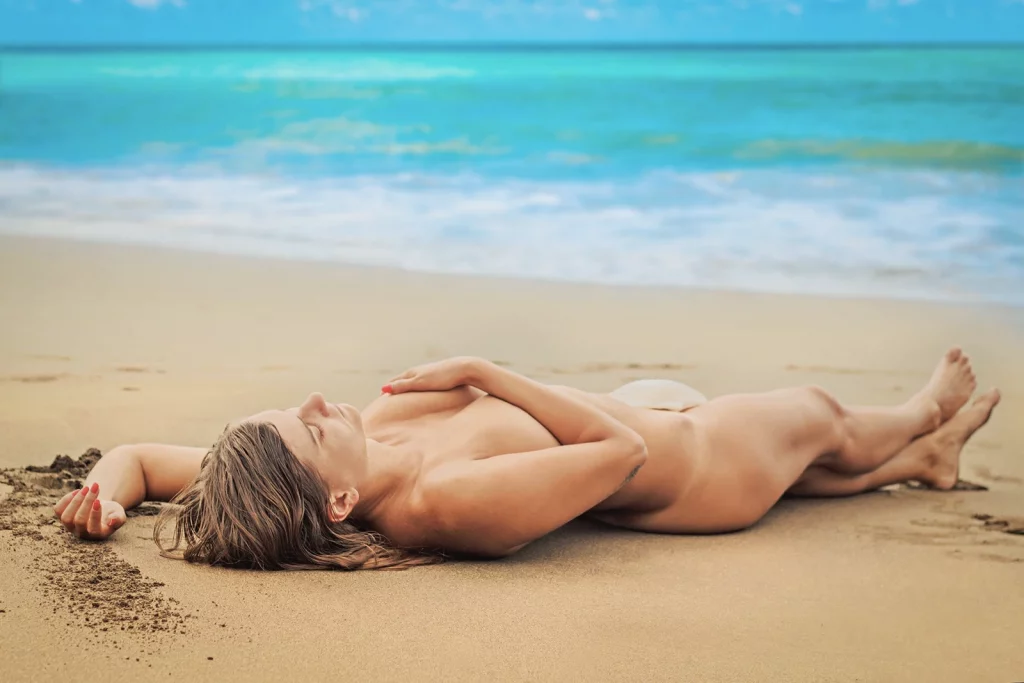
If you’ve ever wanted to try skinny-dipping or topless sunbathing without any fuss, this is the place. Beyond sunbathing, popular beach activities include paddle-boarding on the calm seas, windsurfing in breezier sections of Llevant and simply beach-hopping by bike or scooter. Formentera’s waters are so clear thanks to vast fields of Posidonia seagrass, a UNESCO-linked marine treasure that keeps the ecosystem healthy. When you see how transparent the sea is, you’ll understand why protecting that seagrass is a big deal. Boat anchoring is restricted in sensitive areas to avoid damaging it. In sum, Formentera’s beaches are true paradise — arguably the finest in Spain for sand and water quality.
Life on Formentera
There’s a delightful simplicity to things here. The “capital”, Sant Francesc, is a sleepy village with a lovely square, a whitewashed church, a few boutiques and cafés. Rent a bicycle or scooter to get around — the island is mostly flat and only around 20 km long, so you can explore end to end easily. Cars are allowed, but in peak season there’s a push to limit vehicles, and many visitors happily stick to two wheels.
For 2026, this matters even more: vehicle access is regulated from 1 June to 30 September, with authorisation required for motor vehicles and a cap on the number allowed to circulate. If you are planning to bring a car or motorcycle over from Ibiza, check the current rules first rather than turning up at the ferry and assuming all will be fine. Personally, I think Formentera is more beautiful when you surrender to its scale — bike, e-bike, scooter, ferry bag, beach towel, good sunglasses, done.
Head to La Mola lighthouse on the eastern cliff. The view from this high cliff down to endless blue sea is awe-inspiring, and the lighthouse supposedly inspired Jules Verne’s novel Off on a Comet. Near La Mola, there’s also a small hippie market on Wednesdays and Sundays with crafts and live music, recalling the 70s when artists and hippies settled here seeking peace. In fact, Formentera has had famous hippie residents; Bob Dylan spent a stint living at the Cap de Barbaria lighthouse in the 1960s, and Pink Floyd allegedly wrote music here. The island’s bohemian legacy lives on in chilled beach bars and the generally laissez-faire vibe.
Don’t expect nightclubs beyond perhaps a late bar or two in Es Pujols. Nights are about watching sunsets, having a long dinner and maybe listening to some live acoustic music at a beachside chiringuito. Sunsets at Cap de Barbaria should not be missed — it’s a silent, dramatic sunset viewing as the sun sinks into the sea with no land in sight.
There are a few excellent restaurants given the island’s size, many focusing on ultra-fresh seafood. Formentera’s must-try is peix sec — sun-dried fish, usually ray, crumbled into salads with local tomatoes and olive oil, a real delicacy with roots in fishermen’s tradition. Also look for figs, which are super sweet here, and local digestifs made from figs and herbs. Water sports are a draw for some; you can kayak around nooks of the coast or scuba dive, with underwater caves, wrecks and sea life flourishing in the seagrass meadows.
But really, Formentera invites you to slow down and do very little. It’s the kind of place where the biggest decision might be: which beach should we swim at this afternoon? And that is a glorious question to ponder while lazily pedalling a bike with a straw hat on.
As Marina, reflecting on Formentera, I’ll always remember a particular moment: lying on the sand at Ses Illetes in the early evening, most people gone, just me and the sound of gentle waves, the sky turning soft pink. I felt an overwhelming sense of peace and gratitude. Formentera has a way of recharging your spirit. It’s no wonder many say it has a certain energy — some attribute it to the alignment of Ibiza and Formentera’s Es Vedrà with other mystical sites. Who knows. What I know is that it’s one of the most beautiful places I’ve seen, yet unpretentious and warm. Whether you’re a seasoned naturist or someone like me who only just braved it, you’ll feel welcome and at ease on this island.
Best Time to Visit Formentera
July and August bring the crowds, including many Italian holidaymakers, as Formentera is very popular with Italians. It gets busy, and accommodation can be exorbitantly priced then. June and September are perfection — still buzzing enough but not packed, everything open, sea wonderfully warm. May and October can be hit or miss weather-wise, though May is usually sunny and October can still have beautiful days.
In winter, Formentera is ultra-quiet with many businesses closed. The ferry from Ibiza still runs year-round, but you’d find yourself almost alone on those beaches, not a bad thing if solitude is what you seek. Bear in mind, many people visit Formentera as a day trip from Ibiza, which is fine for a taste. You can rent a bike at La Savina port, zip to a couple of beaches, have lunch and ferry back. But if you can, consider an overnight or two. Even a modest apartment stay will allow you to experience the dawn and dusk hours when the island is most magical. Formentera can be more expensive than one expects, due to limited accommodation and the logistics of bringing everything by ferry, but that’s the price of paradise.
Where to Stay and Eat in Formentera
Budget: Formentera has fewer choices, and true budget digs are limited, especially in peak season. There are a couple of hostals and camping options that are the best bet for backpackers. Booking well ahead for summer is crucial. Alternatively, some people stay on Ibiza and ferry over each day, but that eats into relaxation time. For eating cheaply, supermarkets in Sant Francesc or Es Pujols will be your friend. Pack picnics for the beach. There are also food trucks or kiosks near popular beaches selling sandwiches, empanadas and ice cream at reasonable prices. Don’t overlook local bakeries — you can grab ensaïmadas, cocas or bocadillos in town and feast by the sea.
Mid-range: There are many mid-range apartments and small hotels on the island, often in Es Pujols, around Migjorn or near the port of La Savina. These might offer kitchenettes so you can self-cater a bit. Rates are moderate in shoulder season but climb in summer. Staying in a family-run pension in Sant Francesc is another lovely option if you want to be central. For dining, mid-range covers most beach restaurants and trattorias. Given the Italian influence, you’ll find excellent pasta and pizza on Formentera. A typical mid-priced delight is having a fresh grilled fish with garlic and olive oil at a beachside eatery, or a generous vegetarian lunch of salads, grilled vegetables, bread and local cheese. Also try a menú del día at a local café — you can eat well without splurging.
Luxury: Formentera’s luxury is subtle, but it exists in a handful of upmarket boutique hotels and villas. These often emphasise wellness, slow living and stunning settings, like bungalows nestled in dunes or design-forward suites overlooking the Ses Illetes peninsula. Service is usually very personalised. If money is no object, you might hire a private boat for a day to hop between Formentera’s beaches and Espalmador islet at leisure — the ultimate luxury excursion from Ibiza. Dining on the high end might mean a rustic-chic restaurant, a beach club on Migjorn sipping champagne at sunset, or a multi-course meal in a restored farmhouse lit by candles. Even then, Formentera’s vibe is never flashy. Luxury here is about exclusivity of location and the freshness of ingredients. One thing is certain: whether you’re eating a €5 sandwich or a €50 beachside meal, doing so with your toes in the sand and turquoise water in view makes it feel like a million-dollar experience.
Eat Clean: Island by Island
For all their indulgence, the Balearics are also wonderfully easy places to eat clean. Fresh produce, olive oil, sea air, morning markets and the islands’ wellness culture make it surprisingly simple to balance long lunches and sunset drinks with something lighter, greener and kinder to the body.
Mallorca — Organic Glamour and Raw Indulgence
Bon Lloc, Palma
Mallorca’s first vegetarian restaurant, dating back to 1978, is now fully vegan. Expect refined dishes such as roasted beetroot tartare, wild mushroom creations and elegant tasting menus in a calm, minimalist setting. It’s the sort of Palma address that makes plant-based eating feel polished rather than punitive.
Temple Natura Café Garden, Palma
A lush courtyard café with Buddha bowls, smoothies and vegan cake that draws a loyal creative crowd. The vibe is jungle-boho chic in the heart of the city — ideal when you want a soft reset between shopping, sightseeing and evening cocktails.
Ziva To Go, Santa Catalina and Palma
A go-to for raw vegan lasagne, cold-pressed juices, chia puddings and superfood bowls. Perfect for a wellness reset, or simply when your body is quietly begging for something green after three days of bread, wine and sea salt.
Menorca — Slow Food Meets Sustainability
Clorofila, Ciutadella
Vegetarian, organic and artistic, with nourishing dishes such as Moroccan-spiced couscous, beetroot hummus, homemade cakes and green smoothies in a leafy hideaway. It fits Menorca beautifully: thoughtful, unfussy, quietly good.
Ses Forquilles, Maó
Not vegetarian-only, but strong on Menorcan produce and contemporary plates. Look for vegetable-led options, mushroom dishes and seasonal ingredients. It’s a good choice for mixed groups where one person wants meat or fish and another wants something lighter.
Es Tast de na Sílvia, Ciutadella
A slow-food favourite using local, seasonal and km-zero ingredients. Not strictly vegetarian, but worth considering for veg-forward menus and a more considered approach to island dining.
Ibiza — The Bohemian Vegan Hotspot
Wild Beets, Santa Gertrudis
A pioneer of Ibiza’s modern plant-based scene. Think raw dishes, clean luxury, colourful plates and the kind of post-yoga lunch that makes you feel as if your entire body has been put through a soft-focus filter.
Passion Café, multiple locations
An Ibiza staple for smoothie bowls, matcha pancakes, vegan desserts and energised brunches. Stylish, reliable and useful if you want something bright and healthy before the island pulls you back towards cocktails.
The Skinny Kitchen, San Antonio and Ibiza Town
Fitness-focused and casual, with protein-packed vegan burgers, beetroot lattes and colourful Buddha bowls. It’s especially useful for brunch or recovery food after a late night.
Formentera — Barefoot Plant-Based Bliss
Can Dani, Sant Ferran
Elegant countryside dining with creative, beautifully plated options and a more refined island feel. Ask about vegetarian or vegan options when booking, especially in high season.
Blat Picat, Sant Ferran
Vegetarian-friendly, rustic and local, with hearty plant-based dishes and an artisan feel. Ideal when you want something nourishing without losing the island’s barefoot charm.
Integral Formentera, Sant Francesc Xavier
Part organic health store, part café stop. Grab a turmeric latte, vegan wrap or raw snack before heading to the beach. It’s perfect for packed picnics, which, on Formentera, can be the most luxurious meal of the day.
Marina’s tip: Always ask for the menú del día. Even upscale restaurants often prepare a seasonal vegetarian set lunch that offers far better value than ordering à la carte.
Riviera Ready Intelligence for the Balearic Islands
The Balearics reward travellers who know when to chase the scene and when to let the island come to them. This is not a place to treat like a checklist. Choose your island by mood: Mallorca for variety, culture and polished ease; Menorca for nature and calm; Ibiza for contrast, nightlife and bohemian soul; Formentera for barefoot beauty and a slower pulse.
For beaches, timing is everything. Go early for famous coves, late for softer light, and avoid turning every day into a frantic race between locations. In Mallorca, shoot Palma’s cathedral from the waterfront in golden light, then look for quieter details in Valldemossa, Deià or a market lunch. In Menorca, keep it restrained: Ciutadella at dusk, Mahón harbour, sandals on sandstone, a calm cove from above. In Ibiza, Cala d’en Serra and Portinatx are ideal for a more Riviera Ready version of the island — pine-framed cliffs, snorkelling water, relaxed beach style and none of the forced nightclub clichés. In Formentera, the perfect shot might be a straw hat on pale sand, a bicycle against a white wall, or sunset at Cap de Barbaria after the day-trippers have gone.
The big rule: respect the place. Don’t trample dunes, climb unsafe rocks, take shells or sand, or block village lanes for reels. The clear water around Ibiza and Formentera owes much to Posidonia seagrass, so treat the sea as a living landscape, not just a turquoise backdrop. Boat trips are wonderful, but anchoring carelessly over seagrass is not.
Be especially thoughtful on clothing-optional beaches. Ibiza and Formentera are relaxed about naturism, but that freedom depends on respect. No sneaky photos, no staring, no performative shock and no turning someone else’s peaceful swim into your content.
For style, less is usually more. A tasteful bikini or swimwear shot can work beautifully — this is the Mediterranean, after all — but the best Balearic images are not just about posing. They are about light, texture, atmosphere and restraint: wet hair after a swim, linen over bronzed shoulders, a market basket, a beach picnic, a cold drink at sunset, or the curve of a cove before the crowds arrive.
Food-wise, don’t make the islands all about overblown “must-eat” trophy dishes. Yes, there is seafood, wine, sobrassada, ensaïmadas, cheese, figs, rice dishes and all the pleasures of a long Mediterranean table. But there is also a gentler way to eat here: markets, bakeries, vegetable dishes, local cheeses, clean cafés, beach picnics and slow lunches that don’t require turning every meal into a spectacle. And no, lobster does not need to be on your list.
The Balearics are at their best when you travel lightly, look properly and leave the place as beautiful as you found it. That, really, is the island code.
When to Go and How to Get There
Best Times to Travel
The Balearics as a whole have a classic Mediterranean climate — hot dry summers, pleasantly warm spring and autumn, and mild winters. High season is July and August, when you’re guaranteed hot beach weather and the islands are in full swing with events, but also when prices and crowds peak.
If you can, June and September are highly recommended. You’ll still get long sunny days and warm seas, but with a bit more breathing room on the beaches and in towns. May and October are shoulder months offering a more tranquil experience and lower costs — perfect for outdoor activities, though swimming is more refreshing in May and gradually warmer by October after the summer heat.
Each island has local festivals worth catching: Mallorca’s Sant Joan celebrations in June, Menorca’s horse fiestas in summer, Ibiza’s club opening and closing parties, and Formentera’s quieter cultural events. Do note that off-season, from November to March, while mild, sees many tourist amenities partially shut down, especially on Menorca and Formentera. However, Palma de Mallorca and Ibiza Town remain active year-round, and cultural sites are open, making winter an option for a quiet retreat or city break.
Travelling from the UK
The Balearics are extremely well-connected to the UK. In peak season, there are numerous direct flights every day from London and many regional airports — Manchester, Birmingham, Glasgow and others — to Mallorca, Menorca and Ibiza. Flight times are short, around 2 to 2.5 hours from the UK, far closer than the Canaries.
Low-cost carriers and package holiday charters make up the bulk of flights, meaning you can often snag affordable fares if booked well in advance or during an airline sale, especially in May, early June or late September. Package deals are also plentiful. UK tour operators like TUI, Jet2 and easyJet Holidays often have packages that work out cheaper than flight-alone, particularly in shoulder season or last-minute.
All three main islands have international airports: Palma de Mallorca, Ibiza and Menorca. From any of them you can reach your resort by shuttle, bus or taxi. If your final destination is Formentera, note that there’s no airport. You fly to Ibiza and then take a ferry from Ibiza Town to Formentera, with frequent services in summer and year-round links.
In terms of budgeting and getting the best deals, travel in the fringe months or book early for peak summer to lock in lower prices. The UK’s love affair with the Balearics means lots of competition keeping prices reasonable, from all-inclusive family resorts in Mallorca to adults-only boutique hotels in Ibiza. If you’re adventurous, you could even island-hop: fly into Mallorca, spend a few days there, then catch a short domestic flight or ferry to Ibiza, and hop to Formentera.
There are regular ferries between the islands in summer, and Ibiza–Formentera runs year-round. Car hire is a popular way to explore, and can be booked from the UK. Just be sure to read the terms; in peak season, manual cars are usually cheaper than automatics, and early booking is wise. For Formentera, check the vehicle authorisation rules if travelling between June and September. Another money-saving tip: consider self-catering accommodation if travelling in a group or with family — shopping at local supermarkets for some meals can be both fun and economical. And don’t forget travel insurance, especially if you’ll be doing watersports.
Packages vs DIY
UK to Balearics packages versus DIY travel really depends on your preference. Packages, with flight and hotel together, can simplify things and often include transfers. They’re great for those who want a hassle-free beach holiday and are happy with a specific hotel or resort. DIY travel — booking flight and accommodation separately — offers more flexibility. You could stay in multiple areas or islands, for instance.
Flight prices with budget airlines are competitive, and if you plan to hire a car, sometimes packages offer that as an add-on. Cruises are another way Brits visit the Balearics; Palma is a major cruise port. But to really soak up each island’s unique atmosphere, I recommend spending at least a few days on each island you visit.
In summary, the Balearic Islands are an accessible escape for UK travellers, whether you seek sun-filled family fun, romantic getaways or an adventurous island road trip. From the vibrant markets of Mallorca to Menorca’s quiet trails, Ibiza’s dual nature of clubs and calm, and Formentera’s unmatched beaches, each island offers a distinct experience yet all share that irresistible Mediterranean allure.
As Marina Zivaree, I hope this deep dive has conveyed not just the facts and recommendations, but the feel of these islands — a place where, in my experience, life’s worries float away on the balmy sea breeze. Pack your sunscreen, your sense of adventure and maybe your dancing shoes, and let the Balearics work their magic on you.
Happy travels — or as the locals say, bon viatge.
Further Reading
Where to Stay in Mallorca: Best Areas for Every Trip
Where to Stay in Ibiza: The Balearic Guide
Balearic Islands official tourism information — Illes Balears Travel
Responsible tourism in the Balearic Islands — Illes Balears Travel
Cala d’en Serra, Ibiza — Illes Balears Travel
Port de Portinatx, Ibiza — Illes Balears Travel
Posidonia, the natural treasure of Ibiza and Formentera — Illes Balears Travel
Formentera.eco — Vehicle access and sustainable transport information
Spain.info — Menorca Biosphere Reserve
Condé Nast Traveller — Best beaches in Mallorca
Condé Nast Traveller — Best beaches in Ibiza
Formentera Island — Beaches of Formentera
Menorca Tourism — Sweet island specialities
Barceló Guide — Atlantis Ibiza, from quarry to hippie hideaway