
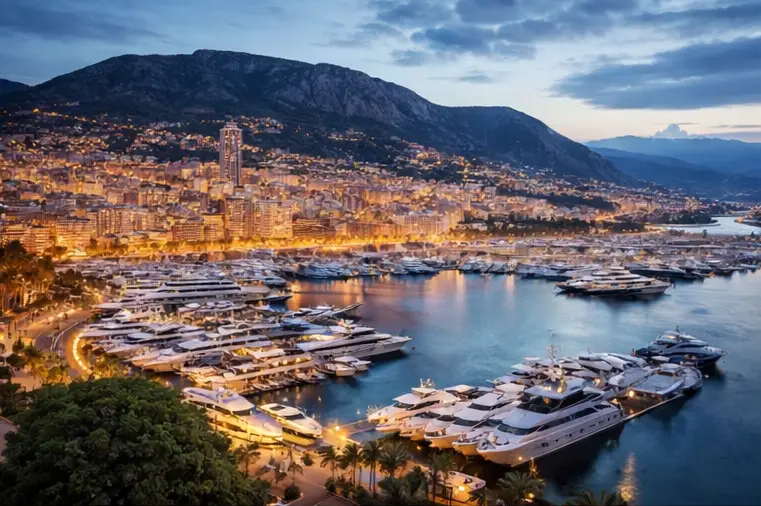
Monaco and Beyond: Where the Super Rich Go to Escape Tax
By Riviera Ready Magazine
Where the super rich go to escape tax tells us as much about power, politics and personal freedom as it does about yachts, penthouses and private banks.
Since the 1960s the world’s tax map has been redrawn by a handful of tiny jurisdictions that promise security, sun and negligible taxation. These are not just bolt‑holes for yachts and penthouses; they are a symptom of globalisation, politics and personal freedom. Monaco, Dubai, the British Virgin Islands (BVI), Luxembourg, Jersey and the Isle of Man have become magnets for high‑net‑worth individuals, celebrities, Formula One drivers and, in darker corners, organised criminals. In light of the recent war in the Gulf and the exodus of expatriates from Dubai, this article explores why people relocate, what these havens offer at different levels of wealth and status, and the moral questions that arise when citizens leave their home countries to avoid paying taxes.
Monaco – the ultimate gilded Tax Haven
Exclusivity, bank‑account checks and Formula One glamour
The tiny principality on the Côte d’Azur has long been the archetypal tax haven. Monaco levies no income, wealth or inheritance taxes for its residents and does not impose capital gains tax, a combination that saves high earners millions. Its status as a sovereign state means it can set its own fiscal policies, although French citizens must still pay French taxes. In return for tax exemption, Monaco demands financial solidity: prospective residents must open a bank account and deposit around €500,000 (£427,000); some banks require €2 million for non‑residents. According to the fintech firm Wise, minimum deposits start at €500,000 for residents and can reach €2 million.
Monaco’s membership rules partly explain why it is home to almost half of the Formula One grid. Drivers including Lewis Hamilton, Max Verstappen, Charles Leclerc and Lando Norris live there because the principality offers privacy, secure banking, low crime and proximity to European racetracks. Alpine Partners explains that the absence of personal, wealth and estate taxes allows athletes to retain more of their earnings, while real‑estate firms note the grand prix circuit’s historic allure and the prestige associated with Monaco. Residency requires spending at least 183 days per year in the principality, ensuring that the tax benefits are tied to genuine relocation.
Who moves and why?
Monaco’s local economy revolves around luxury consumption and asset management. It suits those earning in the £1‑5 million range (top sportspeople, hedge‑fund managers, celebrities) who desire both prestige and security. Its schools, healthcare, and low crime rates attract families, while its strict residency checks and high property prices (often £50,000 per square metre) act as barriers to all but the very wealthy. Residents must show a clean criminal record, sign leases or purchase property, and deposit funds in a local bank before obtaining a residency permit. The result is a micro‑state of about 40,000 residents where nearly one in three is a millionaire.
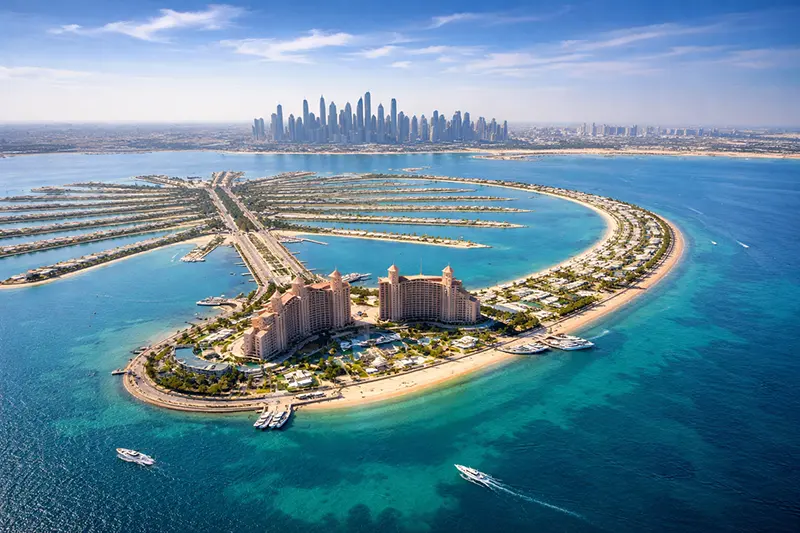
The United Arab Emirates – promises of 0 % income tax, now tested by war
The Golden Visa and fixed‑deposit route
Dubai is not a country but part of the United Arab Emirates (UAE); its tax regime has nonetheless attracted a flood of entrepreneurs, influencers and digital‑nomad millionaires. According to PwC’s tax summary, there is currently no personal income tax in the UAE, and individuals need not register or file personal tax returns. Businesses, however, are subject to a federal corporate tax introduced in 2023: the UAE government notes that corporate profits up to AED 375,000 (£80,500) are taxed at 0 % and profits above that are taxed at 9 %.
Dubai’s answer to Monaco’s residency requirements is the Golden Visa. One of the easiest routes involves placing a fixed deposit of AED 2 million (about £430,000) in a UAE bank. The deposit must be the applicant’s own funds and cannot be withdrawn for at least two years. Once the money is locked in, the government issues a renewable 5‑ to 10‑year visa; the entire process costs roughly AED 4,800‑5,700 in fees and takes 5–7 working days. The deposit route is popular because it avoids the vagaries of the property market and business investment.
Influencers, ex‑pats and the new “Bali”
The absence of personal income tax, combined with lenient social regulations and a glamorous lifestyle, drew a huge influencer community to Dubai. The Atlantic notes that the government actively courted creators via its “1 Billion Followers” summit and offered Golden Visas to influencers. However, when Iranian missiles hit the city during the 2026 Gulf war, the glossy façade cracked. Influencers posted images of smoke plumes and explosions; the day trader Mike Babayan noted that “people are packing up and leaving altogether”. Another influencer, Ralph Anthony Chiti, fled to London, saying he felt unable to speak freely in Dubai and that the city had become eerily empty.
Dubai’s government responded by threatening those who spread “rumours” about the war with prosecution. A British man was arrested for filming missiles, and campaigners warned that residents who post conflict images could face two years in prison. The Guardian reported that around 300,000 Britons and many other expatriates were trapped in the Gulf when hostilities erupted. As the perception of safety evaporated, talk among influencers turned to Bali as a new home: hot, Instagram‑friendly, cheaper and, crucially, far from Iran.
What about “Only Fanners” and high‑end escorts?
Dubai’s nightlife and permissive environment attracted a cohort of online content creators and escorts. The city’s wealth and anonymity offered a lucrative base for sex workers catering to wealthy expatriates. However, the Gulf war and the crackdown on social‑media posts have prompted many to leave; some returned to London, Paris or Los Angeles, while others decamped to Thailand or Indonesia, where visa rules are looser and digital work is tolerated. Reliable statistics are scarce, but anecdotal reports on social platforms suggest a noticeable migration away from the UAE to cheaper, less volatile destinations.
Who is Dubai for?
Dubai suits mid‑ to high‑income earners in tech, trading, and social media who want a cosmopolitan lifestyle without personal income tax. With the new corporate tax, true high‑net‑worth individuals may look elsewhere if they earn profits above AED 375,000. The fixed‑deposit visa demands roughly the same wealth threshold as Monaco’s bank deposit but offers a far larger property market and more relaxed residency requirements. The city’s hypermodern infrastructure appeals to digital nomads and entrepreneurs, but the events of 2026 show that political stability—not just tax policy—is essential.
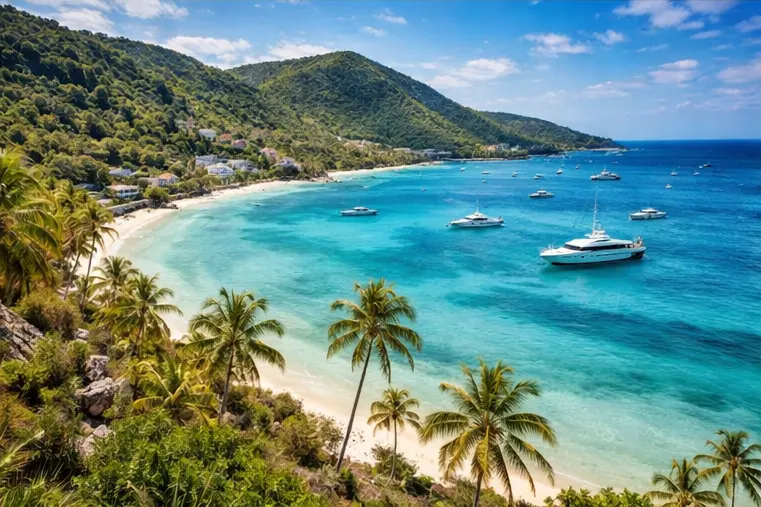
The British Virgin Islands – 11 companies for every resident
Zero‑tax model and secrecy
The BVI is one of the Caribbean’s oldest and most notorious tax havens. Its International Business Companies Act of 1984 created a regime of zero corporate income tax, zero capital gains tax, zero inheritance tax and zero withholding tax for offshore companies. Companies pay a flat licensing fee of $350–$1,100 depending on authorised capital, and there are no foreign exchange controls, allowing free movement of capital. Property and payroll taxes apply domestically, but these are modest.
By September 2025 the BVI hosted 361,747 active companies, roughly 11 per resident (the population is about 32,000), and accounted for 40–45 % of global offshore companies. The jurisdiction channels 2.9 % of worldwide multinational financial activity and registers 8,348 new incorporations per quarter. Its role in profit shifting, ownership concealment and treaty shopping has been highlighted by the Tax Justice Network. The Panama Papers revealed that over half of the shell companies exposed were BVI entities. In 2025 the territory was grey‑listed by the Financial Action Task Force because of weak beneficial‑ownership transparency.
Suitability by wealth tier
The BVI’s appeal lies in its anonymity and simplicity. Entrepreneurs and multinational firms use BVI companies to hold assets, intellectual property or investment funds. There is no requirement to deposit money in local banks, and there are minimal residency obligations; thus the BVI suits corporate structures and individuals who need an offshore vehicle rather than a place to live. For individuals with £5 million+ in mobile assets, BVI entities can be used alongside residency in Monaco or Dubai. For the merely affluent seeking a physical home, the islands offer little: there is limited infrastructure and few cultural amenities.
Luxembourg – Europe’s discreet facilitator
History and tax machinery
In the 1960s Luxembourg reinvented itself as an offshore centre by encouraging banks to trade Eurobonds free of local taxes. Although Luxembourg’s statutory corporate tax rate is about 25 % (17 % corporate income tax plus surcharges), the effective rate can be as low as 1–2 % because of intricate tax structures, favourable rulings and a lack of transparency. For individuals, the country offers zero tax on royalties and long‑term capital gains (for holdings under 10 % of a company) and generous deductions for married couples, children, transport costs and medical expenses.
Luxembourg abolished bank secrecy and joined automatic information‑exchange regimes in the 2010s, but it still scores 55 / 100 on the Financial Privacy Index and features in the LuxLeaks and OpenLux scandals, which exposed secret tax rulings enabling multinationals to pay almost no tax. Around 80 % of profit shifting in the EU is channelled through Luxembourg and other havens.
Who benefits?
Luxembourg is attractive to corporations and ultra‑high‑net‑worth individuals who manage intellectual property, royalties or private equity funds. Unlike Monaco, there is no bank‑deposit requirement and no residency obligations for company directors. For individuals earning tens of millions, Luxembourg can reduce tax on dividends and capital gains to near zero. For middle‑class expatriates, however, the cost of living is high and tax advantages are minimal compared with neighbouring Belgium and Germany.
Jersey and the Isle of Man – Crown dependencies with (slightly) more rules
Jersey – high‑value residency and 20 % cap
Jersey is a British Crown dependency with its own fiscal system. There is no capital gains or inheritance tax, and personal income tax is capped at 20 %. Goods and services tax is only 5 %, and corporate income tax is 0 % except for financial services (10 %), utilities (20 %) and property income (20 %). Jersey attracts affluent immigrants through a High‑Value Residency programme: applicants must earn at least £1.25 million per year, pay £250,000 in annual taxes and have personal wealth exceeding £10 million. They must also purchase property worth at least £1.75 million for an apartment or £3.5 million for a house. These requirements limit entry to the ultra‑rich but provide a stable environment and quick access to London (40‑minute flight).
Jersey appeals to hedge‑fund managers and executives who need to remain close to the UK but want lower taxes. The island’s relatively strict residency obligations (living there for 183 days) and high property prices make it unsuitable for middle‑income earners. The corporate services sector is large and often used in tandem with BVI and Luxembourg structures to hold assets.
Isle of Man – the tax cap and quiet entrepreneurship
The Isle of Man, another Crown dependency, has personal income tax rates of 10 % on the first £6,500 of taxable income and 21 % above that, with a generous personal allowance of £14,750. There is no capital gains, inheritance, wealth or corporate income tax. Crucially, the Isle of Man offers a tax cap of £220,000 per year per individual (rising to £440,000 for couples), so high‑earning residents never pay more than this amount. The 2025 budget reduced the higher income‑tax rate from 22 % to 21 % and increased the personal allowance to £14,750, strengthening the island’s appeal.
The Isle of Man markets itself to entrepreneurs and retirees who want moderate cost of living, low crime and proximity to the UK. Property is cheaper than in Jersey or Monaco, and the tax cap makes it attractive for individuals earning £1–3 million per year. There are no bank‑deposit requirements, and residency can be established by renting or purchasing property and spending the majority of the year on the island. Tech start‑ups and e‑gaming companies have flourished under the island’s zero‑corporate‑tax regime.
Moral dimensions – freedom, fairness and the price of sunshine
High taxes and the exodus of artists
The notion of leaving home to avoid taxes is not new. In the 1970s Britain imposed a top marginal tax rate of 90 % on earned income after a 15 % surcharge on investment income. Mick Jagger explained that earning £100 meant the government took £90, making it hard to pay debts. When the Labour government raised the top rate to 98 % in 1974, musicians such as the Rolling Stones, Rod Stewart, Jethro Tull, Tom Jones and Ringo Starr decamped to France, Switzerland, California and Monaco. Rod Stewart publicly complained that the 90 % rate made living in England “not worth it”. Only when Margaret Thatcher cut the top rate to 60 % in 1980 and 40 % in 1988 did the era of British tax exiles end.
This historical episode illustrates a recurring theme: high marginal tax rates can trigger migration among highly mobile workers. Economists argue that certain segments of the labour market, especially top earners with portable human capital, are responsive to taxes. From this perspective, some see tax havens as a necessary counterweight to over‑zealous governments.
Criticism – inequality and public services
Critics counter that tax havens undermine the social contract by eroding national tax bases and exacerbating inequality. The BVI and other havens facilitate profit shifting and ownership concealment, depriving governments of revenues to fund public goods. LuxLeaks revealed that multinational companies channel billions through Luxembourg to pay effective corporate rates of 1–2 %, while the BVI hosts a staggering number of shell companies relative to its population. These flows contribute to an estimated £492 billion in annual global tax losses.
A balanced view
The moral debate hinges on whether taxation is seen as a fee for civilised society or a penalty for success. Citizenship and residency are distinct legal concepts; the UK taxes citizens based on residence, not nationality, whereas the United States taxes citizens wherever they live. For British citizens, moving to Monaco or Dubai legitimately reduces their tax liability without breaking the law. However, when the super‑rich avail themselves of low‑tax regimes while benefiting from the UK’s infrastructure, education and rule of law, resentment understandably follows.
Governments bear some responsibility: excessively high tax rates (as in 1970s Britain) make avoidance attractive, while well‑designed systems can raise revenue without chasing away talent. The Isle of Man cap and Jersey’s flat 20 % rate demonstrate that moderate taxation can be competitive yet contribute to public services. On the other hand, Dubai’s hands‑off approach and the BVI’s secrecy show how near‑zero taxation can invite not just entrepreneurs but criminals, as seen in Marbella, where mafiosi mingle with millionaires and violent gangs now scare wealthy residents.
Conclusion: The Price of Paradise
For the super‑rich, tax havens are not interchangeable. Monaco is the Rolls‑Royce of fiscal refuges, combining zero income tax with glamour and strict residency checks – ideal for Formula One stars and hedge‑fund managers. Dubai sells a similar dream with no personal income tax and a Golden Visa, but the 2026 conflict revealed how quickly stability can vanish. The British Virgin Islands work best as a corporate address, offering near‑total secrecy, while Luxembourg excels at intricate tax optimisation for multinationals. Jersey and the Isle of Man provide lower‑profile alternatives with moderate taxes and proximity to the UK.
Ultimately, the decision to become a fiscal nomad reflects personal values as much as financial arithmetic. Some see paying taxes as a patriotic duty; others view high rates as punitive. As the world becomes more interconnected, the choice of tax haven will remain a barometer of political risk, lifestyle preferences and moral attitudes towards wealth. To paraphrase my favourite maxim, to understand the world, follow the money – and the mood.