
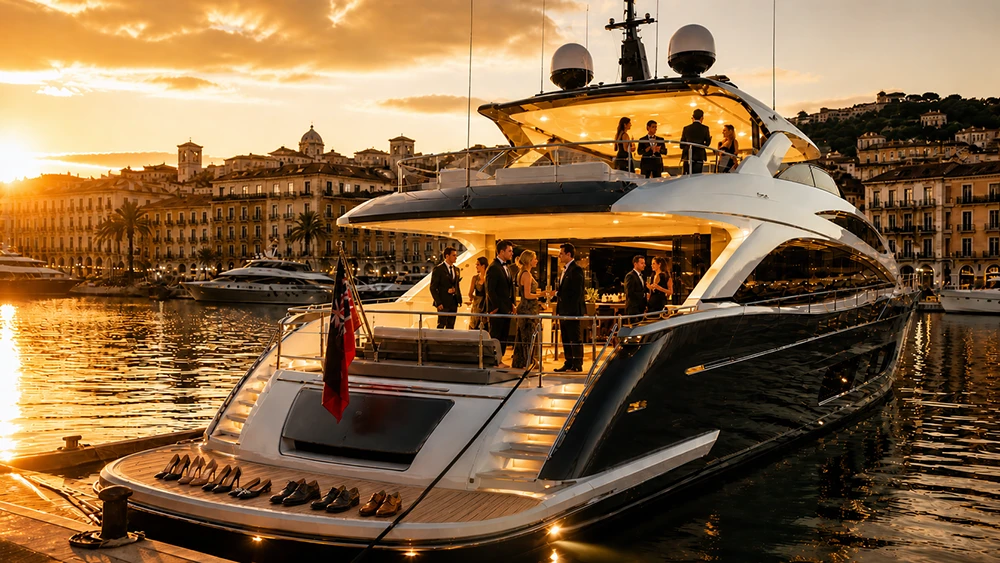
The big taboo – footwear for yachts
By Clara Wetherby
The barefoot rule
There is a reason why the first thing your host asks you to do when you step aboard a yacht in Cannes is to remove your shoes. But is there such a thing as footwear for yachts? Teak decking is expensive and soft – the Marine Accounts charter‑etiquette guide notes that high heels and black soles are forbidden because they can dent the wood and leave marks, while some vessels permit only soft‑soled, non‑marking deck shoes. Boat owners invest heavily in pristine teak; Boat International’s etiquette primer explains that shoes can scuff decks, so most yachts insist on a “bare feet” policy and provide baskets for shoes at the gangway.
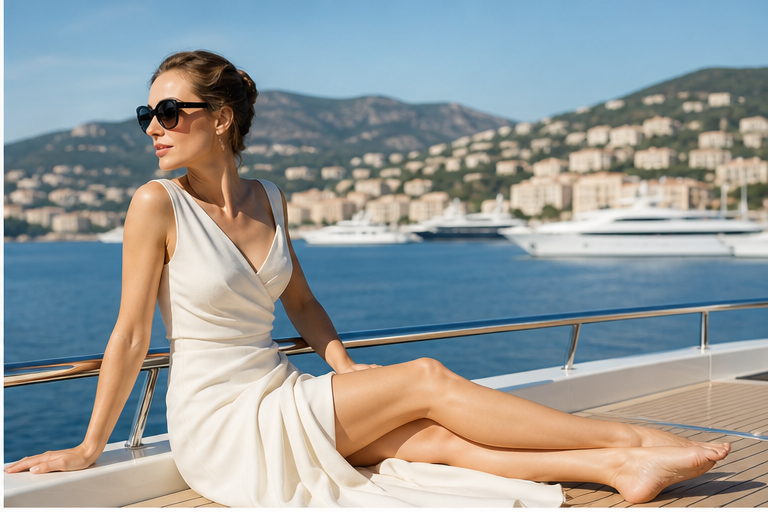
This isn’t snobbery; it is common sense. Teak is naturally oily, giving it excellent grip, but it also scratches easily. Dark soles scuff and tiny stones lodged in trainers gouge the surface, and stilettos are a recipe for divots and twisted ankles. Even the Gentleman’s Journal admits that wearing the wrong shoes is “the fastest way to look inexperienced”; guests should pack clean deck shoes, espadrilles or soft loafers and leave anything heavy or rigid onshore.
Charter companies have similar policies on both sides of the Atlantic. A Fort Lauderdale charter guide advises guests that heavy street shoes and stilettos are prohibited and will be placed in a basket, and only soft‑soled boat shoes with good grip are allowed on deck. A West Coast sailing event even tells guests to carry a clean pair of non‑marking shoes and change out of their street shoes in a designated bin before boarding. The reasoning is practical: shoes bring grit and sand aboard, making cleaning difficult and creating slip hazards.
Fuss pots or sensible custodians?
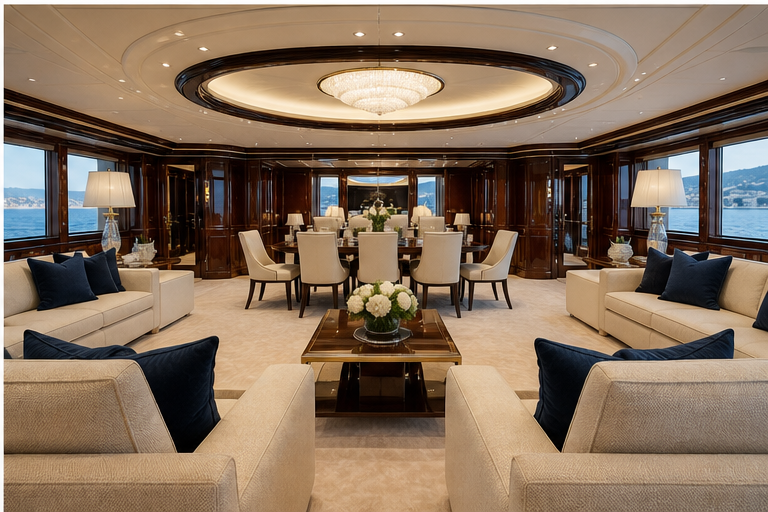
Yacht owners are often accused of being fuss pots, the nautical equivalent of Everybody Loves Raymond’s Marie with her plastic sofa covers. Yet teak replacement is not trivial. A marine‑flooring specialist notes that natural teak costs $60–120 per square foot installed (about £48–£96), and a refit on a 50‑foot yacht can cost £24,000–£64,000. Teak also needs cleaning with special products, re‑sealing and sanding every few years. Synthetic alternatives are cheaper and less fussy: PVC‑based faux teak such as Flexiteek and Permateek costs about $30–70 per square foot (£24–£56) and requires minimal maintenance; EVA foam decking is cushiony, DIY‑friendly and costs $5–20 per square foot (£4–£16), but it retains heat and needs replacement every 5–8 years.
These synthetic decks look convincing and can be pressure‑washed; they are increasingly popular on charter boats. Yachting World notes that PVC decks like Flexiteek replicate the grain and non‑slip properties of real teak and can be sanded to restore their finish. Marine cork, vinyl and composite decking are also on the rise; cork runs about $10–25 per square foot (£8–£20) and provides shock absorption. If more yachts adopted such resilient surfaces, owners might relax their footwear rules. Nevertheless, as long as real teak remains the gold standard, expect to go barefoot.
What to wear – his and hers
Daytime leisure
When planning your yacht wardrobe, think ease and elegance.
- Relaxing on deck or swimming
- Women: Flowy sundresses, kaftans or wide‑leg linen trousers paired with flat sandals, espadrilles or non‑marking deck shoes. FantaSea Yachts suggests flat sandals and espadrilles with good grip and notes that low block‑heel wedges are suitable if you need height.
- Men: Tailored swim shorts with a polo or linen shirt; boat shoes or white‑soled loafers that offer grip.
- Casual cruising or sightseeing ashore
- Women: Linen jumpsuits, shorts and cotton tees; pair with smart espadrilles, leather slides or low wedges.
- Men: Chino shorts or lightweight trousers with a crisp polo; wear clean leather boat shoes or rubber‑soled loafers.
- Caribbean vs Mediterranean vibe
- Women: In the Caribbean, bright colours and beachy prints are acceptable, whereas Mediterranean charters lean towards polished neutrals.
- Men: Relaxed colours suit tropical waters, while more tailored ensembles prevail in the Med.
Evening glamour
For cocktail parties on board, elegance meets practicality. Women should avoid floor‑length gowns that could catch on rigging; mid‑length cocktail dresses or sleek jumpsuits paired with block‑heel sandals, kitten heels or dressy flats are ideal. Low wedges (espadrille or cork) add height without damaging decking. Statement jewellery and a pashmina suffice – leave heavy handbags ashore.
Men should opt for a lightweight suit or tailored trousers with a blazer. FantaSea Yachts recommends clean, polished leather loafers or classic dress shoes, emphasising that they should be non‑marking and set aside for boat use only. Swap to soft‑soled deck shoes once the formalities end.
Footwear by budget
Your footwear choices can range from accessible to extravagant:
- Budget (£50–£100)
- Women: Sperry Top‑Sider boat shoes or espadrilles (£68–£93) from John Lewis; classic espadrilles from high‑street brands.
- Men: Sperry leather boat shoes (£68–£93); white‑soled loafers from Clarks or Sebago (~£80).
- Mid‑range (£100–£300)
- Women: Aeyde “Harris” leather boat shoes (£420) and Le Monde Béryl driver moccasins (£530) serve as smart deck shoes; wedge espadrilles by Castañer (~£130).
- Men: Tod’s Gommino suede boat shoes (£595), Gianvito Rossi “Vandee” suede boat shoes (£660) and Bally Pathy leather boat shoes (£795) blend luxury with function.
- Luxury (£400+)
- Women: Miu Miu unlined bleached‑leather boat shoes (£750) or Gucci boat shoes (£750); The Row’s “Novus” sailor shoes (£1,450); bespoke wedges from Gianvito Rossi.
- Men: Gucci and Miu Miu boat shoes (both £750); The Row Novus sailor shoes (£1,450); Tommy Hilfiger monogram boat shoes for an entry‑level designer option (£140).
Prices are approximate and may fluctuate. When converting US costs from flooring sources, £1 ≈ $1.25.
Protocols and regional differences
- Shoes off, always: The no‑shoes rule applies universally on superyachts, whether you are in the Mediterranean, the Caribbean or Fort Lauderdale. Always ask the crew about footwear before boarding.
- Soft‑soled shoes only: If shoes are permitted, they must have non‑marking rubber soles and be used only on the yacht. Boat International explains that the crew will provide a basket at the gangway; deposit your outdoor shoes there and change into your deck shoes. Carry a pair in your bag – a white‑soled loafer or espadrille does the trick.
- Dress codes vary: European yacht shows (Monaco, Cannes) are polished; Florida shows are more relaxed. The rule that transcends borders is to wear footwear that slips off easily.
- Tipping differences: While not shoe‑related, etiquette varies: Mediterranean charters suggest a 5–15 per cent gratuity, whereas American charters start at 15 per cent or higher. Such regional nuances remind guests to enquire about local norms.
For colder-season escapes, the same etiquette still applies — whether you are packing for the Canary Islands, the Caribbean or a Turkish gulet, our guide to winter yacht holidays looks at where to sail when the Mediterranean cools.
Hacks and alternative solutions
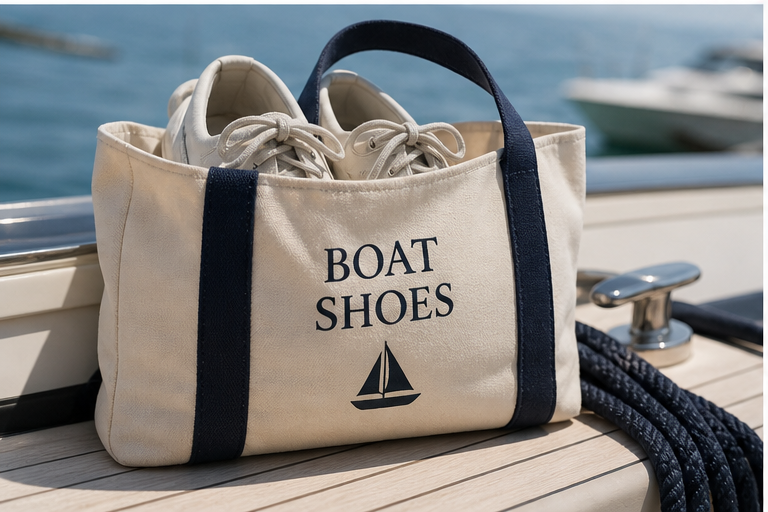
- Bring a shoe bag. Foldable totes fit neatly into a clutch and keep your boat shoes together during the party. Fasten your shoe laces together or use a ribbon so you can quickly identify your pair when a hundred shoes pile up.
- Opt for slip‑on boat shoes. They are easier to don while balancing on a gangway and can double as chic flats ashore.
- Pack non‑slip socks or yacht slippers for comfort if you dislike going barefoot; some crews provide slippers.
- Ask ahead. If the yacht has synthetic flooring or EVA foam decking, the owner might be more relaxed about shoes; nonetheless, always confirm.
- Suggest a cloakroom. For large events, hosts could borrow from nightclub culture and assign a steward to tag guests’ shoes, avoiding the chaotic scramble. When hosting aboard your own yacht, offer monogrammed shoe bags as party favours – elegant and practical.
- Consider resilient decking. When commissioning a yacht or refit, weigh the benefits of synthetic teak, marine cork or composite decking, which tolerate more wear and require less maintenance. A designer floor that isn’t easily scarred could allow guests to stay shod, at least in flat shoes.
Should we embrace the scramble?
Part of yachting’s charm is its rituals. Like a quick change in the back of a limousine or swapping heels for flats after a night on the tiles, the removal of shoes at the top of a gangway becomes a social leveller. The jumbled pile of footwear at the entrance to a cocktail party is a conversation starter: which pair belongs to the film producer? Who wore espadrilles with their tux?
While alternatives – synthetic decks, cloakroom tickets, even shoe cubbies – can make life easier, the barefoot rule speaks to a mindset. A yacht is not a hotel lobby; it’s a floating home with finite resources. As the Gentleman’s Journal eloquently puts it, “boats are lived in … sand is the enemy … the deck crew are not being fussy”. Respecting this ethos ensures you’ll be invited back – and allows you to glide across polished wood with the confidence of a seasoned Riviera regular.
Further Reading
Winter Yacht Holidays: Balancing Leisure and Adventure
Swimwear Fit for a Siren: The Riviera Ready Guide to Bikinis, One-Pieces, Colours and Confidence
Where to Stay in Mallorca: Best Areas for Every Trip
Where to Stay in Ibiza: The Balearic Guide
Where to Stay on the Costa del Sol: Marbella, Málaga, Estepona, Nerja, Fuengirola or the Hills?
Boat International: Superyacht Charter Etiquette
Marine Accounts: Yacht Charter Etiquette