
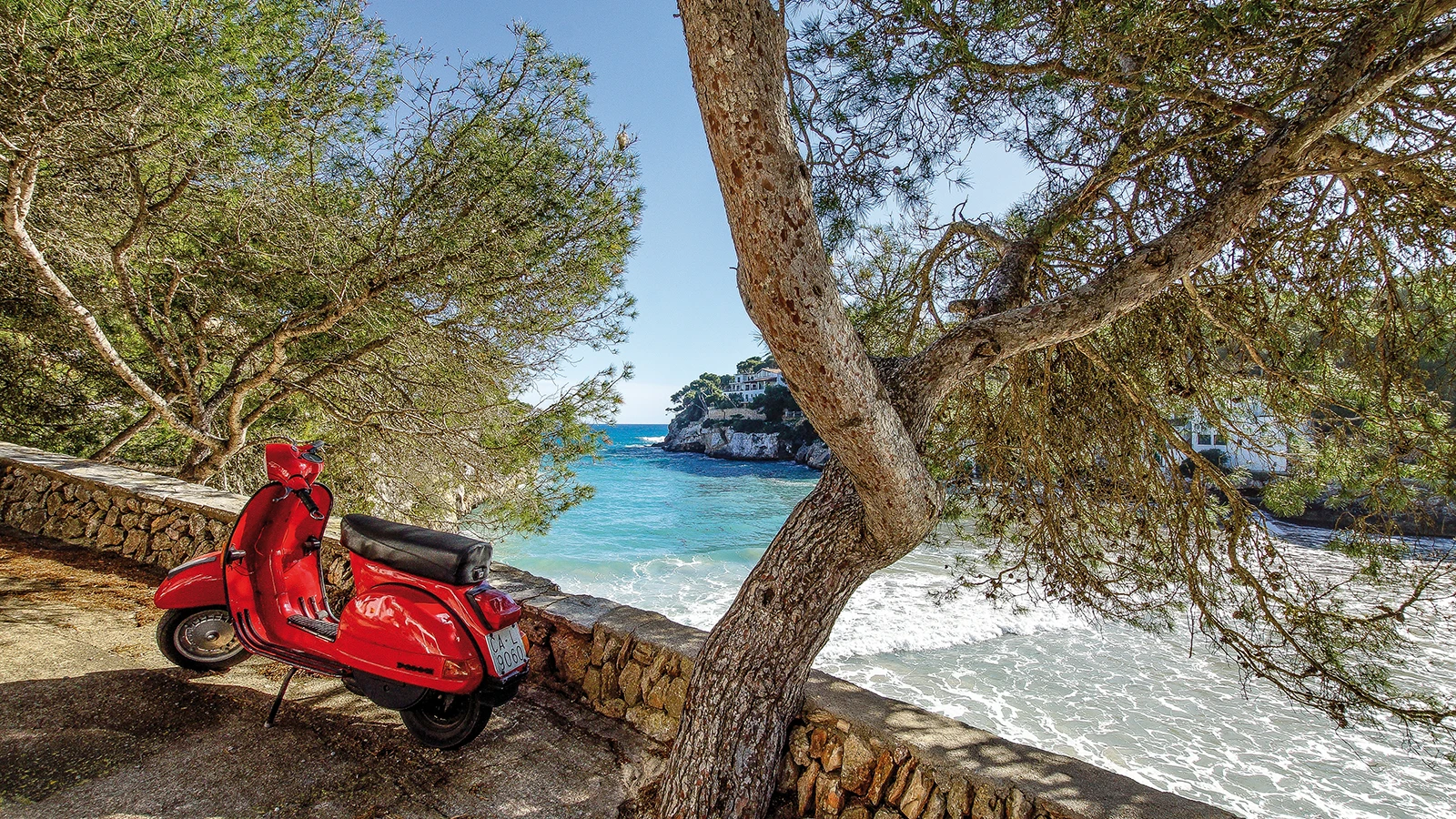
Mallorca Luxury Travel Guide: Royal Summers, Turquoise Coves and Old Mediterranean Glamour
By Marina Zeelie
Mallorca luxury travel guide searches often promise beaches, boutique hotels and pretty villages, but the island’s real appeal lies in something richer: royal summers, yacht culture, mountain estates, artistic villages, turquoise coves and a Mediterranean glamour that has never needed to shout.
This Mallorca luxury travel guide is for the island beyond the easy postcard: royal summers, yacht culture, mountain estates, artistic villages, turquoise coves and Mediterranean glamour that has never needed to shout.
But that easy familiarity is deceptive.
At its best, Mallorca is not a simple resort island. It is a layered luxury destination: Palma’s honey-stone city break, the Spanish royal family’s summer connection with Marivent, King Felipe VI’s sailing presence at the Copa del Rey regatta, Deià and Valldemossa’s artistic and Hollywood afterlife, Sir Richard Branson’s Son Bunyola estate, Michael Douglas and Catherine Zeta-Jones’s long association with S’Estaca, and the UNESCO-listed Serra de Tramuntana rising above it all like a cinematic backbone.
That is the Mallorca Riviera Ready cares about.
Not the Mallorca of rushed airport transfers and overfilled coves, but the island of old money, modern boutique hotels, sea-facing fincas, mountain roads, polished lunches, discreet villas, stone villages, sailing whites, linen evenings and just enough star wattage to remind you that this island has always attracted people who could have gone almost anywhere.
The clever version of Mallorca in 2026 is not about seeing everything. It is about choosing the right Mallorca.
For a practical breakdown of Palma, Sóller, Deià, Alcúdia, Playa de Muro, Cala d’Or and the island’s best bases, read Riviera Ready’s full guide to where to stay in Mallorca.
Mallorca luxury travel guide: royal history and Balearic glamour
A brief history helps explain why Mallorca feels so layered. Long before the yachts and boutique hotels, the island had prehistoric and Talayotic settlements, Roman Palma and Pollentia, Vandal and Byzantine chapters, and then centuries of Muslim rule, when Madina Mayurqa became a sophisticated Mediterranean city. James I of Aragon conquered Mallorca in 1229, after which the island became part of the Catalan-Aragonese world and, for a time, the Kingdom of Mallorca. That is why Palma, the Tramuntana villages and the old agricultural estates still carry so many overlapping traces: Roman, Islamic, medieval Catalan, aristocratic, rural and modern resort life all sitting on top of one another.
Mallorca remains the Balearics’ default headline island because it has range. Ibiza has energy and glamour. Menorca has quiet beauty. Formentera has barefoot perfection. But Mallorca has the widest register: a serious capital city, a royal summer tradition, a major sailing calendar, family beaches, cliff roads, rural estates, luxury hotels, mountain villages, art, shopping, restaurants and a deep stock of villas and fincas.
It is also easy to reach. Palma de Mallorca Airport handled 33.8 million passengers in 2025, which tells you two things at once: Mallorca is hugely accessible, and the island is under pressure.
That pressure is now part of the story. Mallorca is not a secret and should not be sold as one. The stylish traveller’s task is not to pretend they have discovered it, but to experience it intelligently: choose better dates, better bases, better transport choices, better beaches and better manners.
In luxury terms, that is the difference between consumption and taste.
Palma: the city break hiding inside the island holiday
Palma is the reason Mallorca should never be reduced to beaches.
The capital has one of the Mediterranean’s most seductive old quarters: golden stone, shaded streets, grand courtyards, galleries, churches, boutiques, rooftop bars and a marina-facing edge that gives the city its social confidence. It is compact enough for a long weekend and layered enough to feel like more than a gateway.
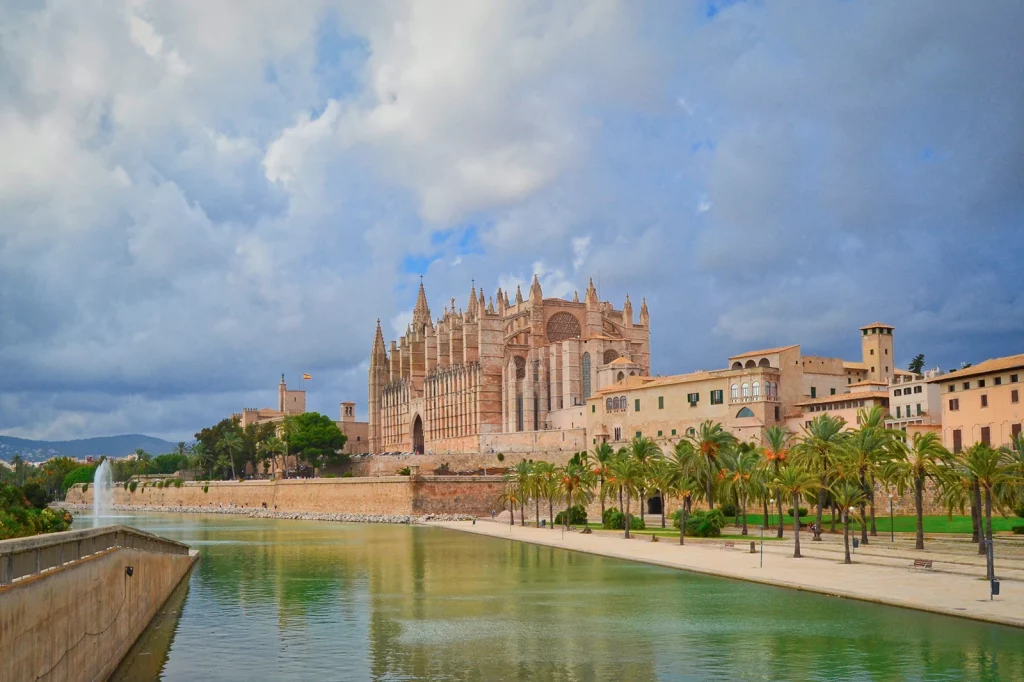
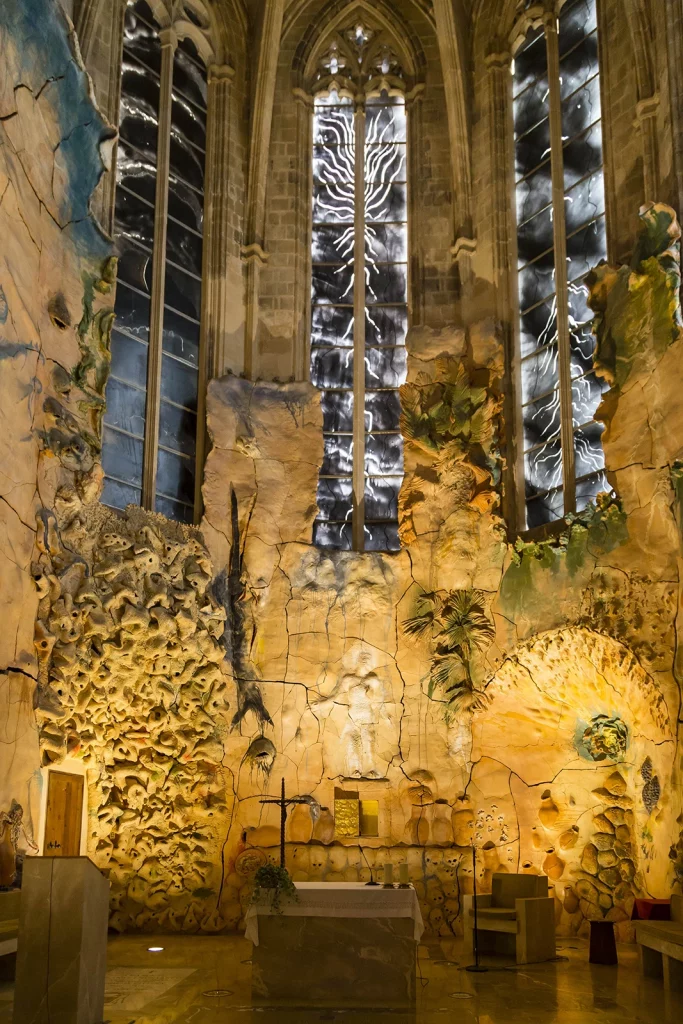
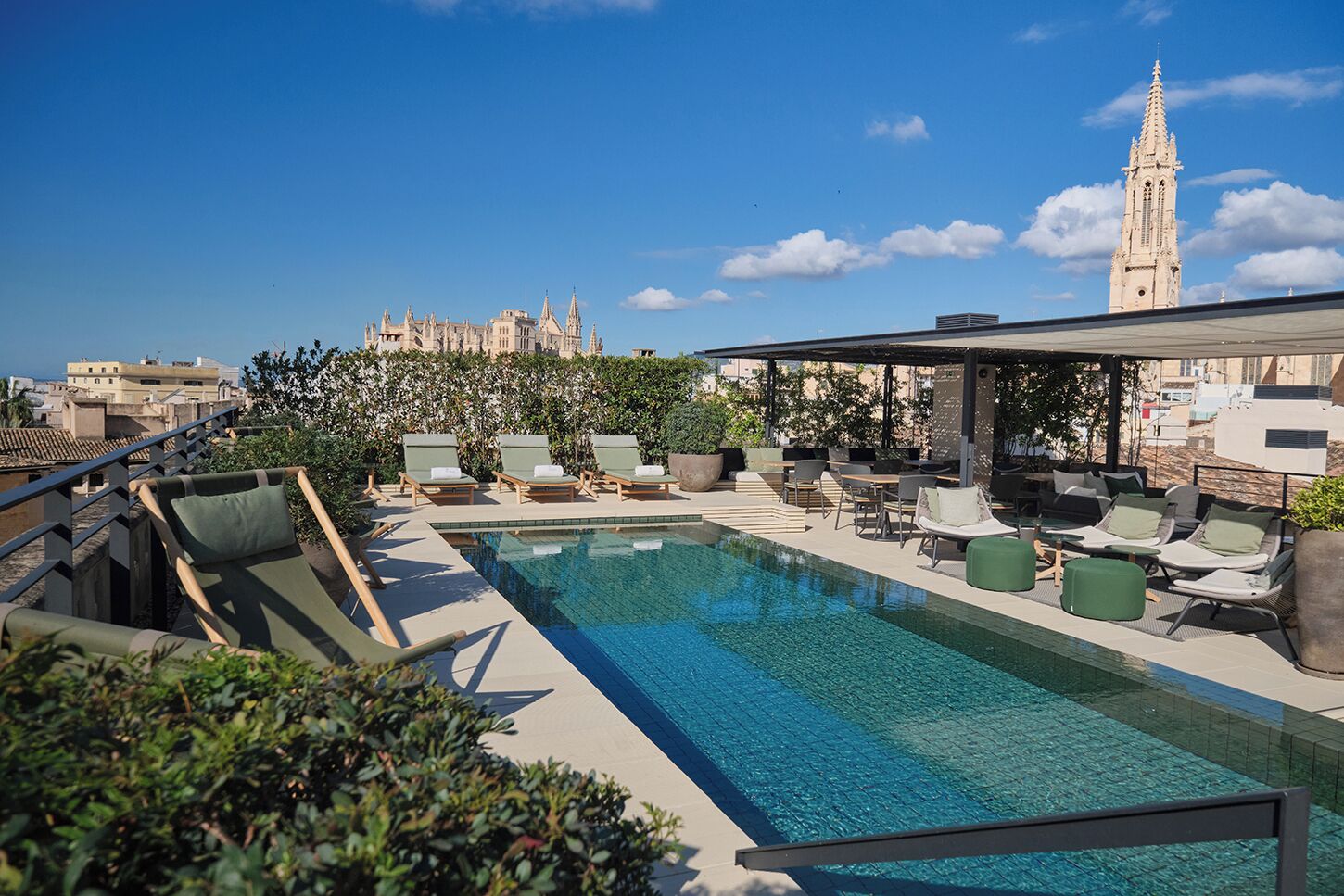
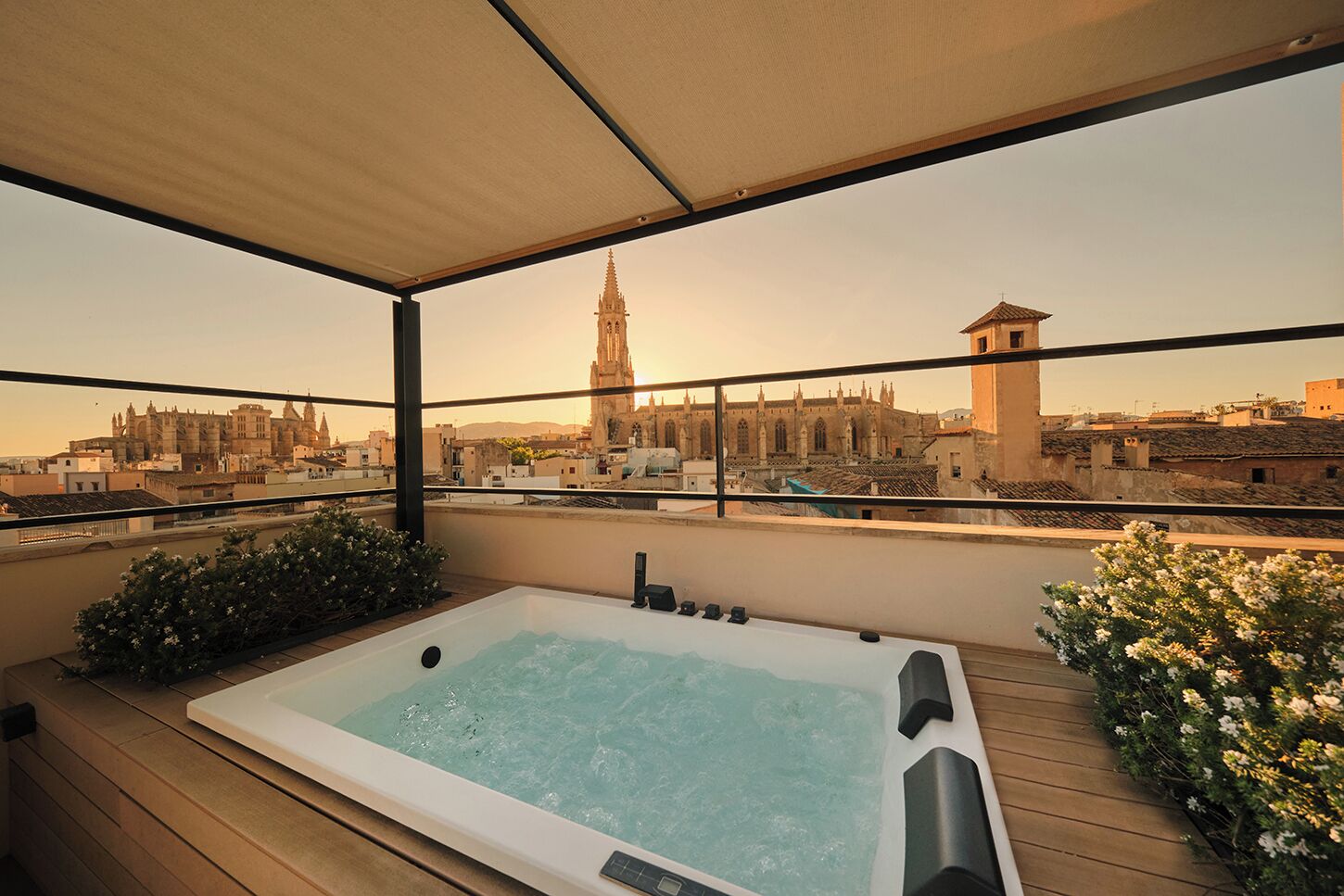
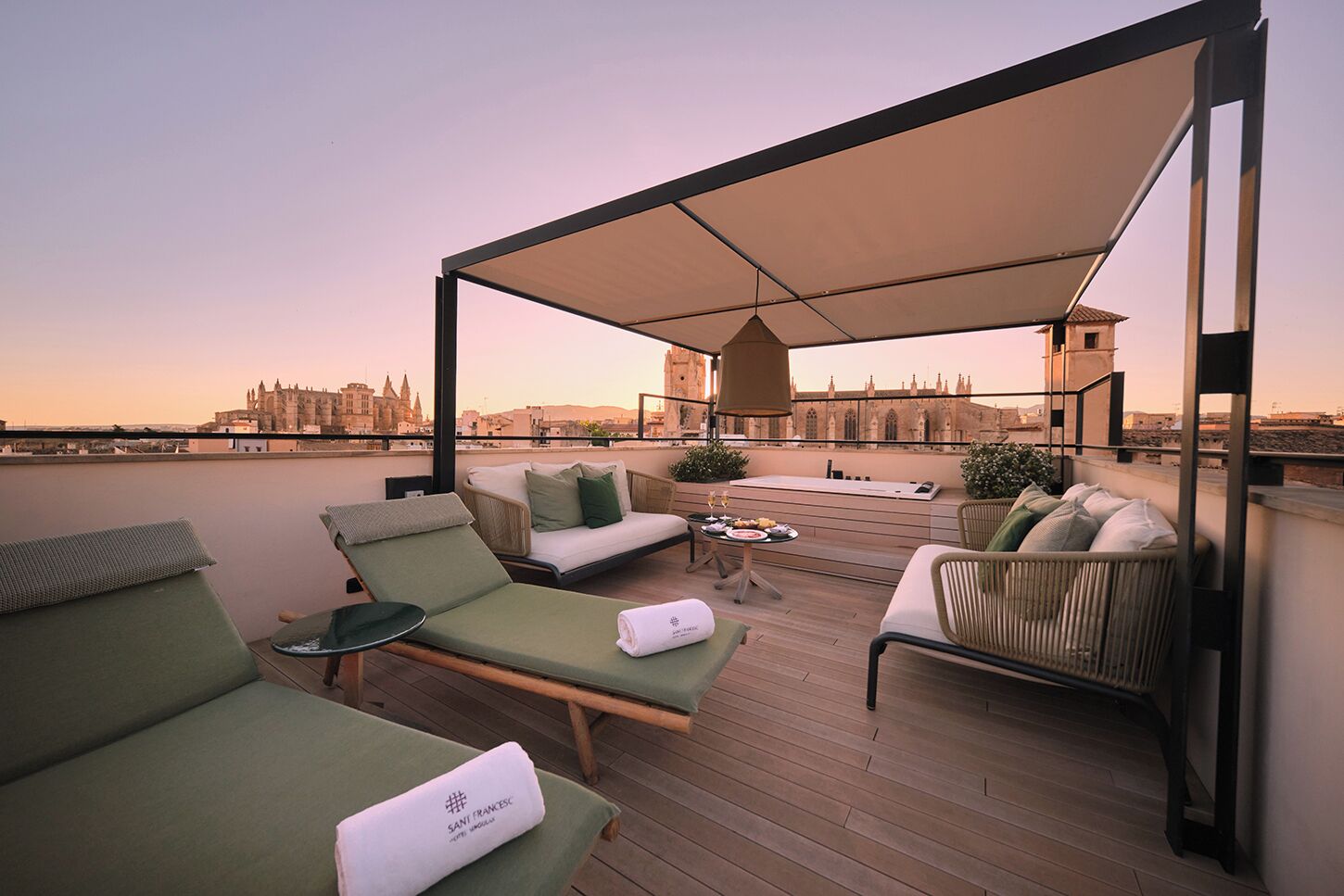
La Seu, Palma’s cathedral, is the visual anchor. Rising above Parc de la Mar, it gives the city one of the great Mediterranean arrival images: Gothic scale, warm stone, sea light and a skyline that feels both religious and theatrical. Inside, the story continues through the work of Antoni Gaudí and Miquel Barceló, giving the building a rare sense of historical and modern artistic continuity.
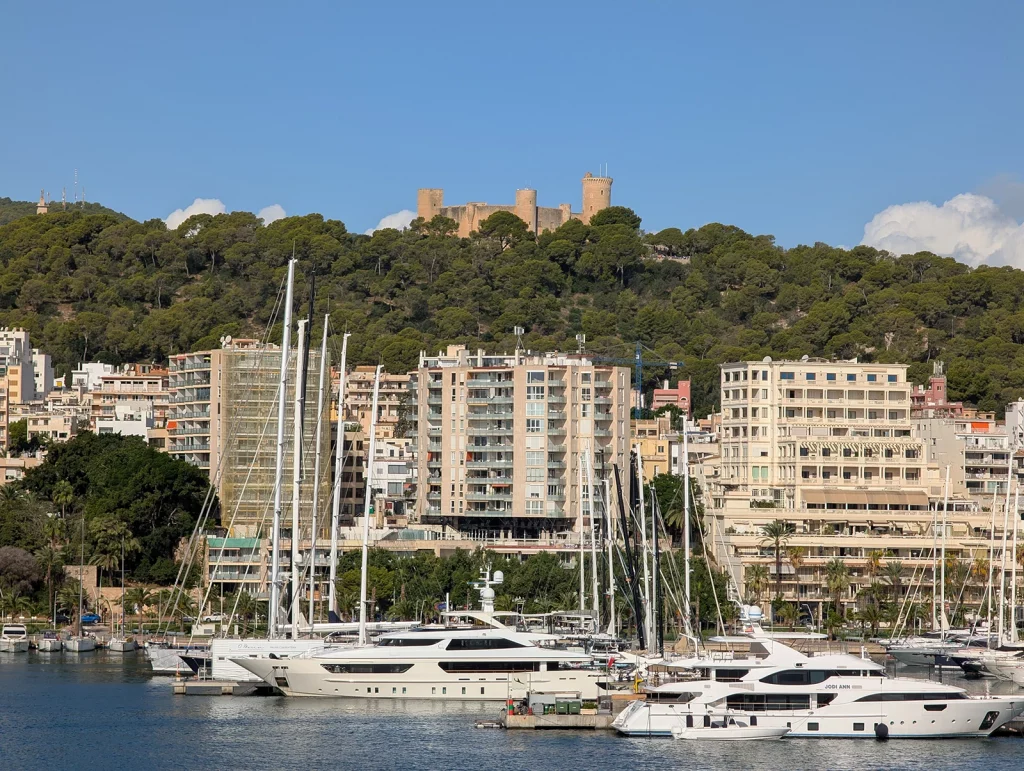
Bellver Castle is Palma’s other great visual landmark: a rare circular Gothic fortress set above the city, with views across Palma Bay, the old town and the surrounding hills. It gives the article a useful counterpoint to La Seu — cathedral below, castle above — and works especially well for readers who want one strong historic stop without turning a Palma weekend into a museum marathon.
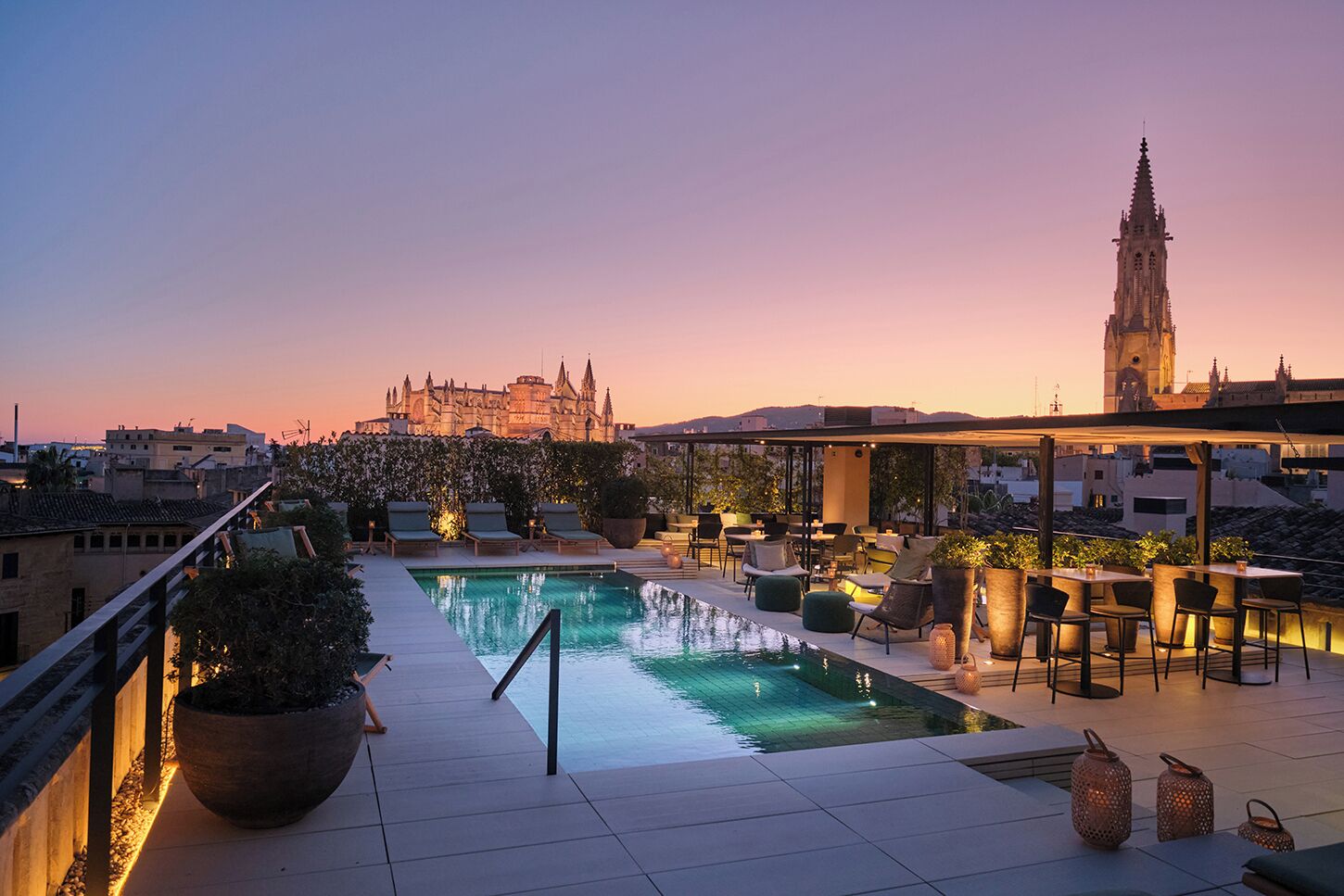
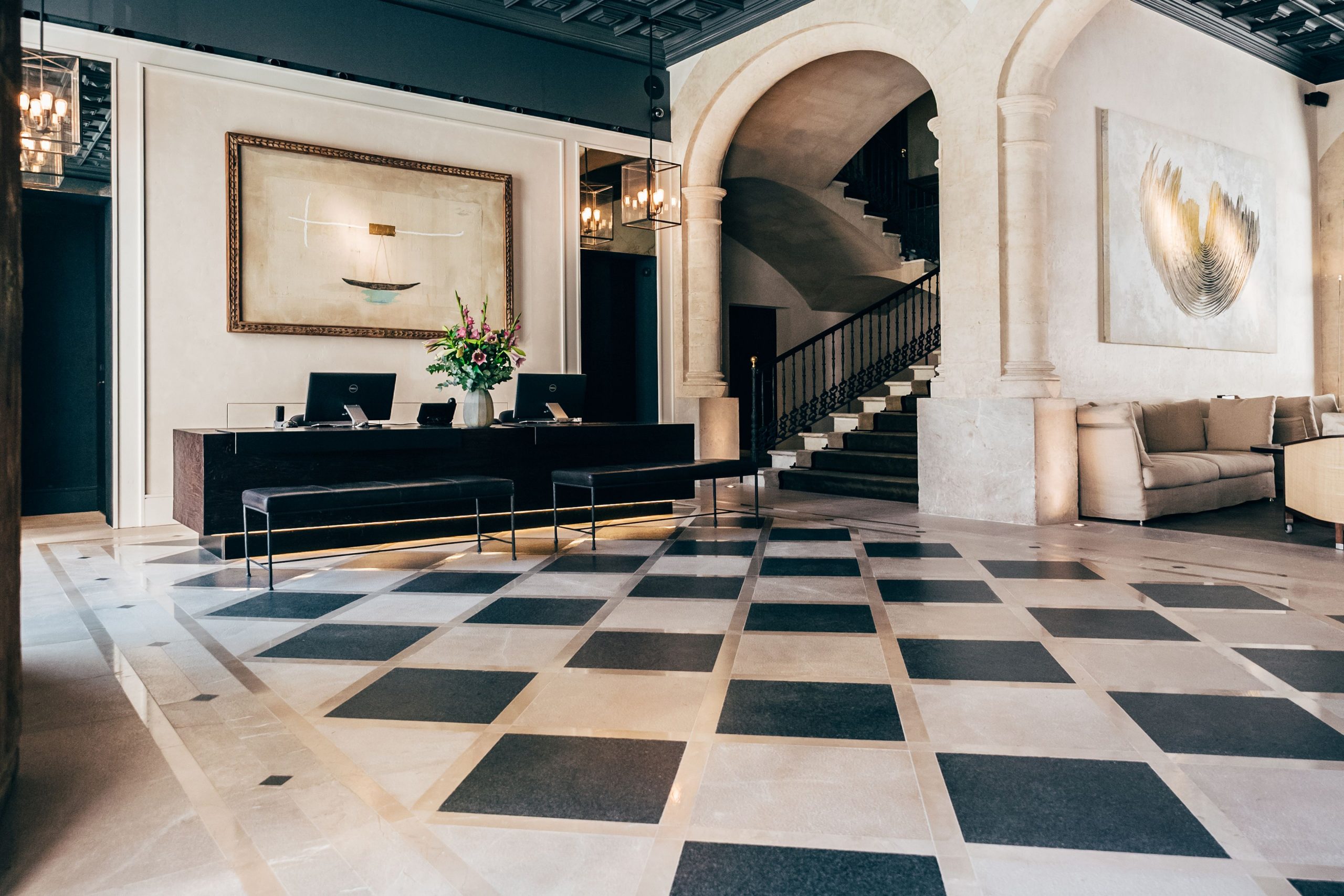
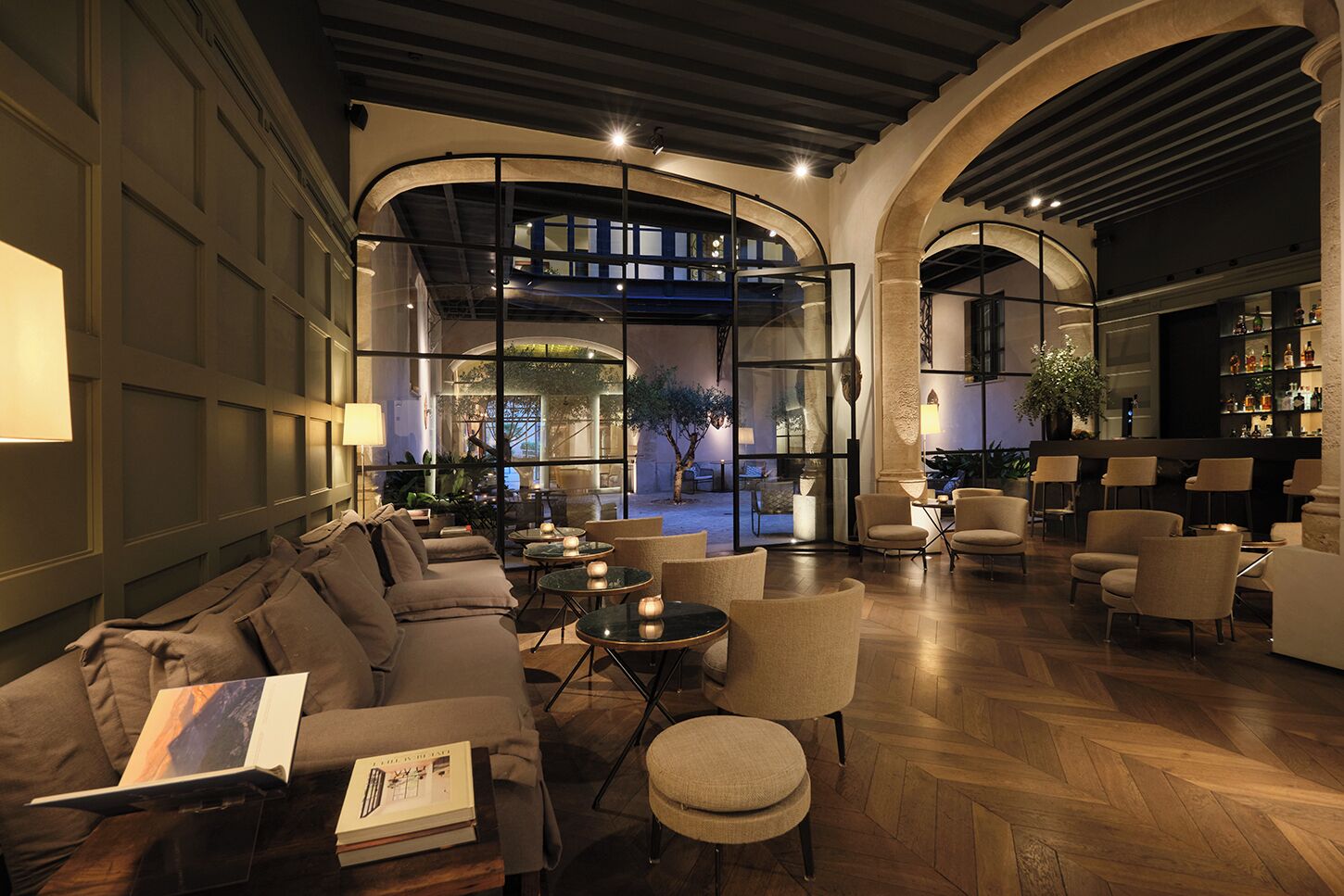
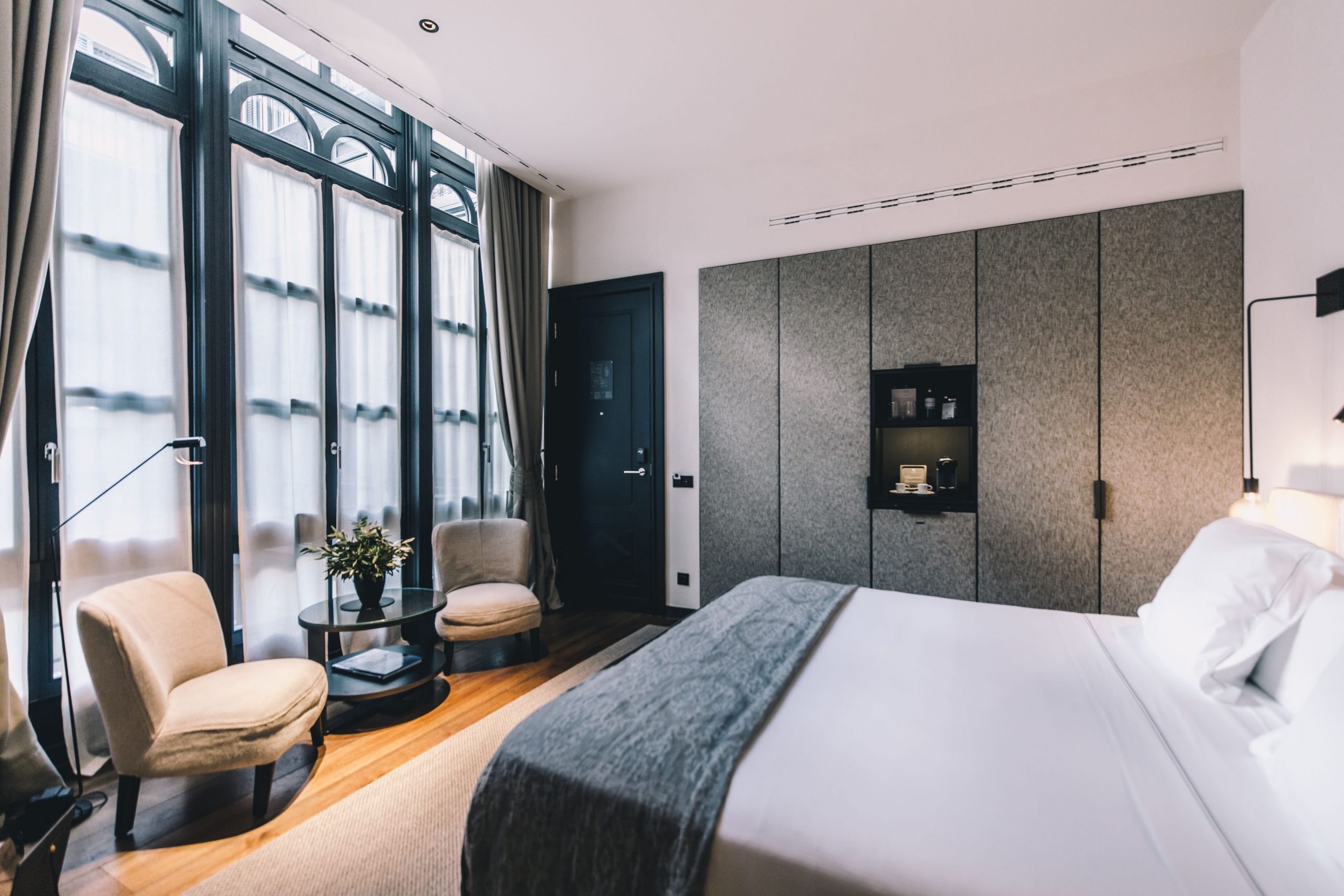
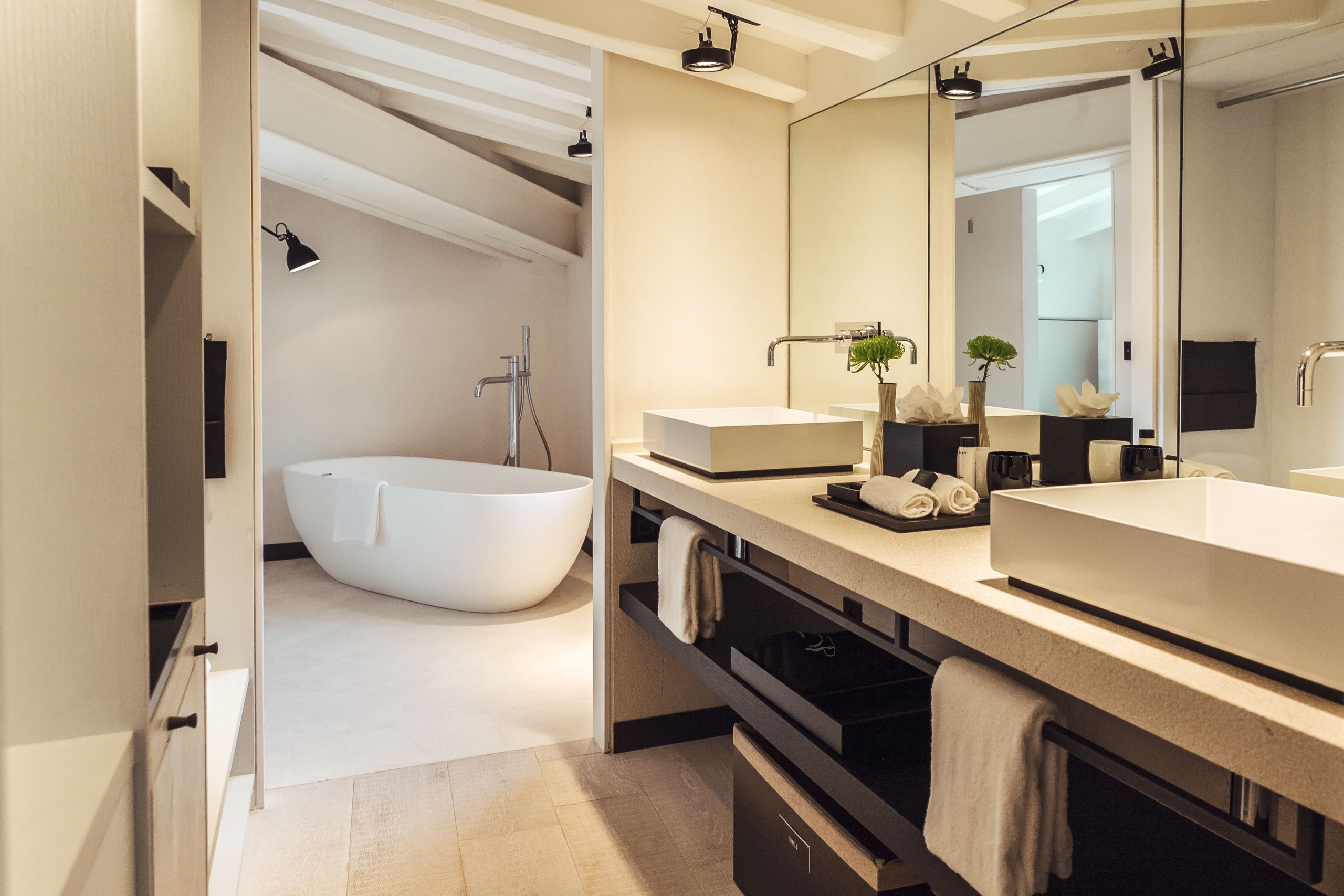
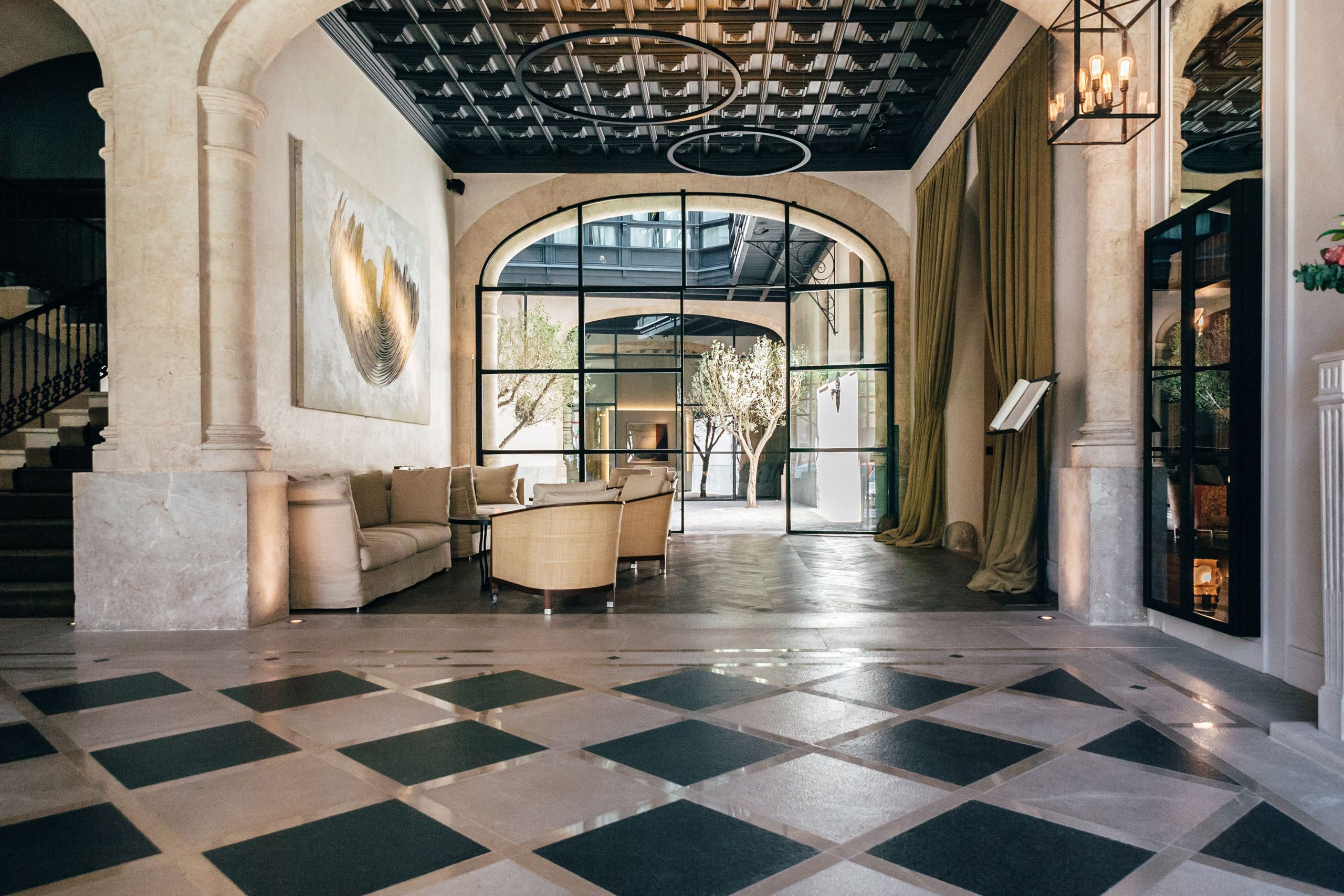
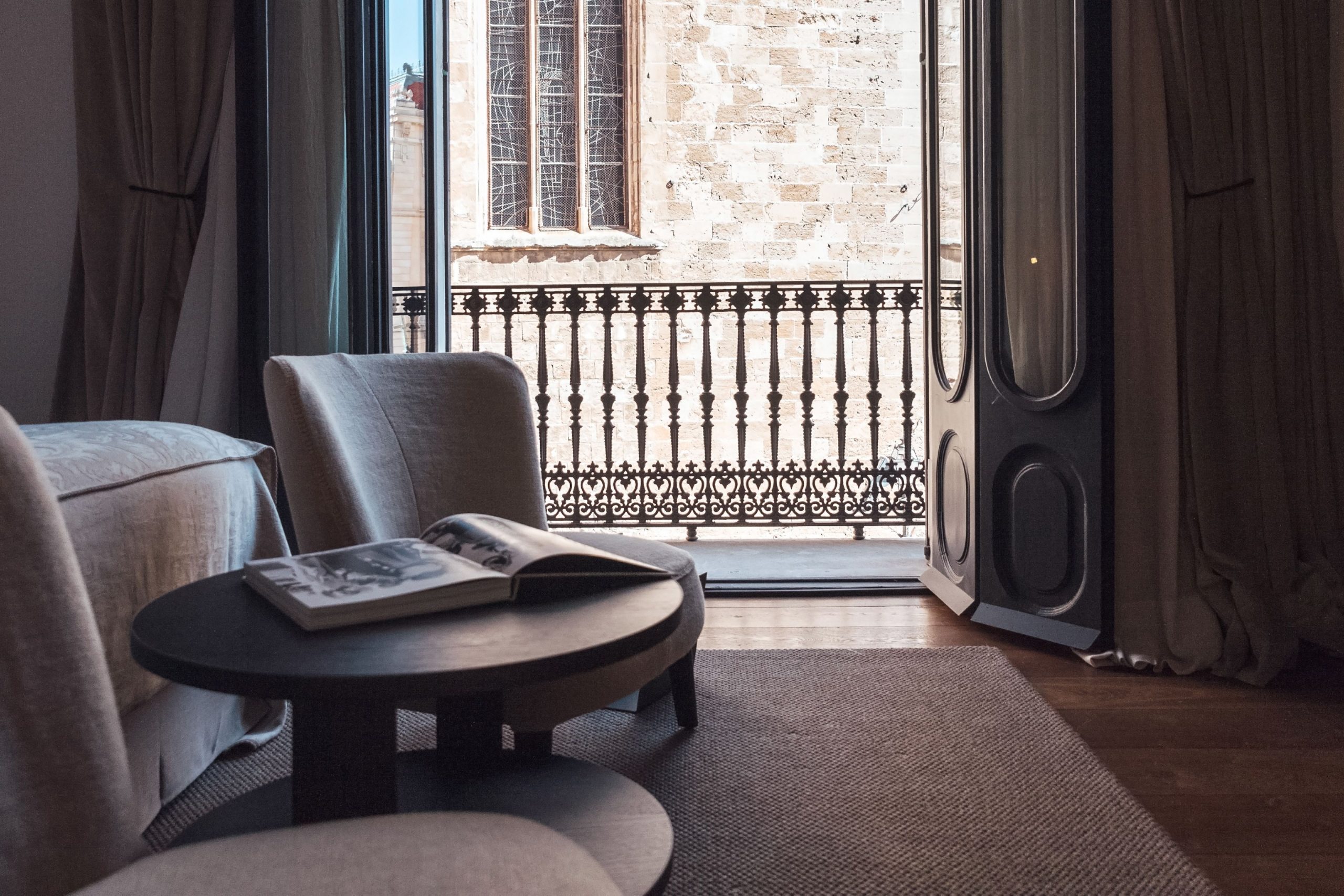
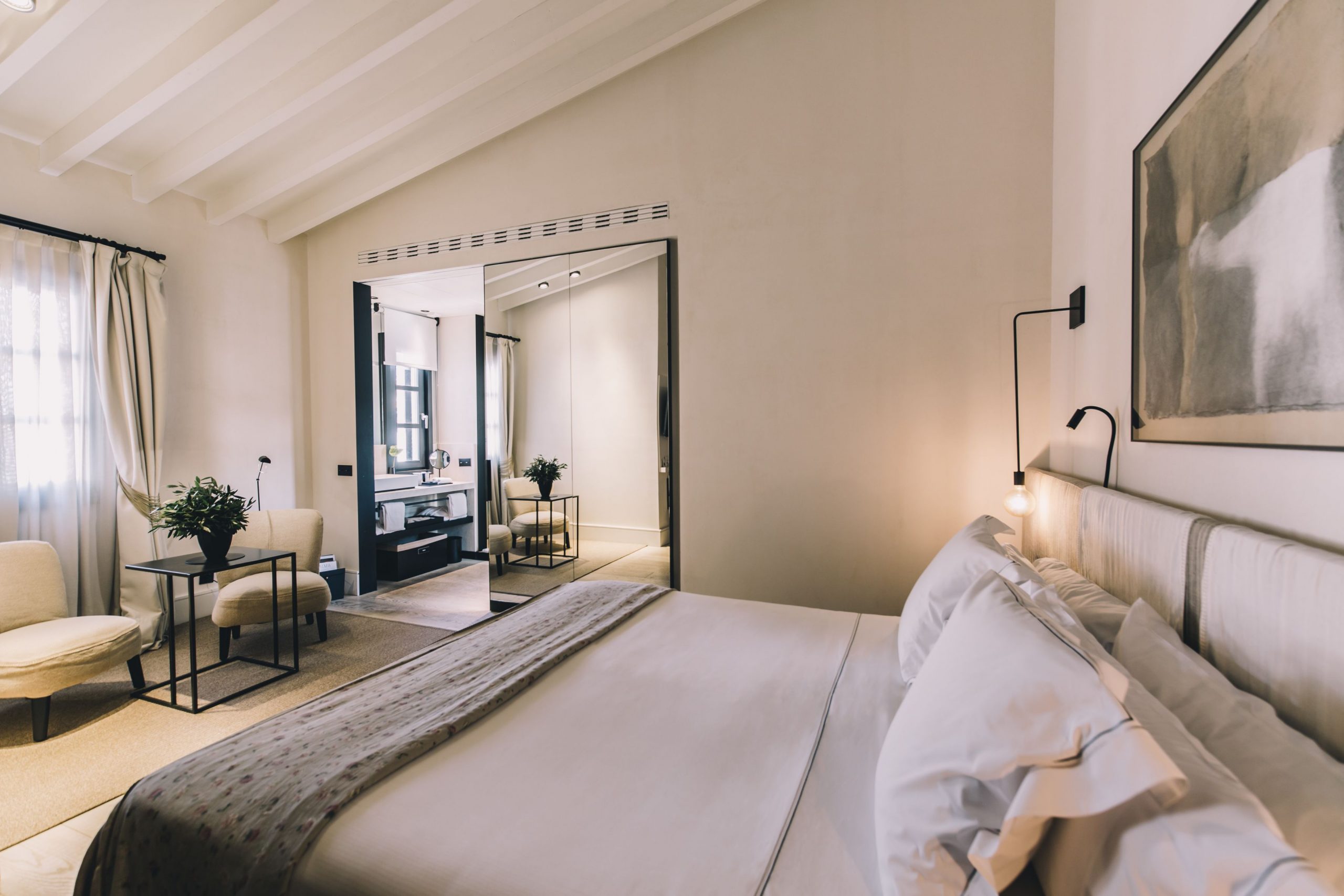
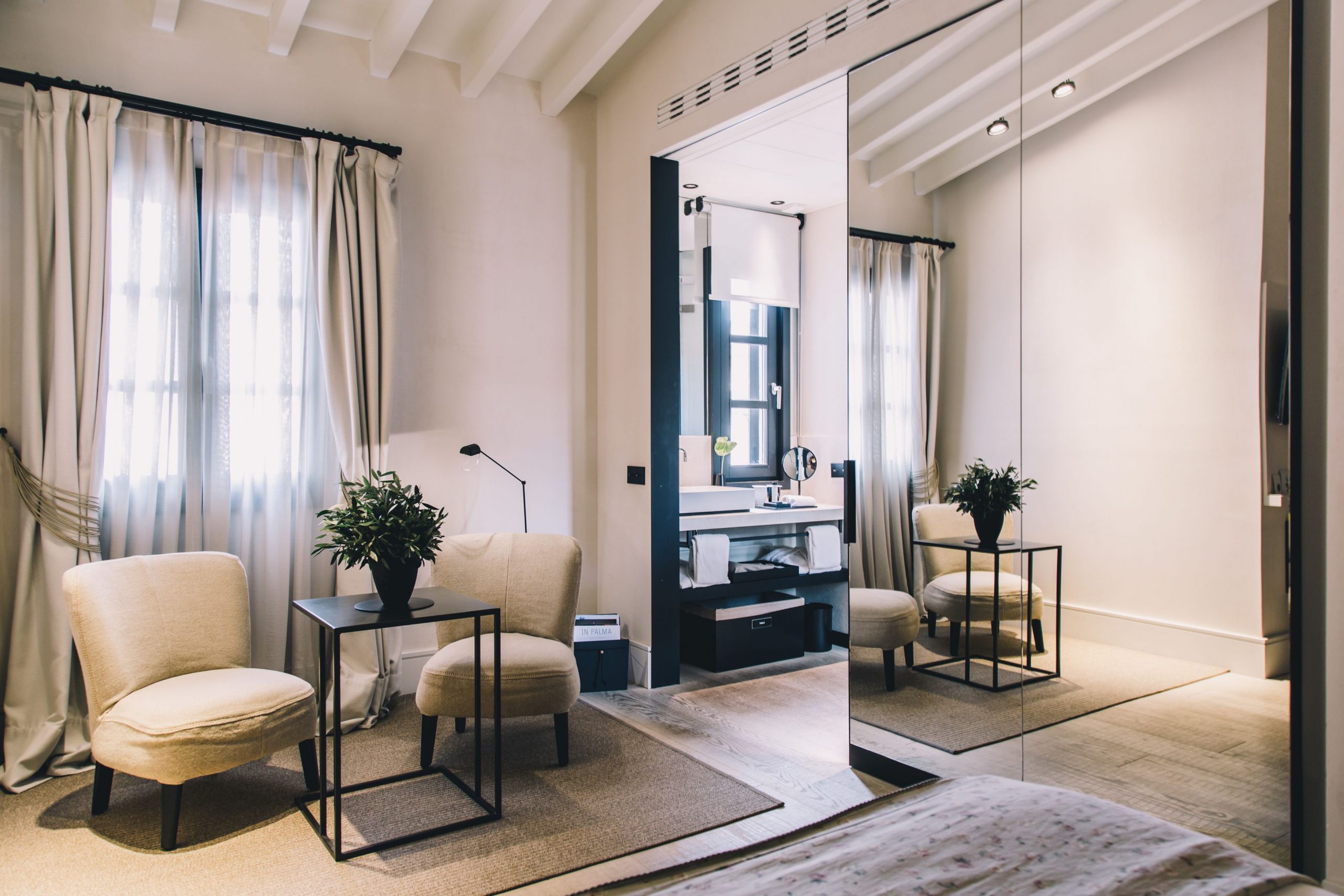
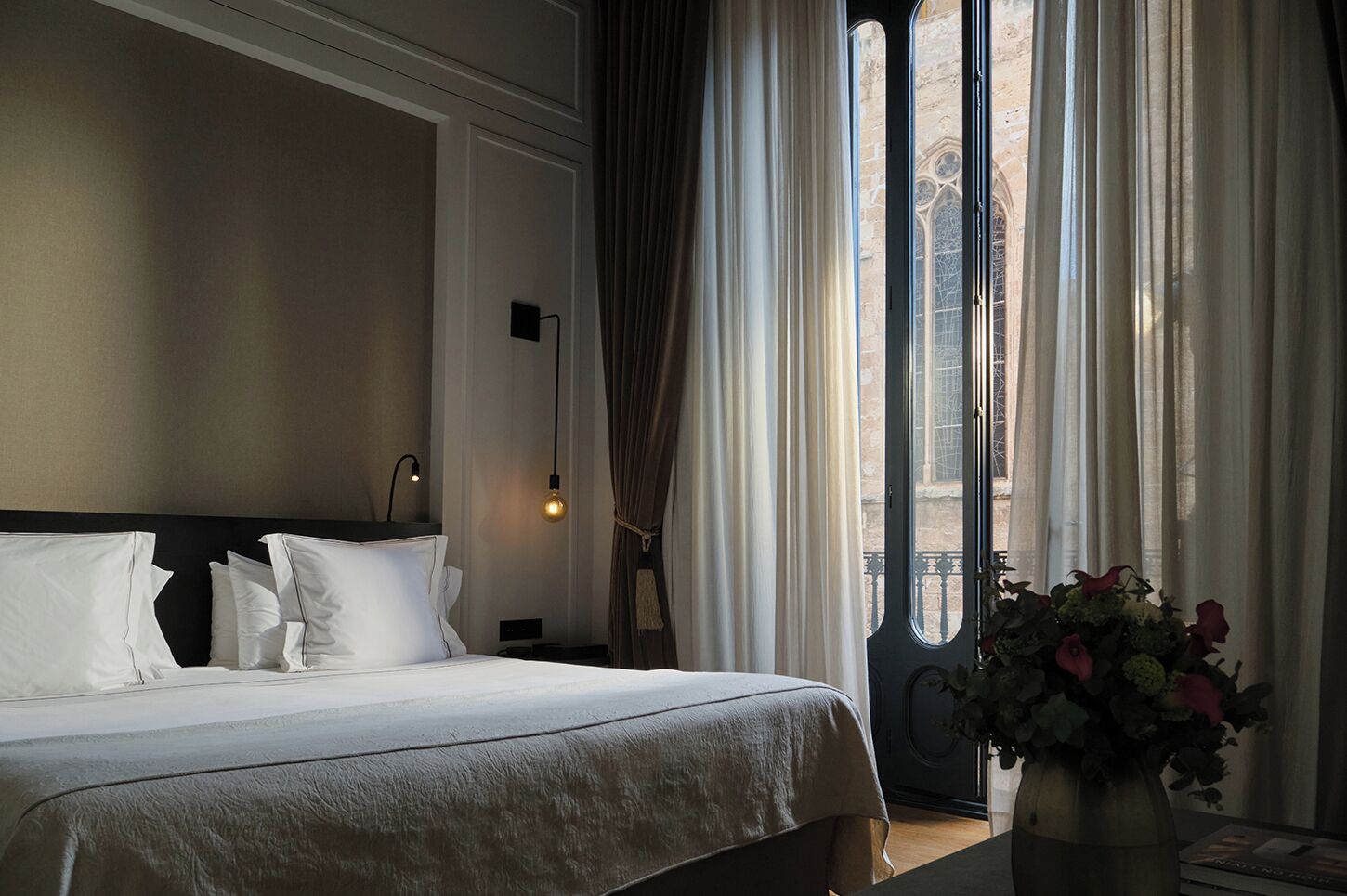
Around it, Palma becomes a luxury city break in miniature. There is the Royal Palace of La Almudaina, Passeig del Born, Jaume III, La Llotja, Santa Catalina, Es Baluard Museu d’Art Contemporani and Fundació Miró Mallorca. The best hotels understand this mood: old palaces, restored townhouses, quiet courtyards, rooftop pools, edited interiors and the feeling that you are staying inside the city rather than beside it.
For a 48-hour trip, Palma alone is enough. Arrive Friday, stay in the old town, walk everywhere, book a rooftop or courtyard dinner, visit La Seu and Es Baluard, shop properly, then use Sunday for Portixol, Bellver Castle or a long lunch before flying home.
The mistake is to race out of Palma too quickly. The city is not the prelude to Mallorca. It is one of the island’s strongest luxury propositions.
Marivent, King Felipe VI and Mallorca’s royal summer
Mallorca’s luxury image is not built only on hotels and beaches. It is also built on royal habit.
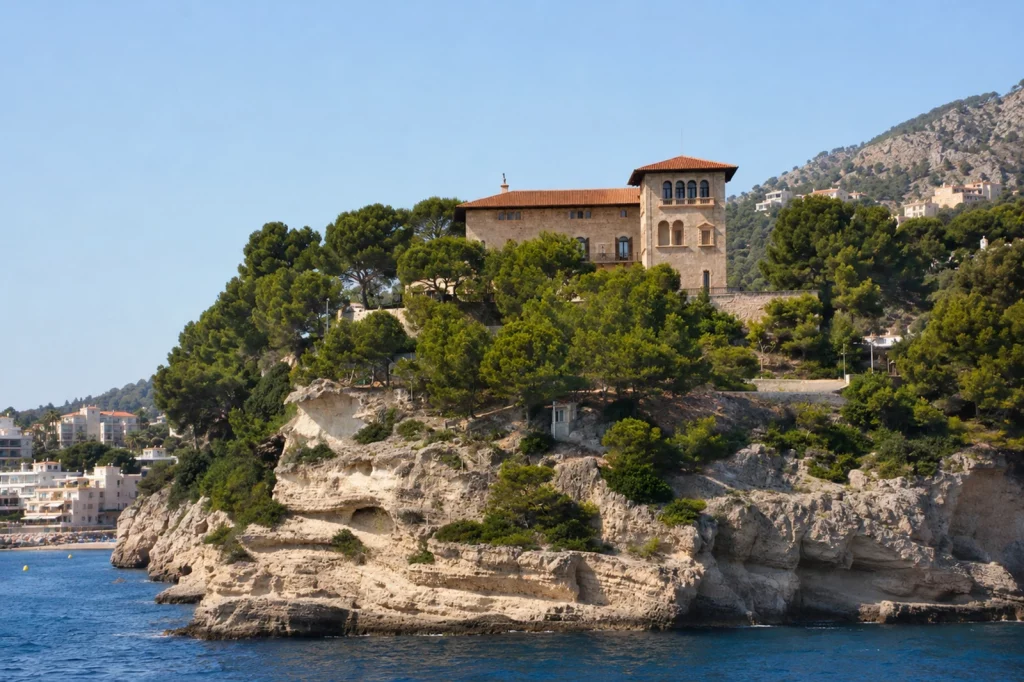
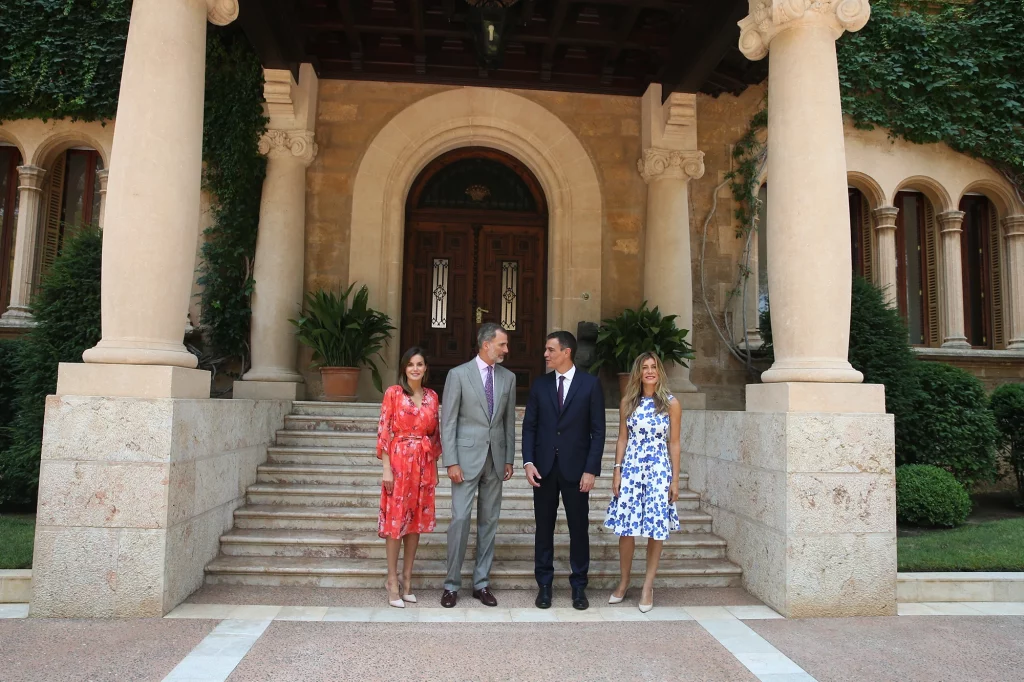
The Spanish royal family’s association with the island, and particularly with Marivent Palace in Palma, gives Mallorca a social gravity that Ibiza and Menorca simply do not have in the same way. When King Felipe VI, Queen Letizia and the royal family are seen on the island in summer, Mallorca briefly becomes not just a holiday destination but a stage for Spanish public life.
The Copa del Rey MAPFRE regatta sharpens that image. Palma’s sailing calendar is not some decorative extra for tourist brochures; it is one of the island’s prestige signals. The Bay of Palma, the Real Club Náutico, the royal connection and the international sailing crowd all reinforce Mallorca’s place in the old Mediterranean circuit of yachts, clubs, white trousers, polished decks and quiet hierarchy.
This matters because it explains why Mallorca still feels more established than fashionable. Ibiza often feels like a scene. Mallorca feels like an institution.
That does not mean every visitor should chase royal sightings or regatta invitations. It means the island’s luxury identity has roots. It has continuity. It has a social architecture.
The smartest way to use that energy is not to behave like a paparazzo, but to choose Palma and the south-west with the right eye: marina walks, sailing weeks, classic hotels, discreet restaurants, summer evenings, and a sense that Mallorca’s glamour has always been most persuasive when it is half-hidden.
Deià, Valldemossa and the celebrity mythology of the Tramuntana
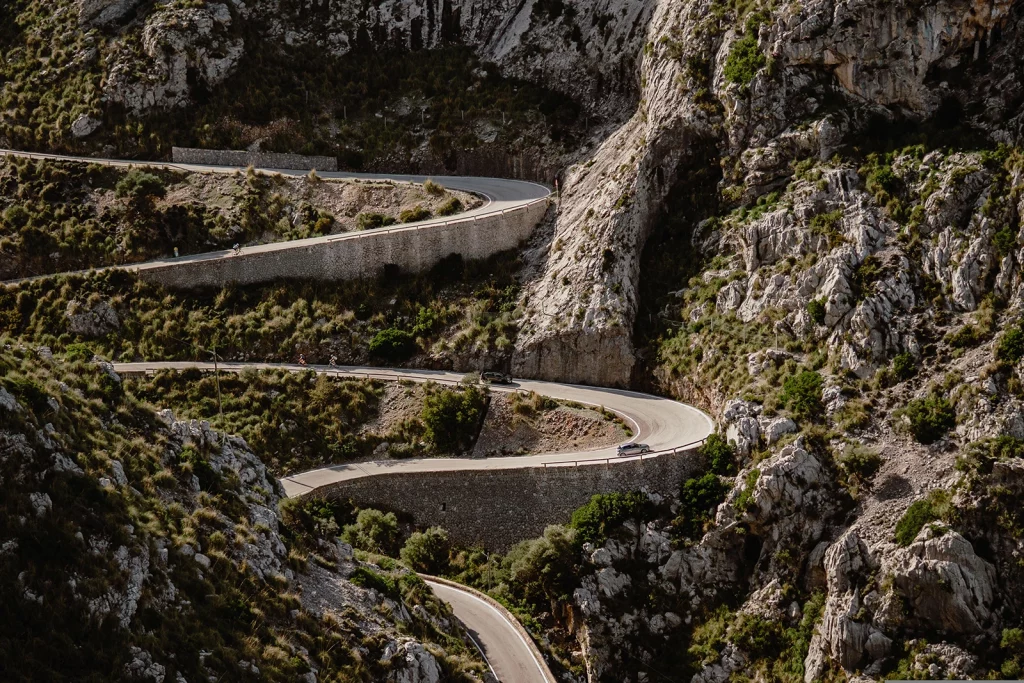
The Serra de Tramuntana is not simply “the scenic part” of Mallorca. It is the island’s great drama.
UNESCO recognises it as a cultural landscape, shaped by centuries of terraces, dry-stone walls, farms, water systems, olive groves and mountain settlements. That is important. The Tramuntana is not untouched wilderness. It is a worked, engineered and inhabited landscape — a mountain civilisation built out of stone, water and patience.
The name also needs a little care. Mallorca’s Serra de Tramuntana should not be confused with the Tramontana or Tramuntana wind of mainland Spain and the wider north-west Mediterranean, although the words are related. Both come from the Latin transmontanus, meaning “beyond” or “across the mountains”, and in Catalan and Spanish usage the term is associated with the cold northerly wind that blows down across mountain ranges, especially around the Costa Brava and the Gulf of Lion. In Mallorca, the Serra de Tramuntana is the mountain range itself — but the name still carries that old Mediterranean sense of northness, weather and mountains.
Valldemossa is the classic entry point: elevated, monastic, beautiful and forever linked with Frédéric Chopin and George Sand. It is close enough to Palma for an easy excursion, but it works better if you give it time. Arrive early, stay late, or sleep nearby. Midday Valldemossa in high summer can feel like a postcard being handled by too many people.
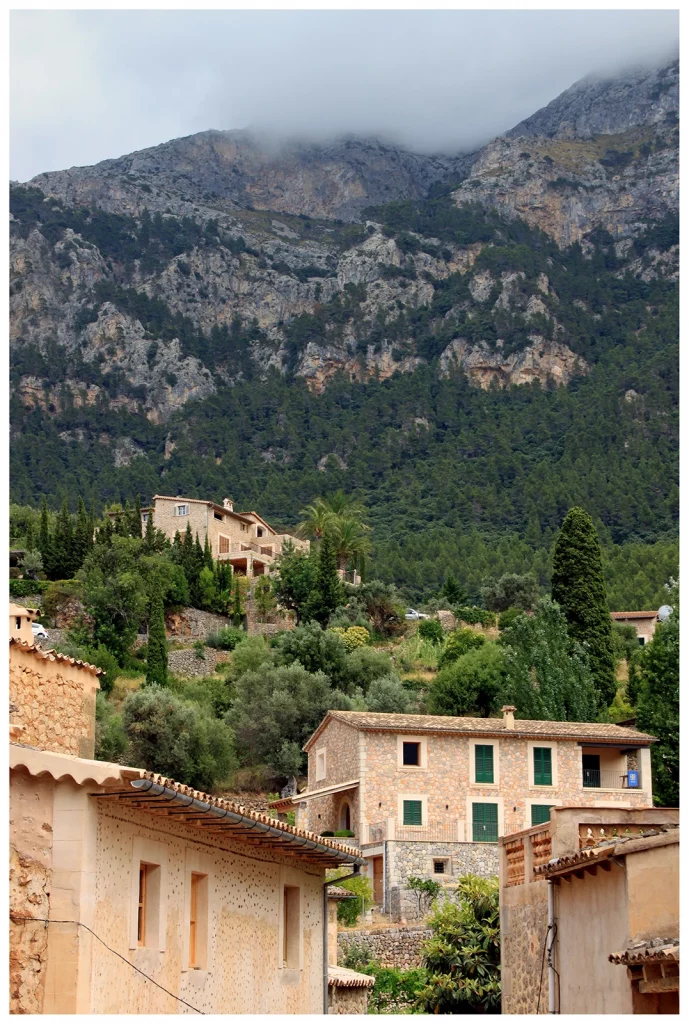
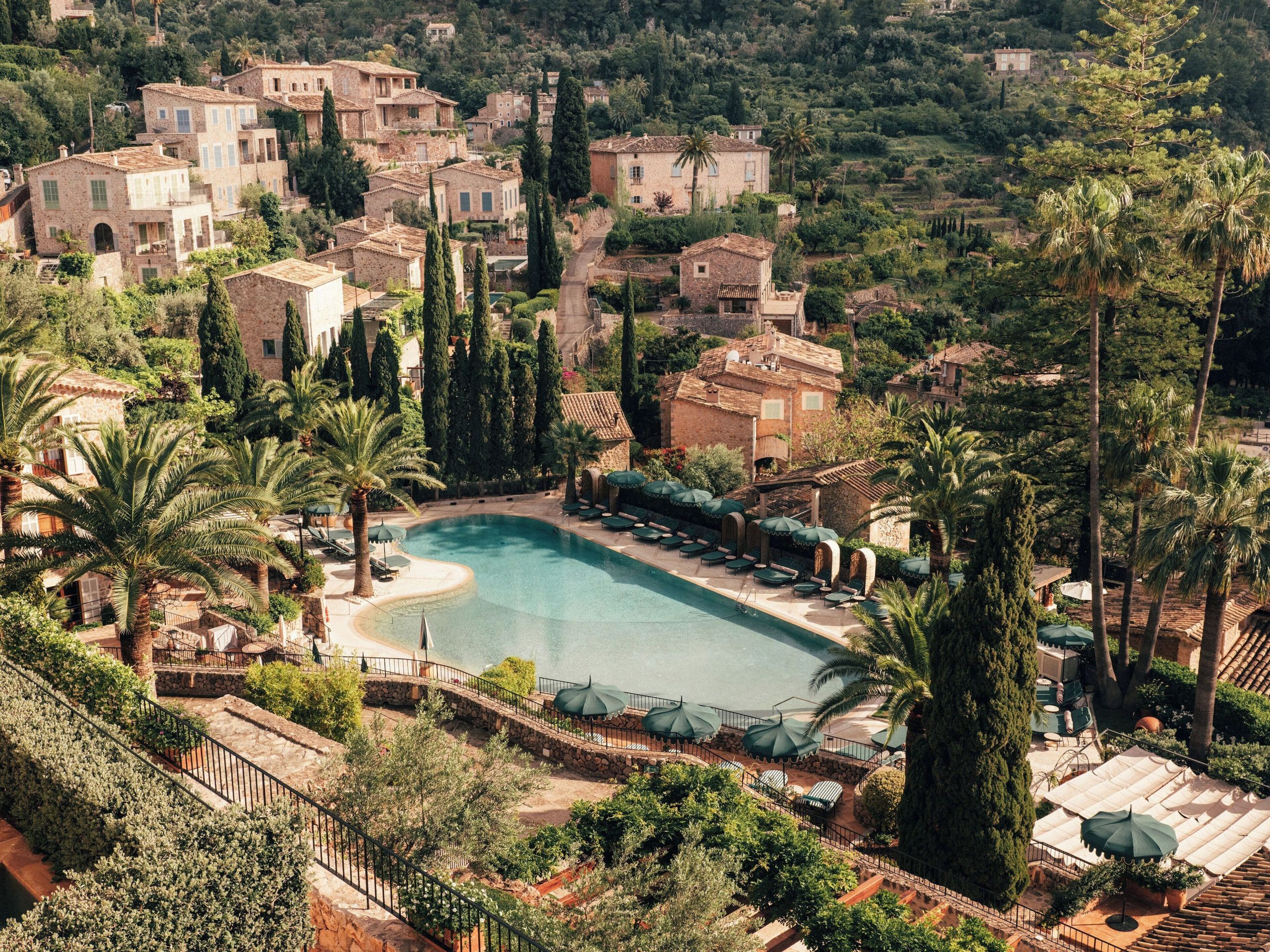
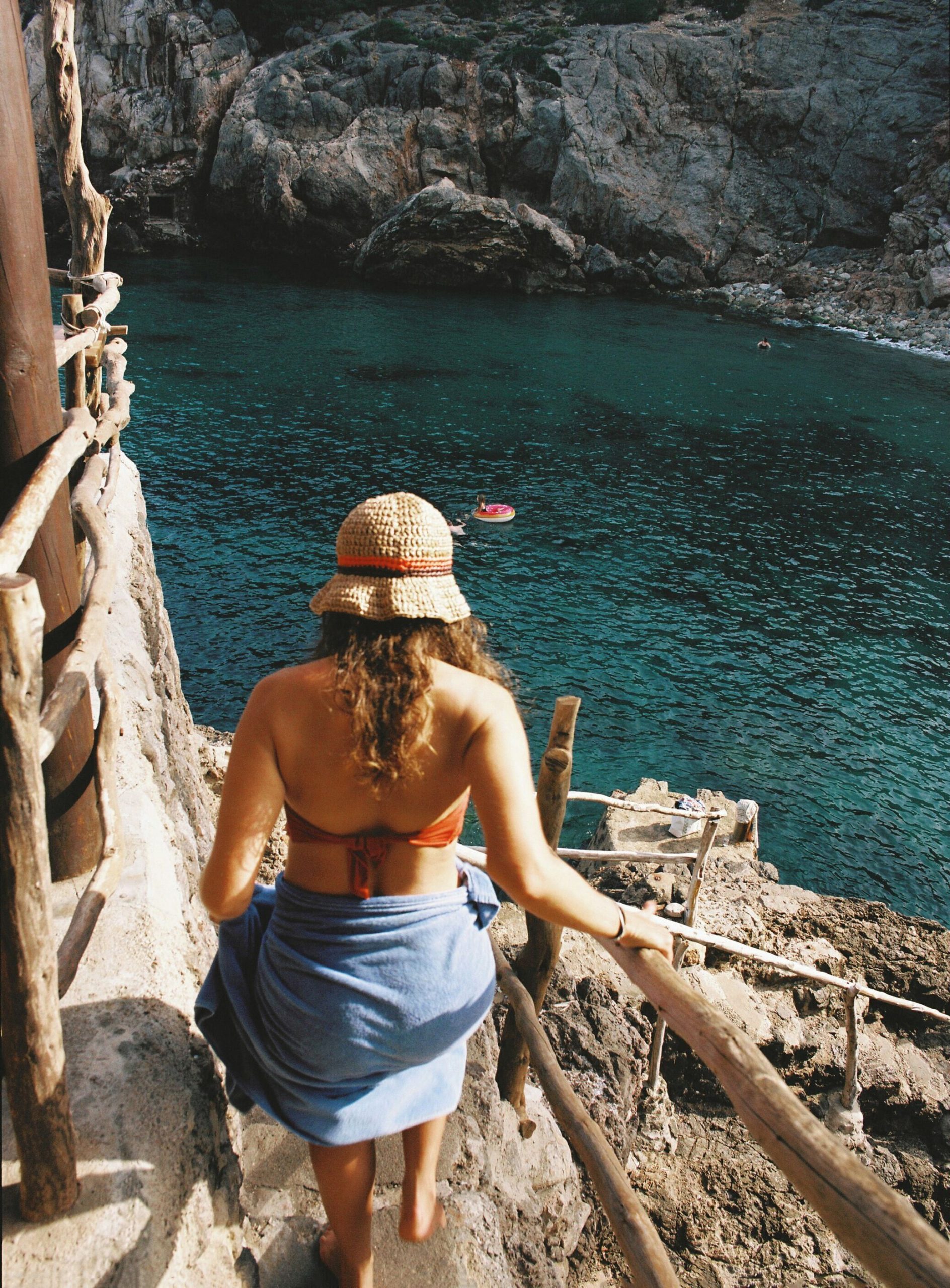
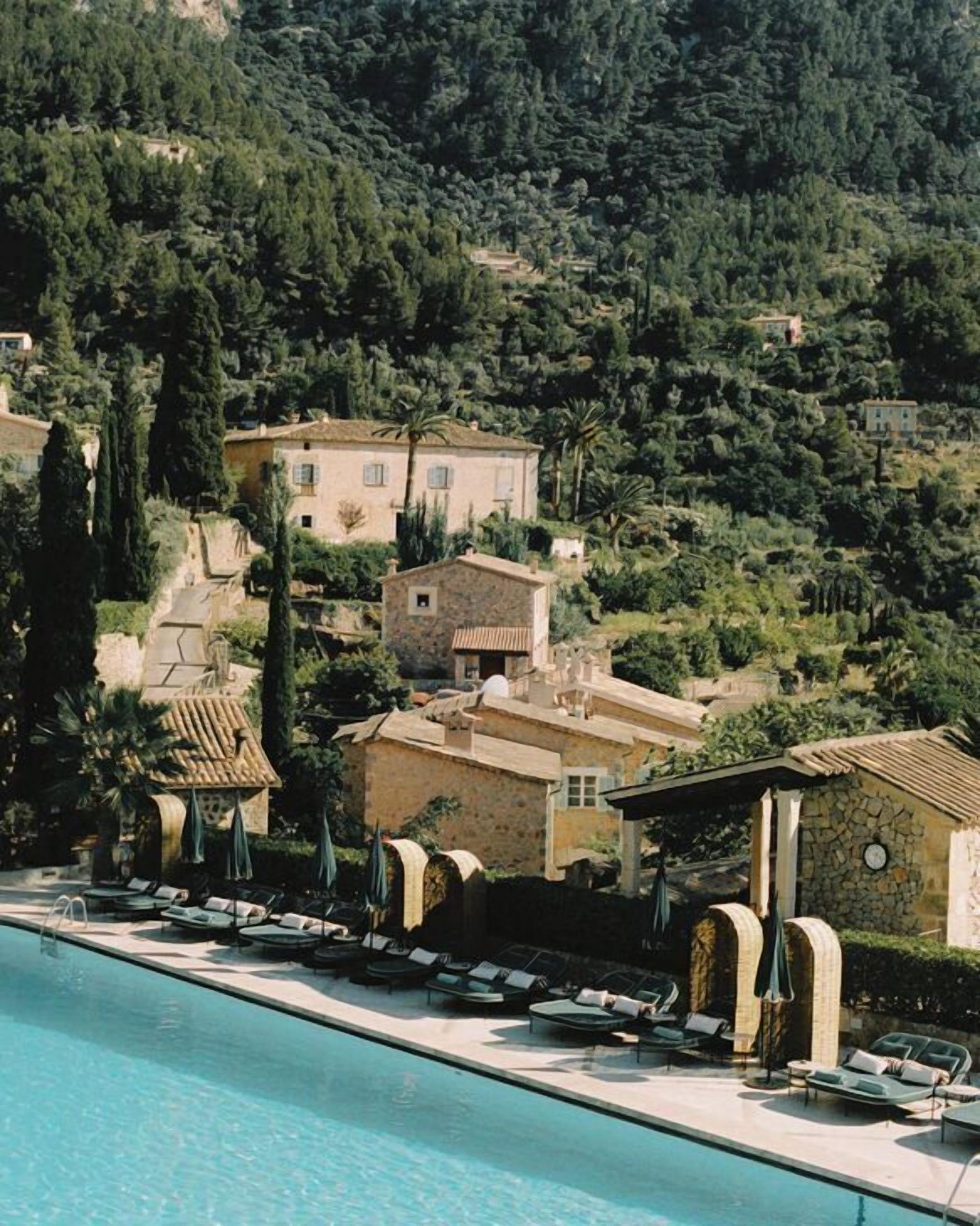
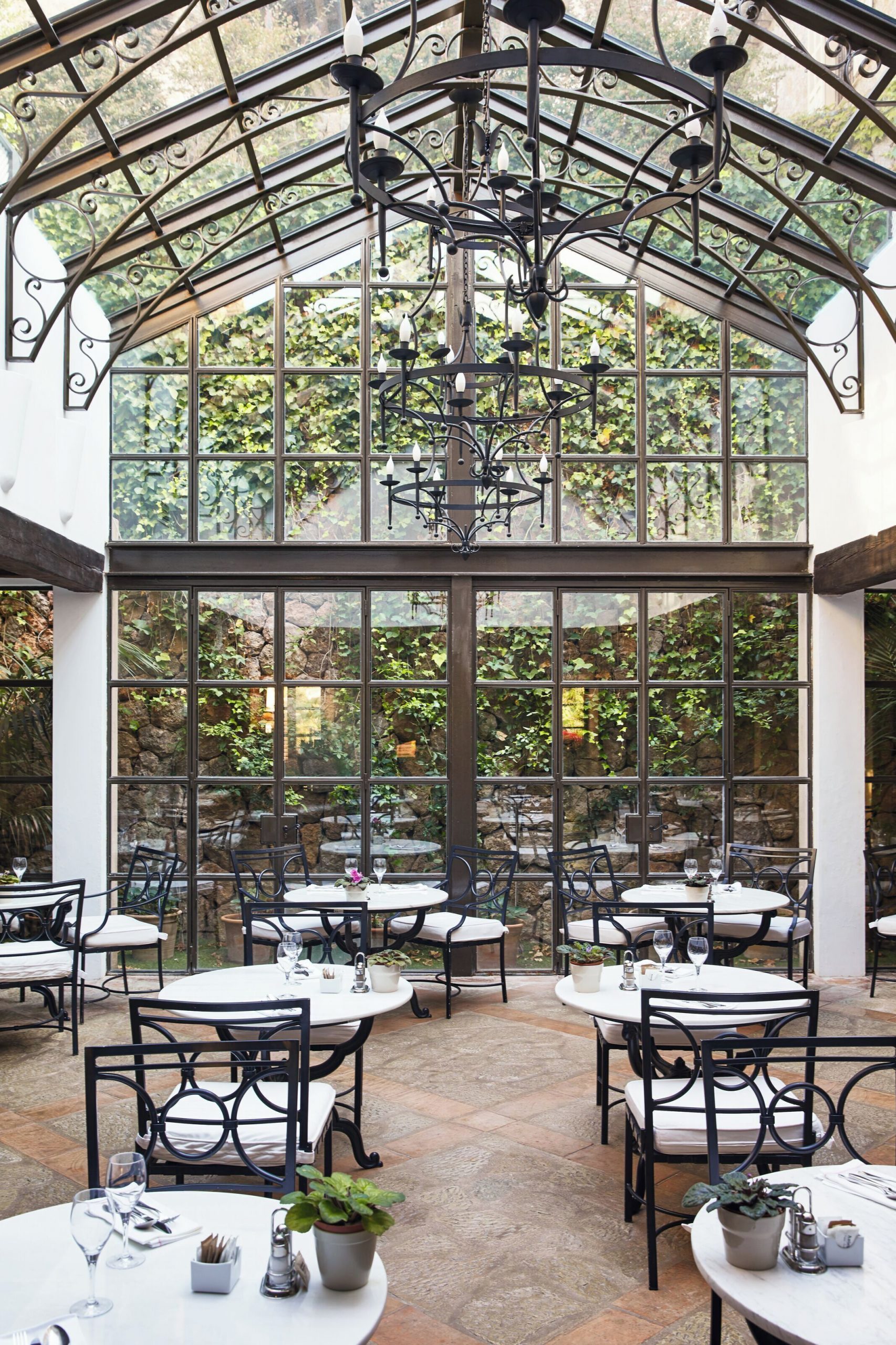
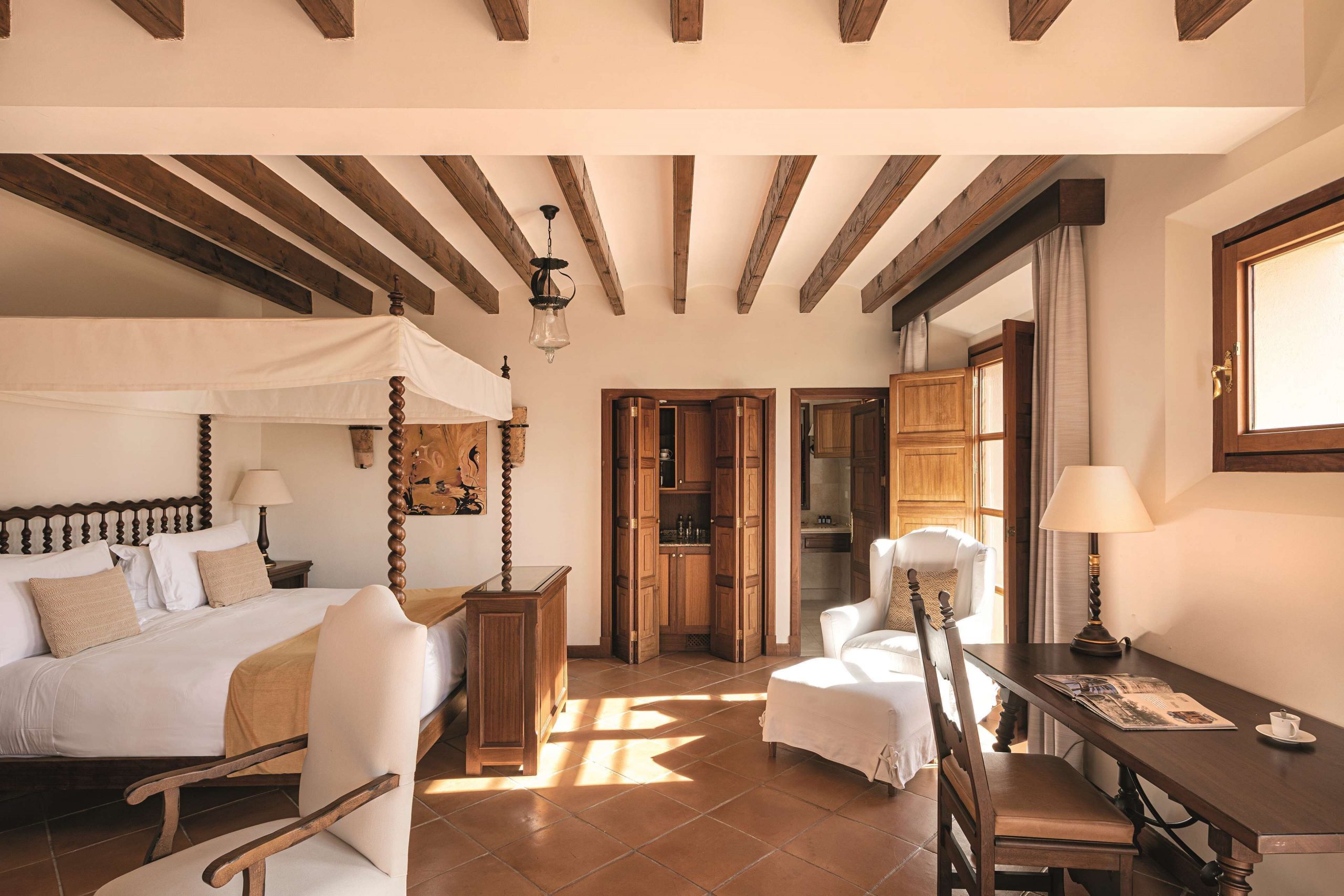
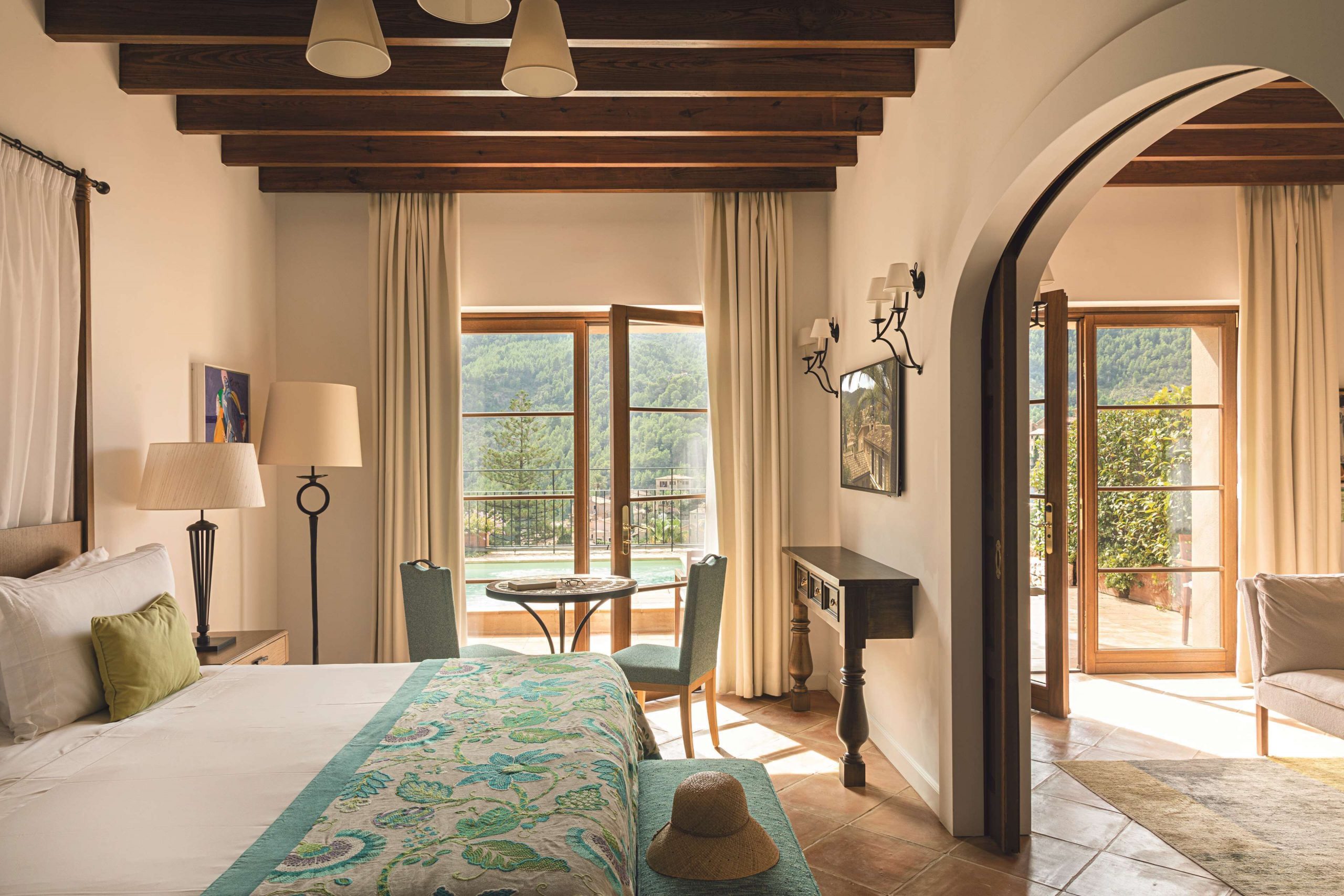
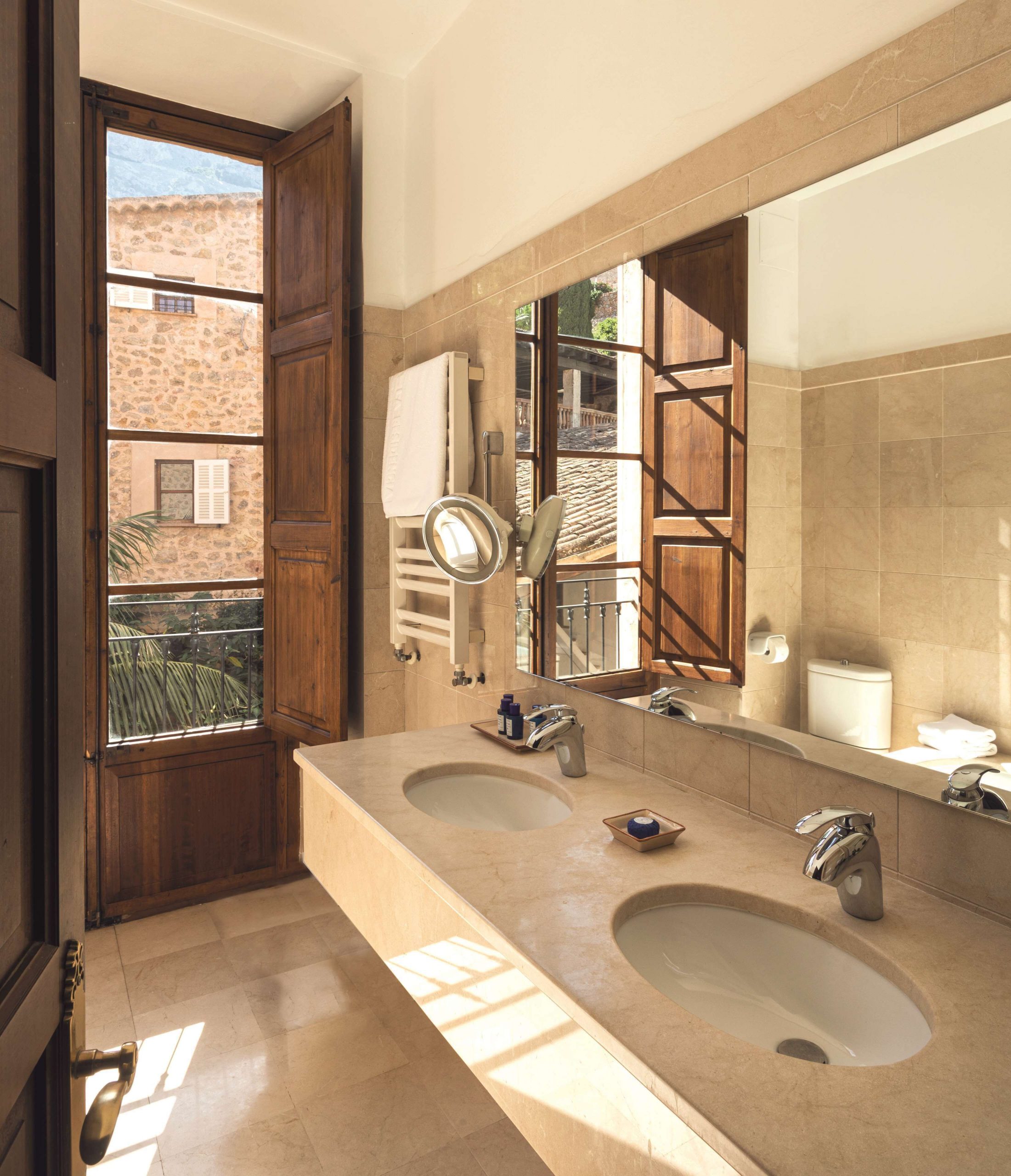
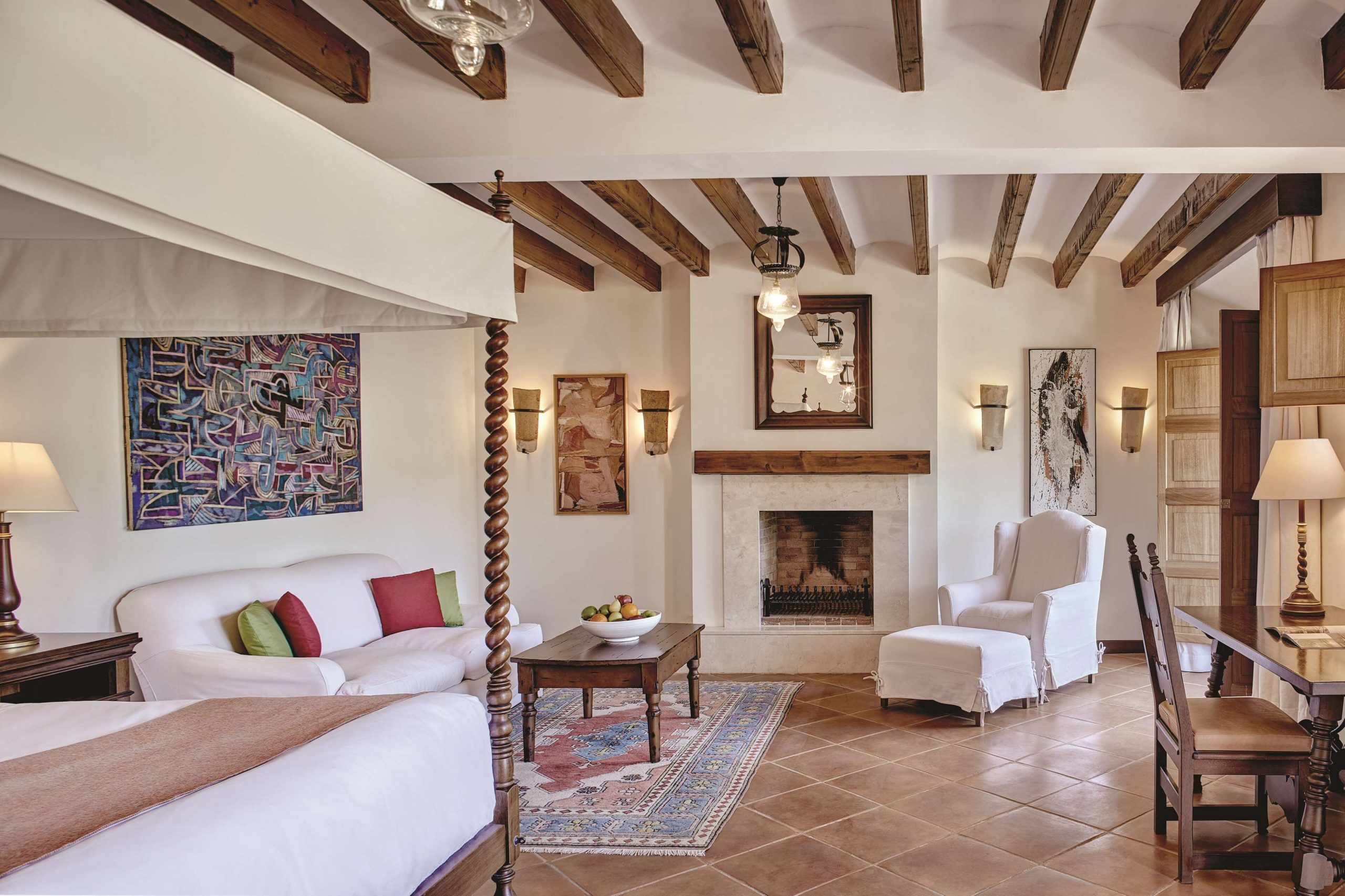
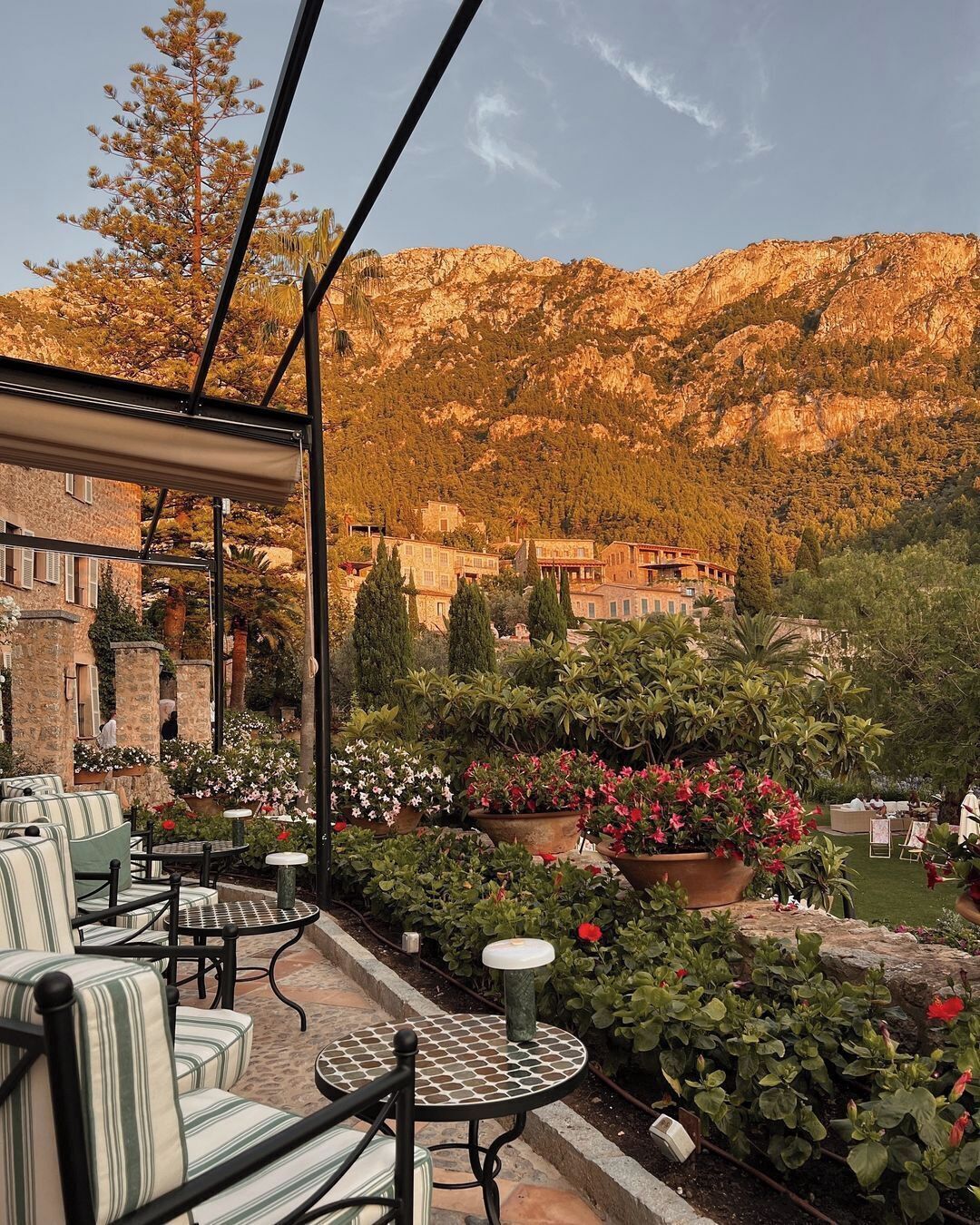
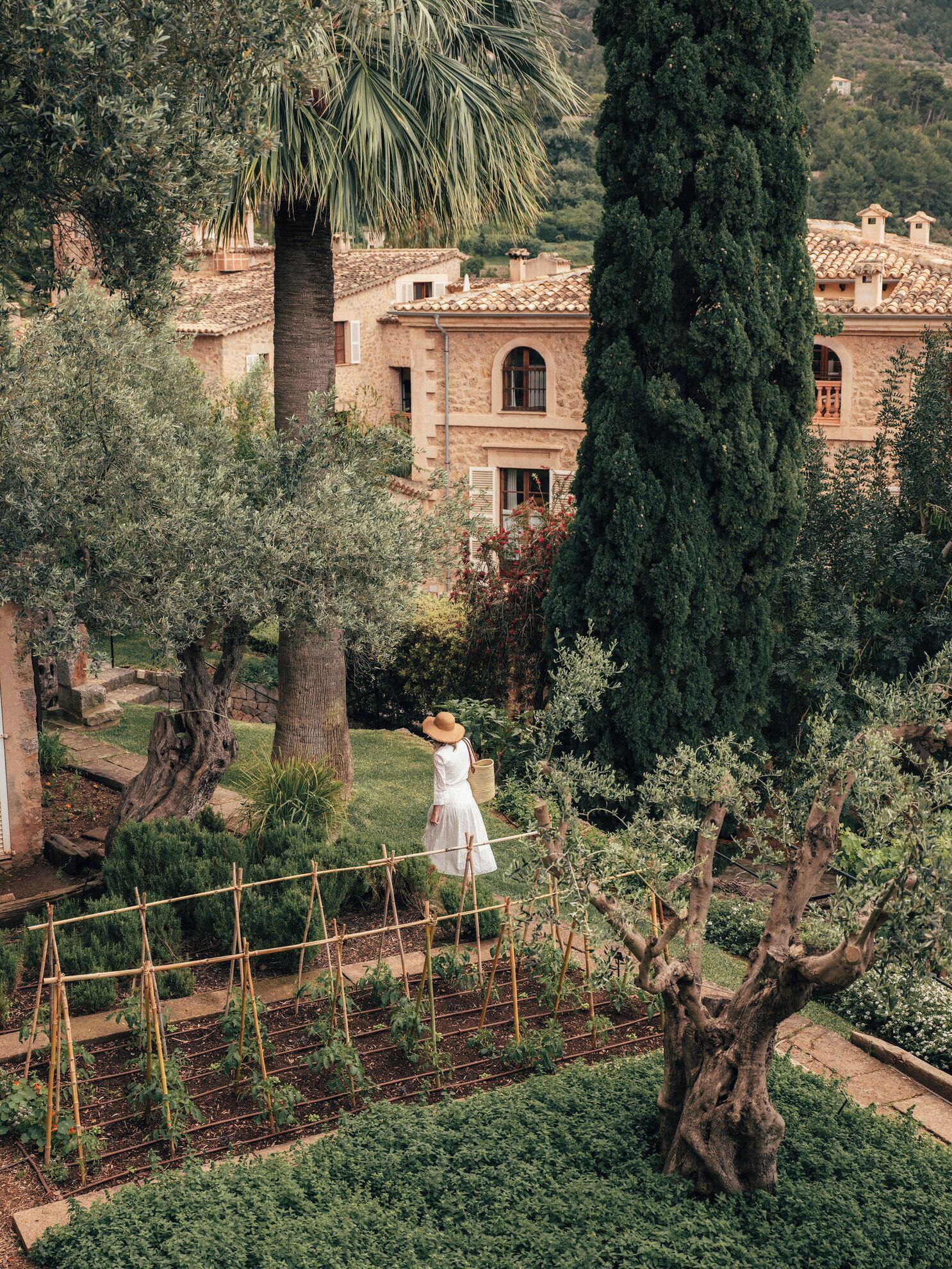
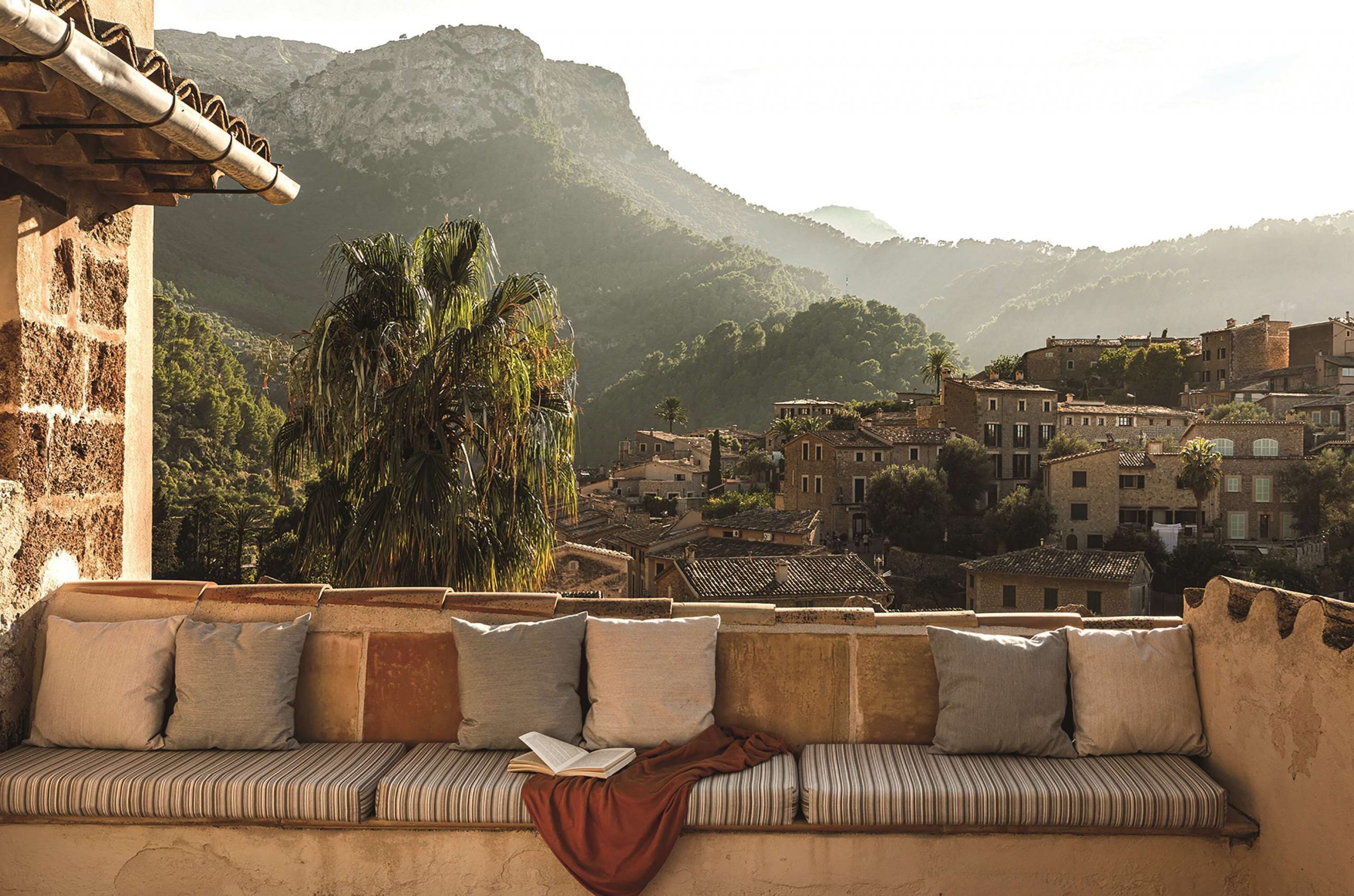
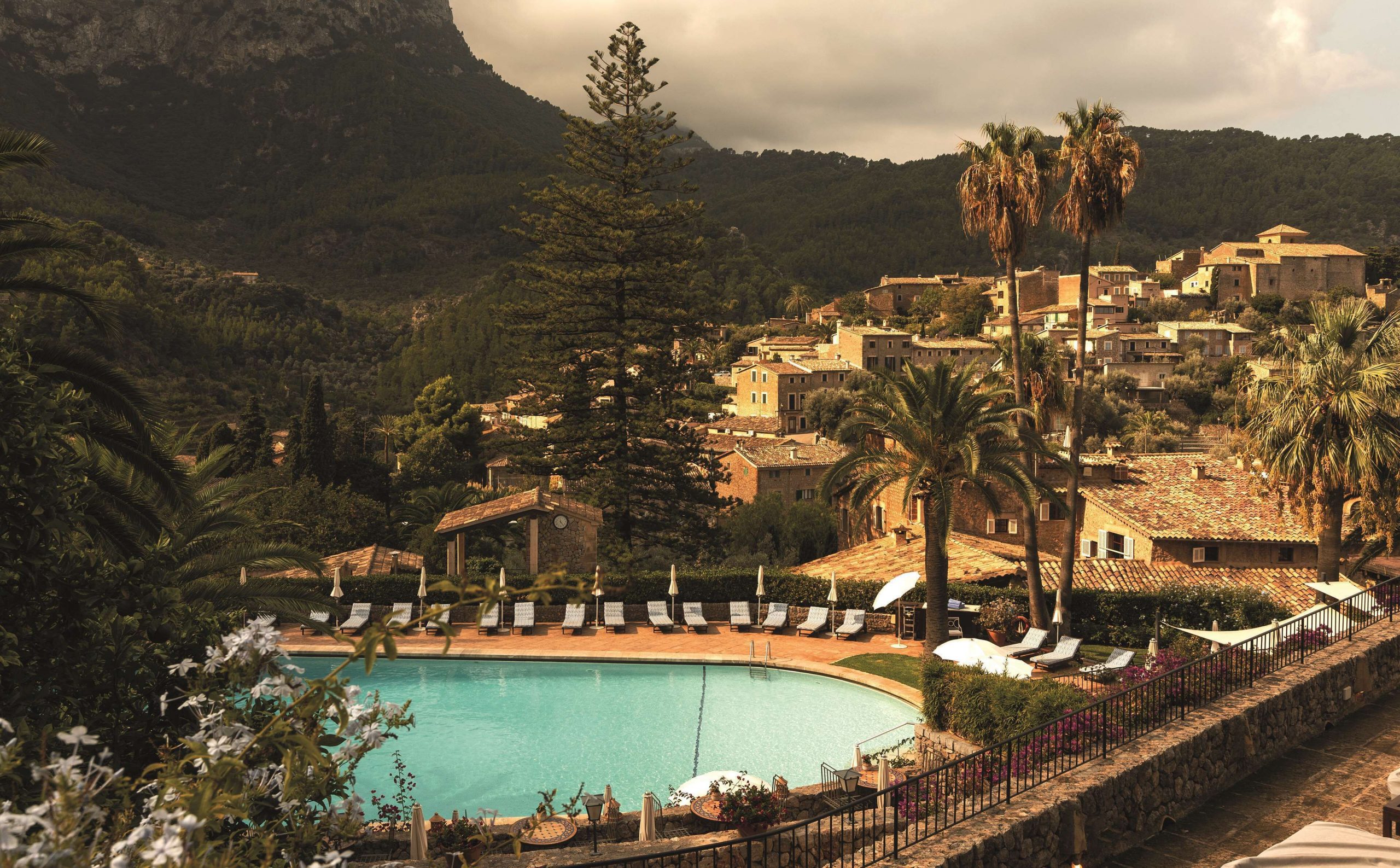
Deià is more mythic. It has writers, artists, cemetery views, steep lanes, Robert Graves associations, sea light and that strange, expensive stillness that clings to places where beauty has been noticed for too long. It can be performative, yes, but the setting is magnificent: mountain behind, sea below, stone everywhere.
Then there is S’Estaca, the cliffside estate associated for decades with Michael Douglas and Catherine Zeta-Jones. Its location between Valldemossa and Deià is not incidental. It is one of the most cinematic stretches of the island, where the Tramuntana turns from landscape into legend.
This is the celebrity layer Mallorca does well. Not red carpets. Not loud beach clubs. Not everyone trying to be seen. More often, it is old estates, private drives, sea access, hidden terraces, dinner behind walls and the understanding that the best address is the one you cannot quite get to.
Son Bunyola and the rise of estate luxury
Sir Richard Branson’s Son Bunyola is another key to modern luxury Mallorca.
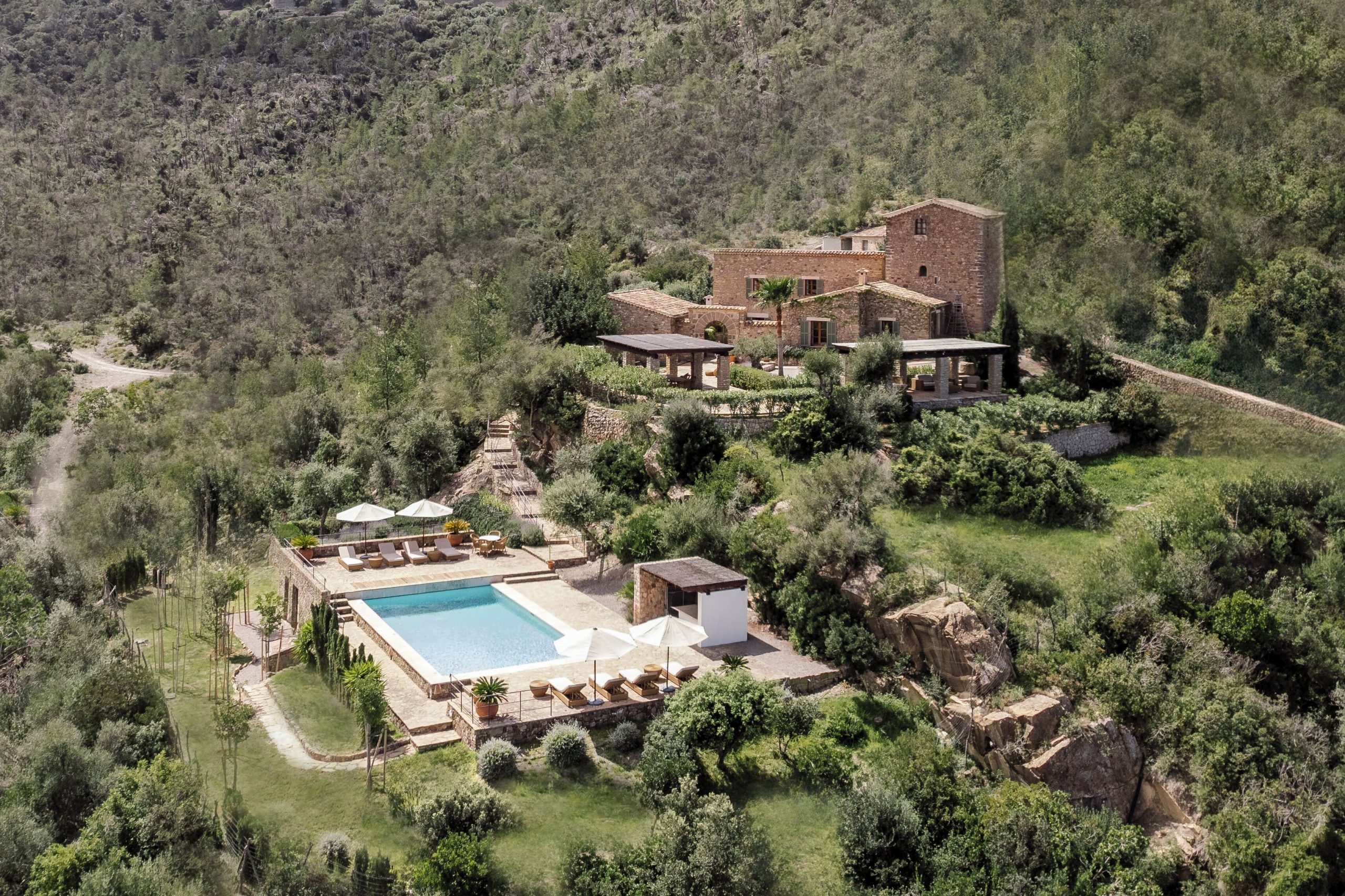
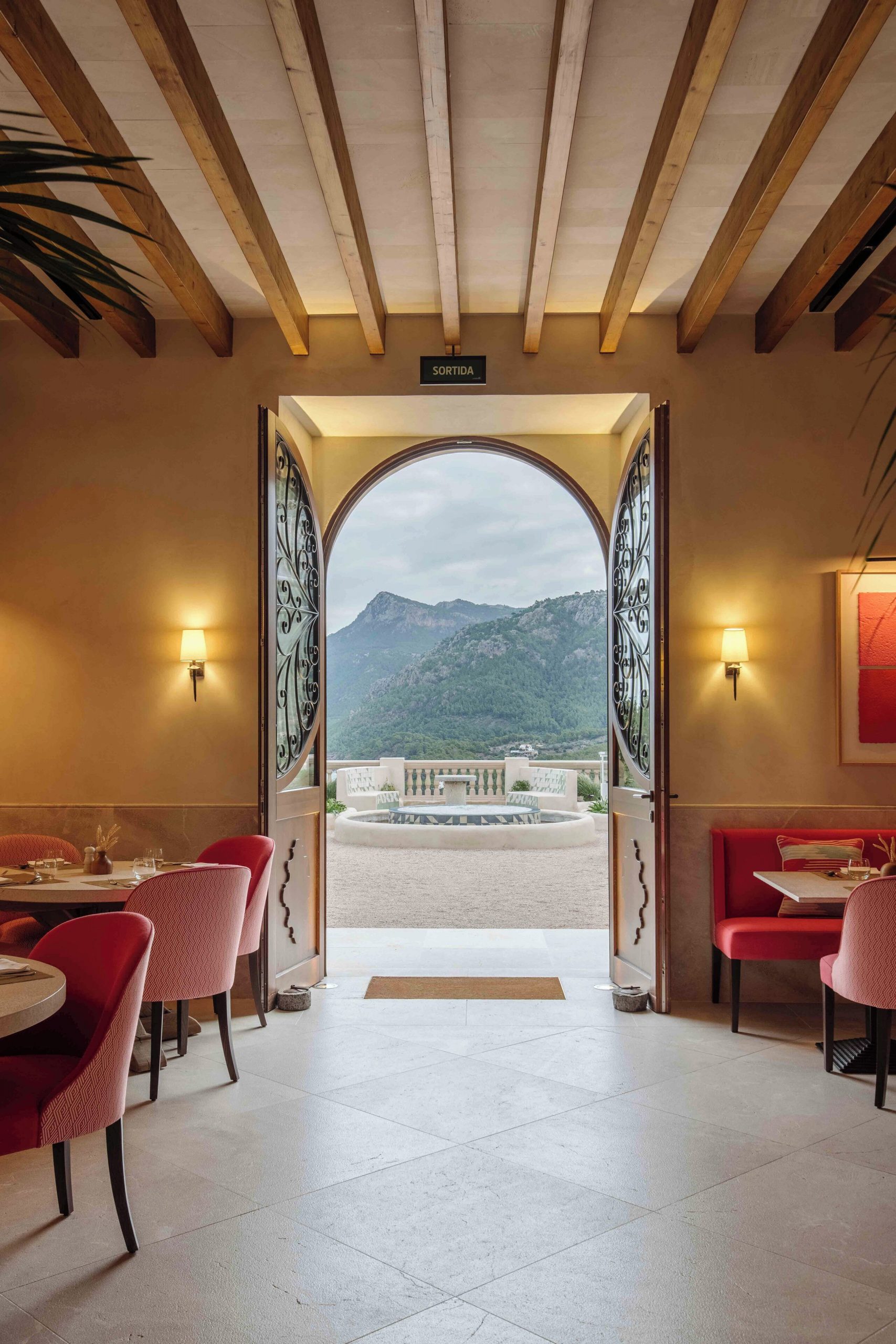
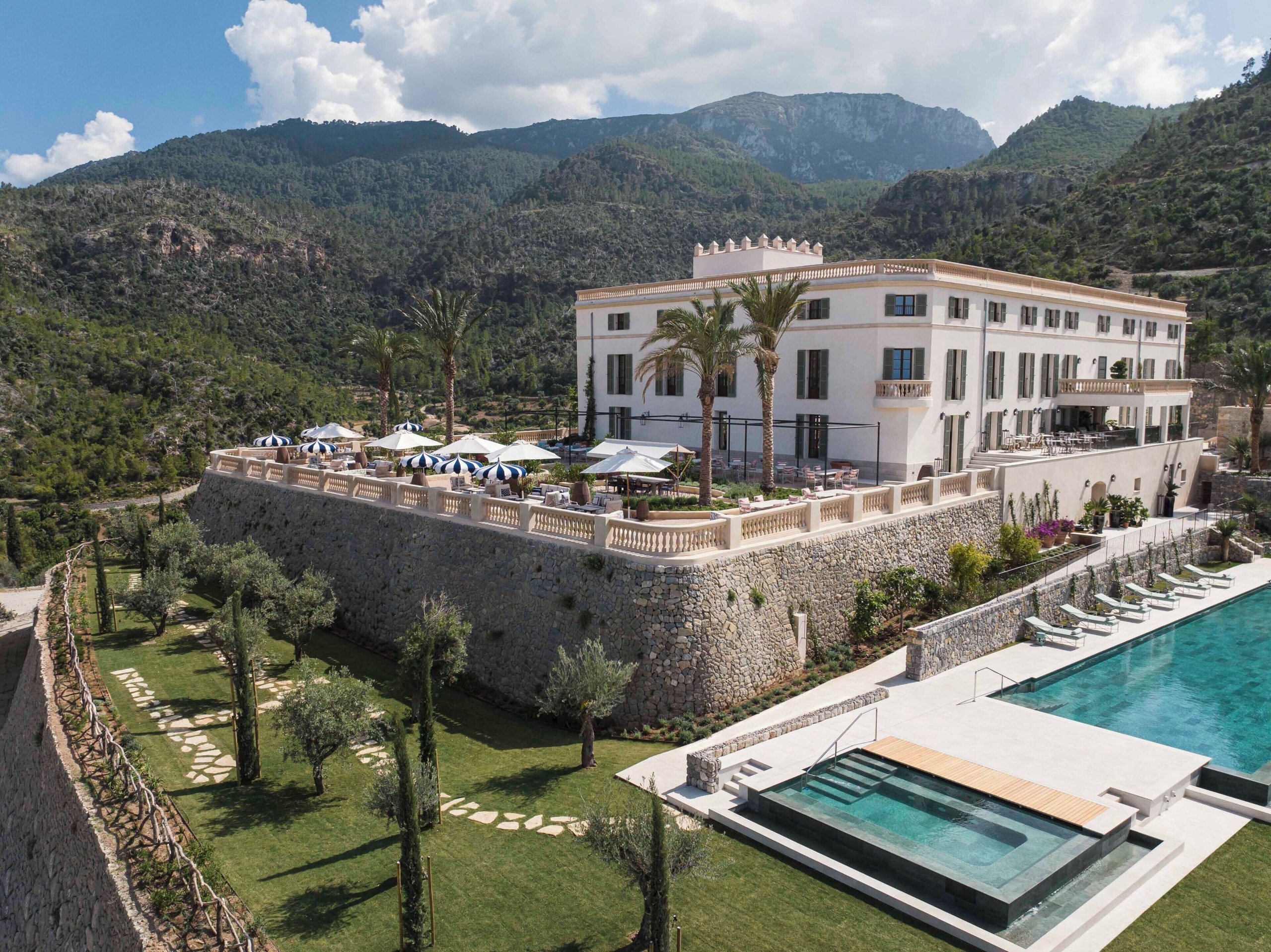
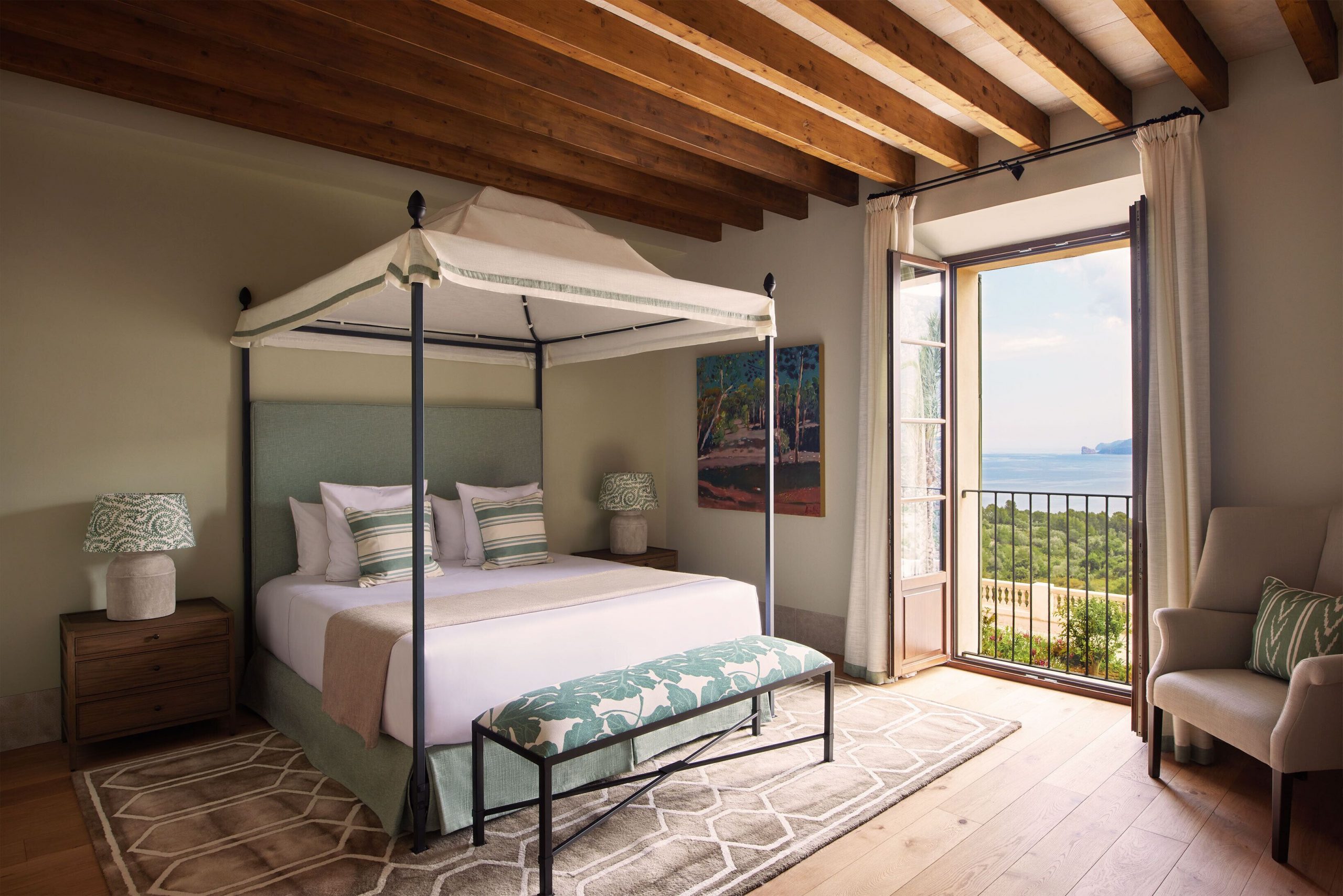
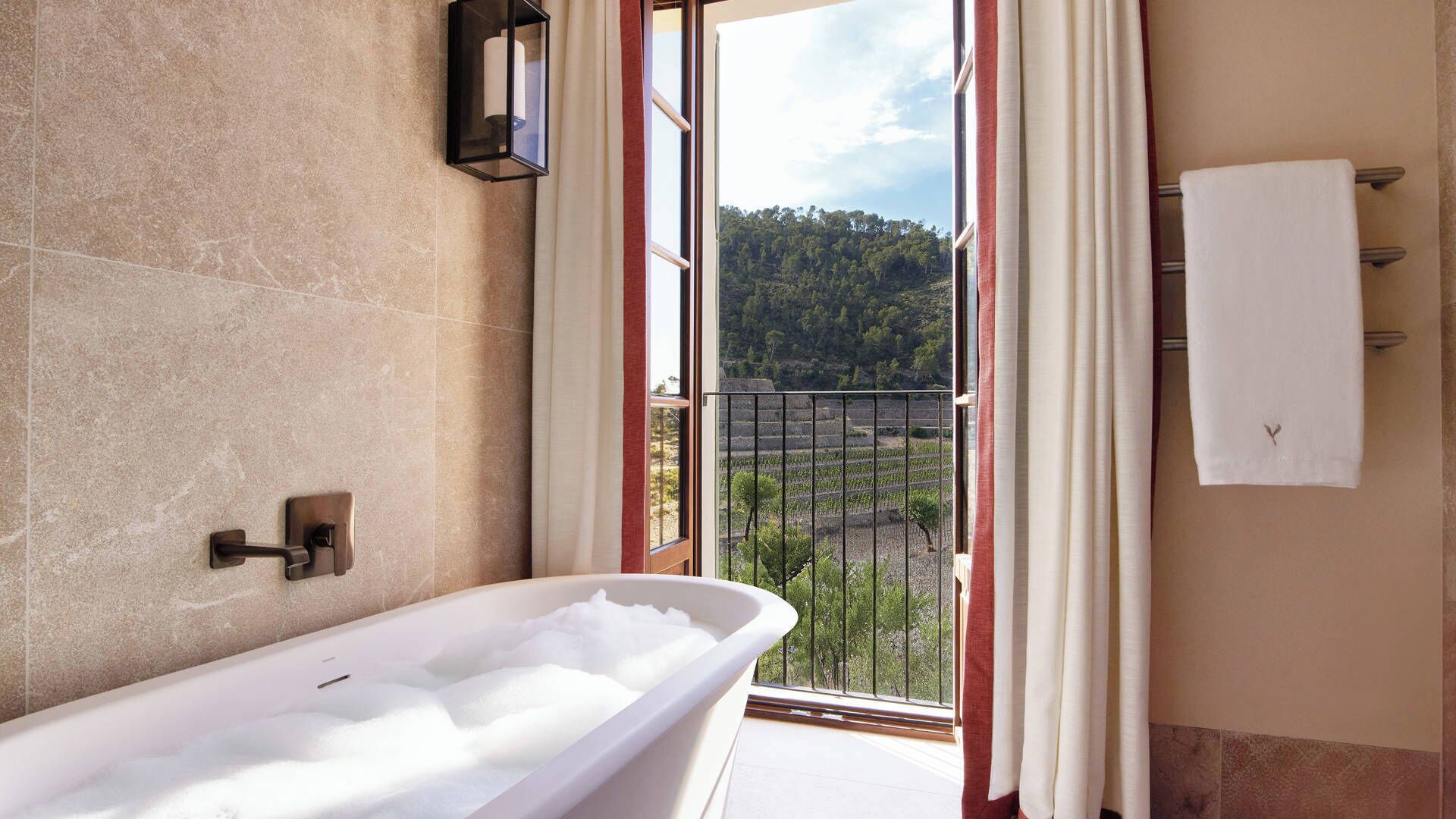
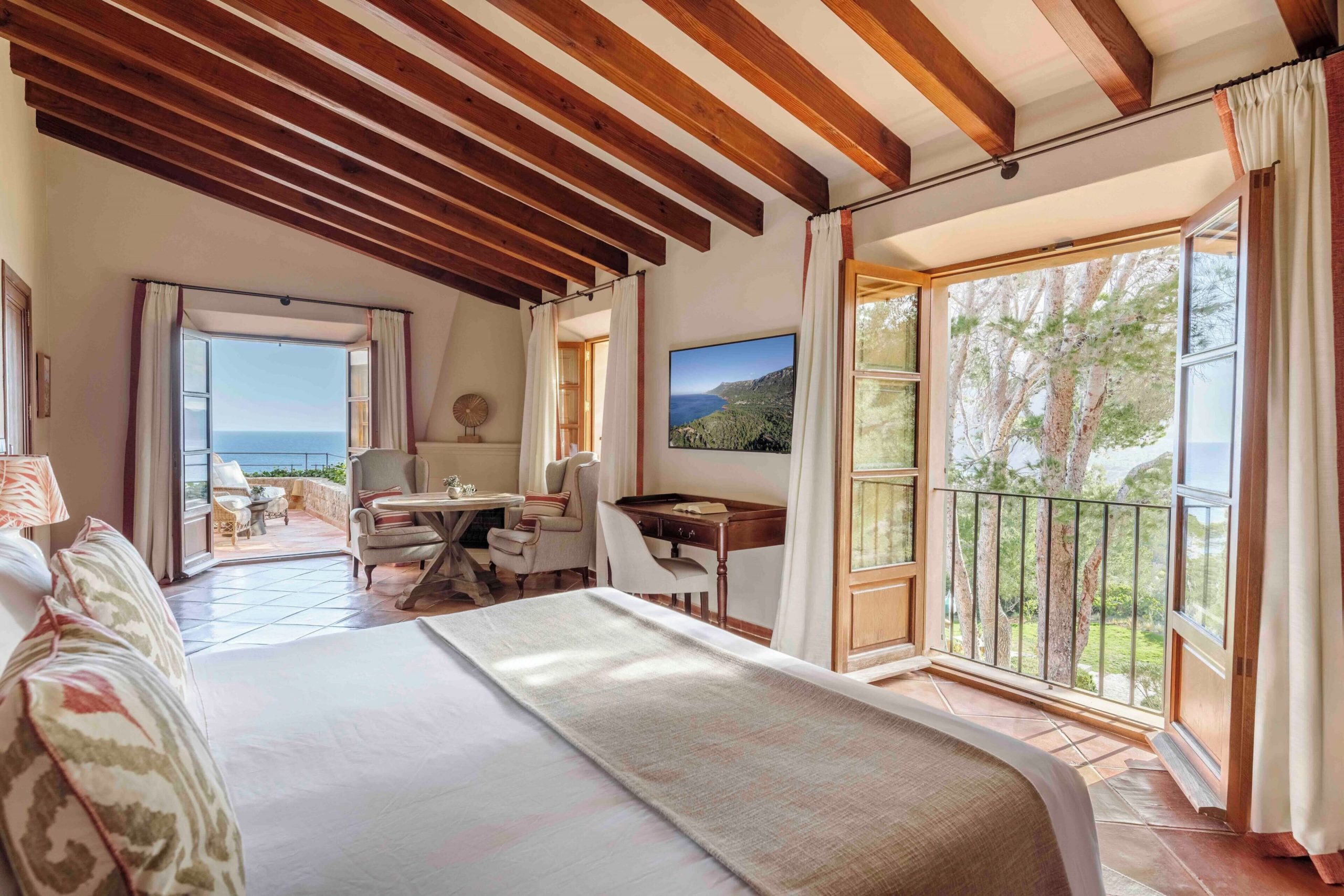
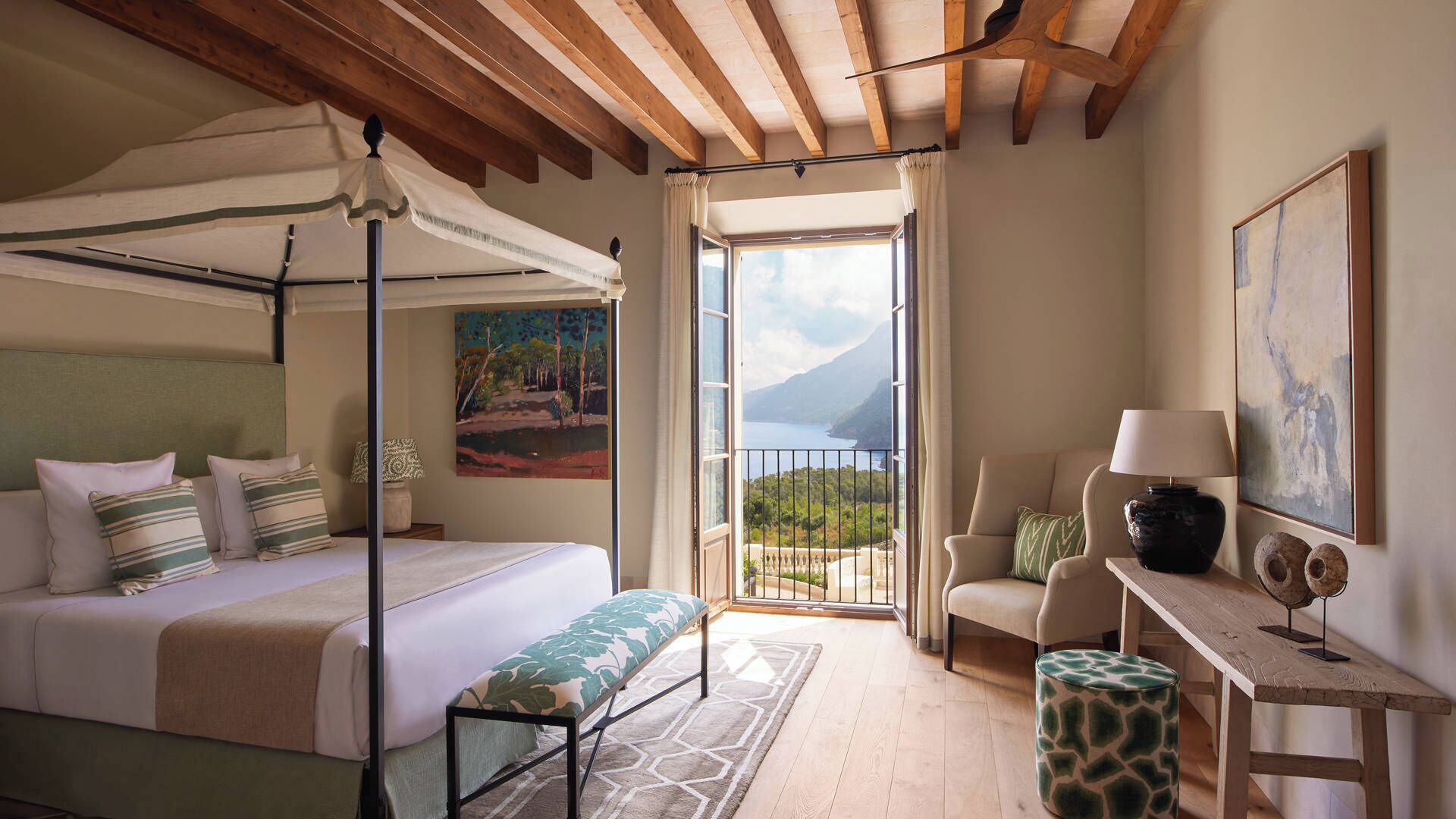
Set within the Tramuntana on an 810-acre estate, Son Bunyola is not simply a hotel. It is part of a wider shift in high-end travel away from generic five-star resort polish and towards restored estates, vineyards, olive groves, local craft, privacy, sustainability language and a sense of place.
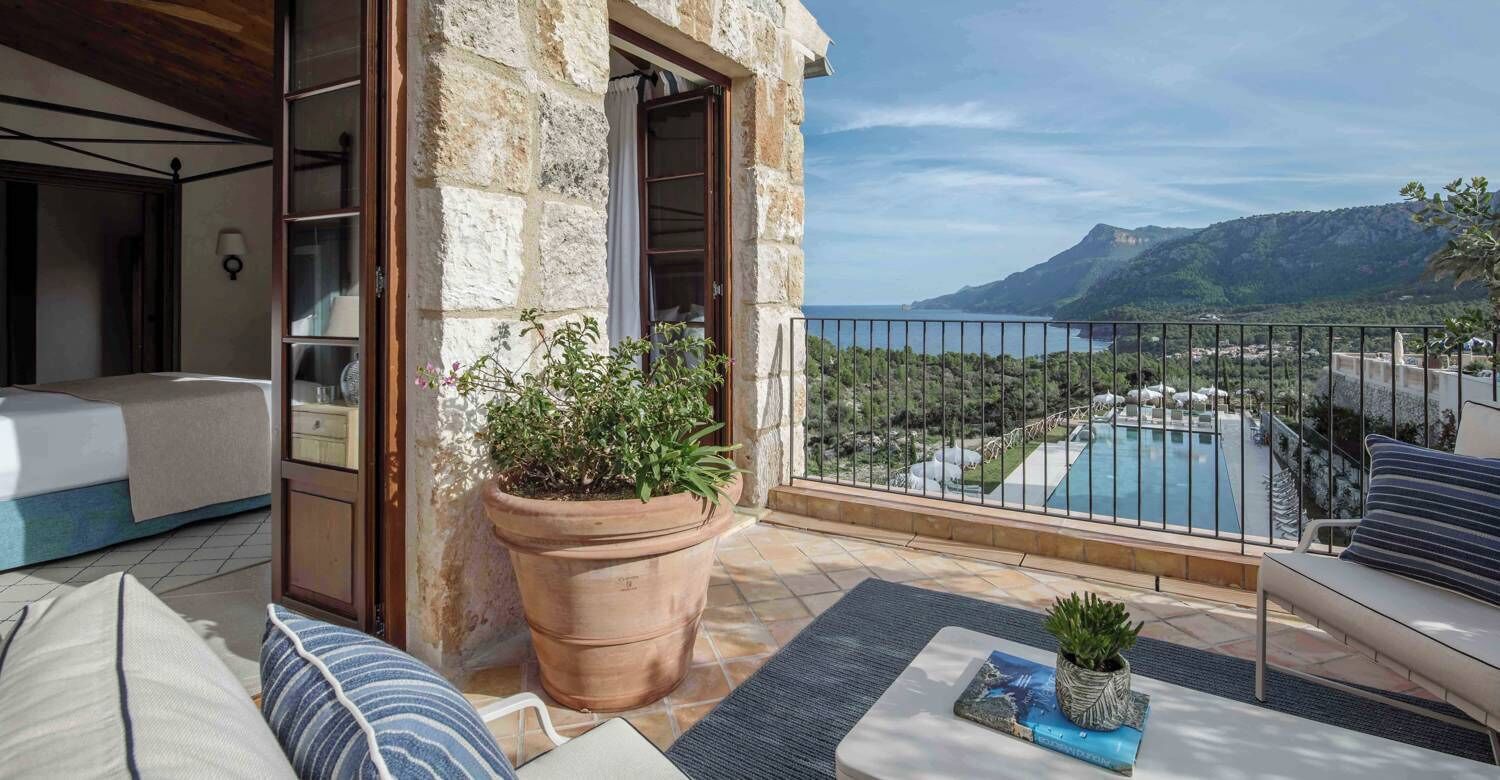
This is where Mallorca is especially strong. The island has the raw ingredients luxury travel now wants: old fincas, serious landscapes, agricultural history, mountain views, sea access, design-led restoration and enough glamour to feel international without losing its local texture.
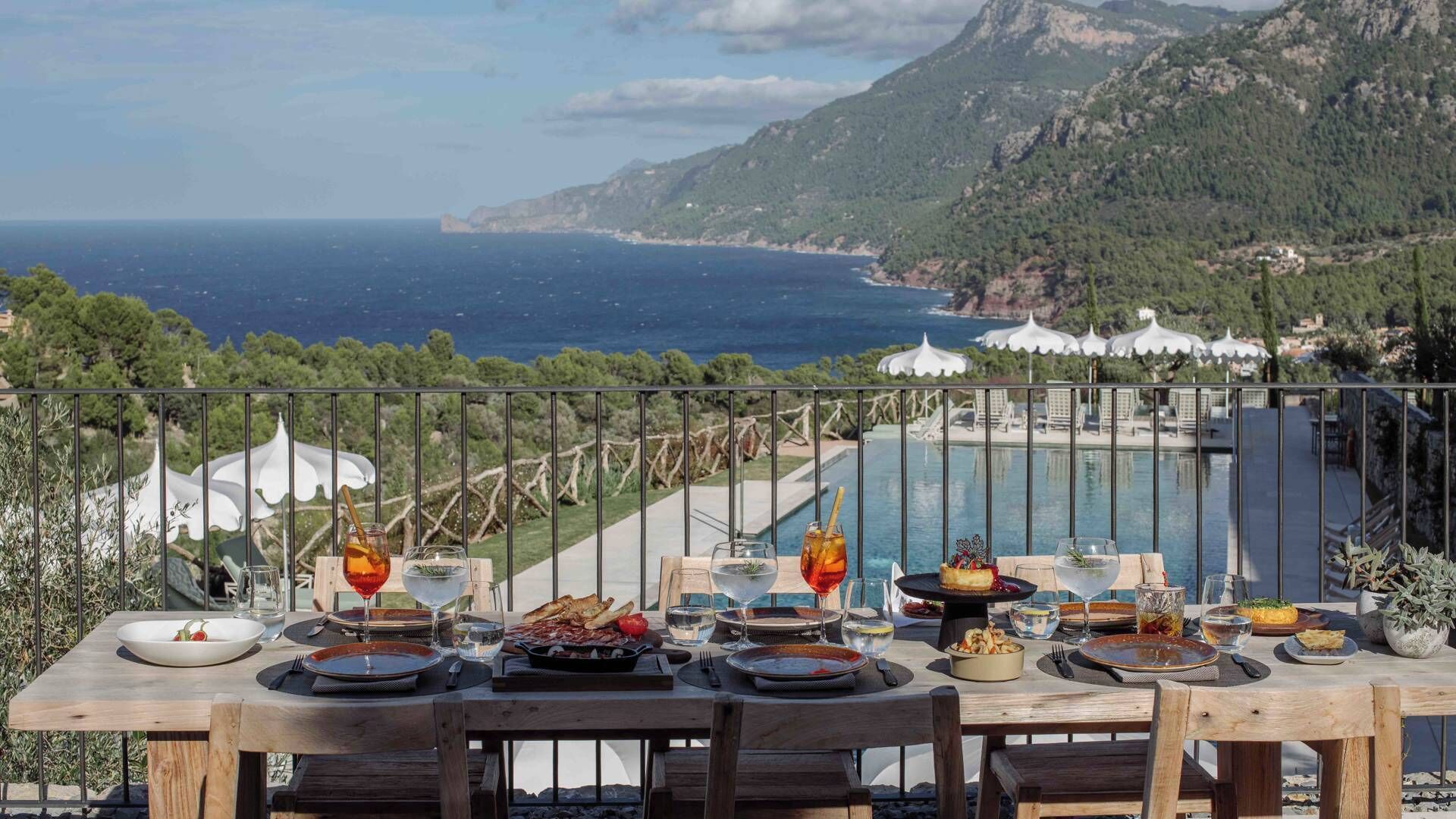
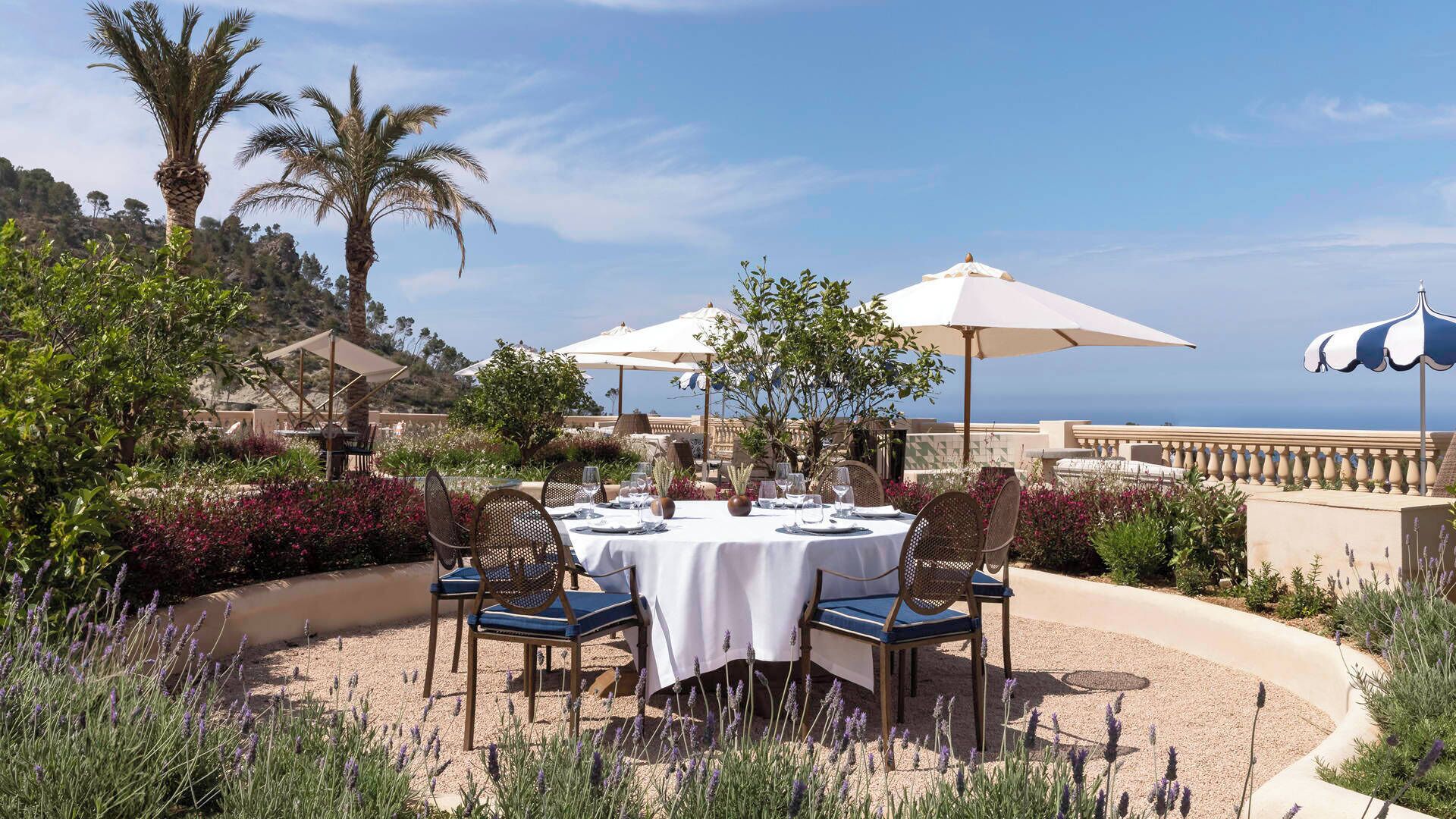
That kind of luxury is different from the beach-club version. It is quieter, slower and more controlled. It suits travellers who want a pool, a view, a good lunch and a story in the stones. It also suits Mallorca’s current moment, because the island can no longer afford to sell itself only through volume, cheap flights and overexposed beaches.
The best Mallorcan luxury now feels edited. Fewer places. Longer stays. Better food. Better architecture. More privacy. Less showing off.
Sóller, Fornalutx and the softer side of the mountains
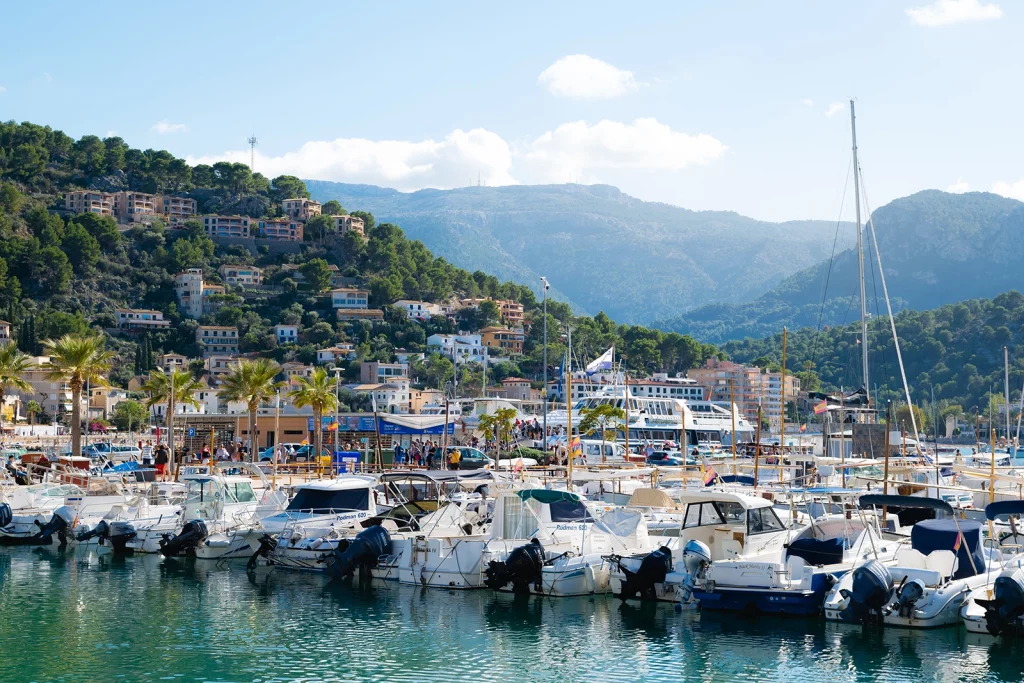
Sóller gives the Tramuntana a gentler rhythm.
The town sits in a valley long associated with citrus, trade and mountain isolation. The historic train from Palma and the tram down to Port de Sóller may be tourist favourites, but they remain beautiful because they connect the island in a way that feels old-fashioned and coherent: city, valley, orange groves, mountains, harbour.
Fornalutx, above Sóller, is the more concentrated village experience. Stone lanes, tiled roofs, mountain air, potted plants, quiet steps and the scent of citrus blossom in the right season. It is not a place to rush. It is a place to walk slowly and notice the geometry of the village.
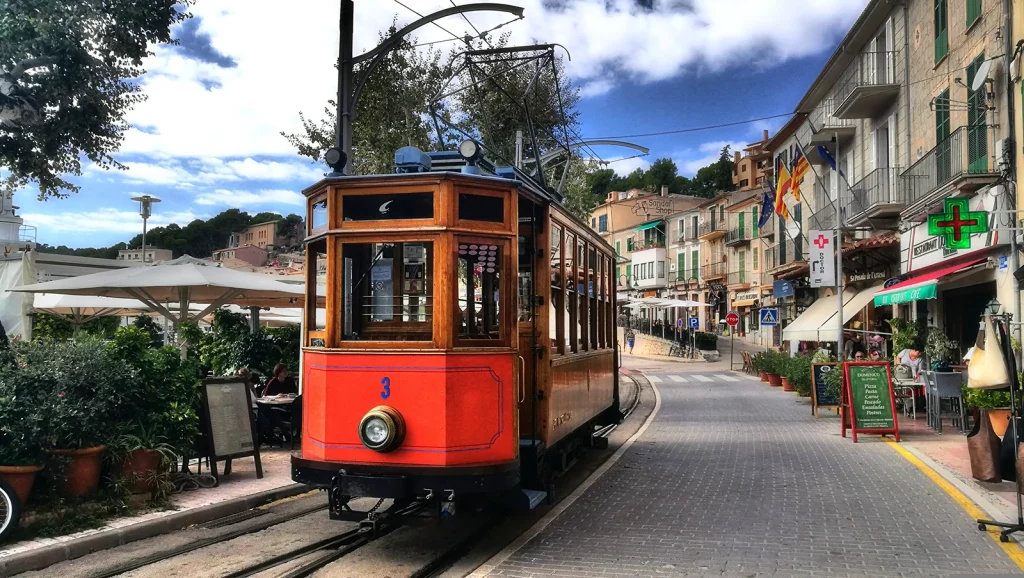
Port de Sóller softens the whole landscape. The mountains fall into a protected harbour, the promenade curves around the bay, and the mood becomes more accessible: families, boats, fish lunches, sunset drinks and a maritime glamour that feels less rarefied than Deià but more relaxed.
For travellers who want Mallorca with beauty but without too much social theatre, Sóller and Port de Sóller may be the best compromise on the island.
Beaches: choose atmosphere over Instagram fame
Mallorca has magnificent beaches, but not all beautiful beaches make good travel choices.
The most famous tiny coves are now often victims of their own image. Caló des Moro is the obvious warning: a fragile, small place whose online fame has turned it into a pressure point. That does not mean it is not beautiful. It means beauty alone is no longer enough reason to go.
For a more intelligent beach day, ask what kind of day you actually want.
For romance and scenery, S’Amarador in Mondragó Natural Park and Cala Tuent on the north-west coast are stronger than many obvious social-media answers. S’Amarador gives you pale sand and protected natural surroundings. Cala Tuent feels wilder, framed by cliffs, pines and mountains.
For families, Port de Sóller, Playa de Muro, Alcúdia and Port de Pollença are often better choices because they work. Calmer water, more space, services, restaurants and less logistical pain matter when you are not travelling purely for a photograph.
For visual drama, Cala Deià, Sa Foradada, the Sóller tram, La Seu and Palma’s seafront will usually produce stronger images than another crowded strip of sand. “Best to photograph” and “best to spend the whole day” are not always the same thing.
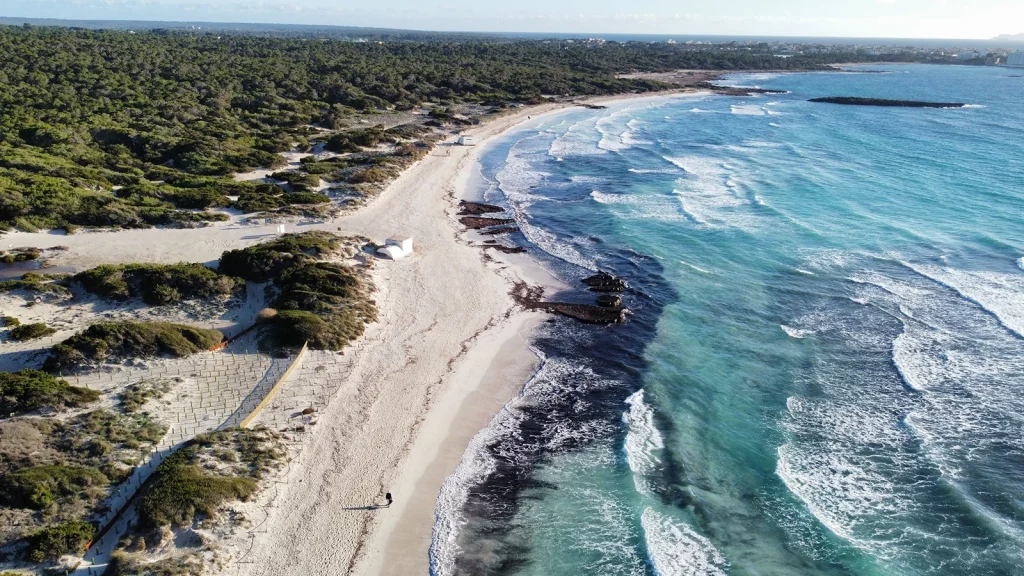
Es Trenc still earns its place because of its pale sand, clear water and protected dune landscape, but it should be visited carefully. The more fragile the place, the more elegant the behaviour should be.
That is the new Mallorca rule: do not love the island to death.
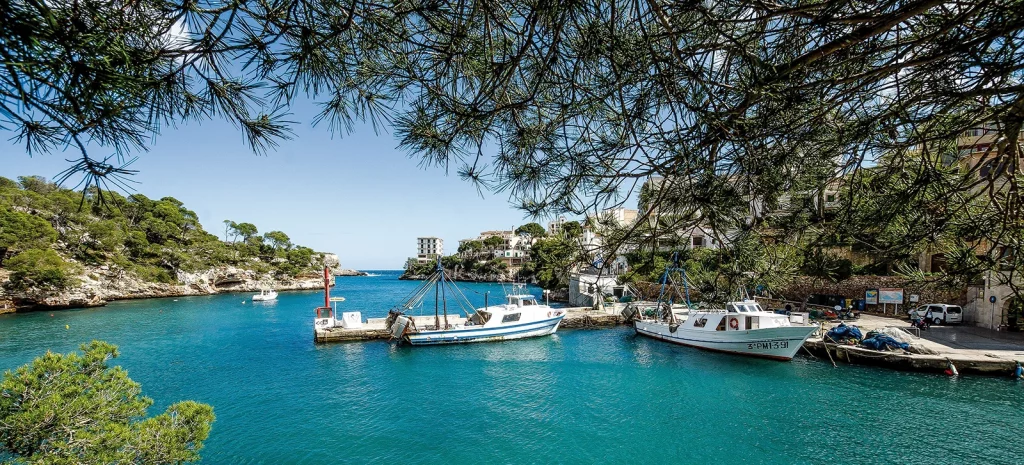
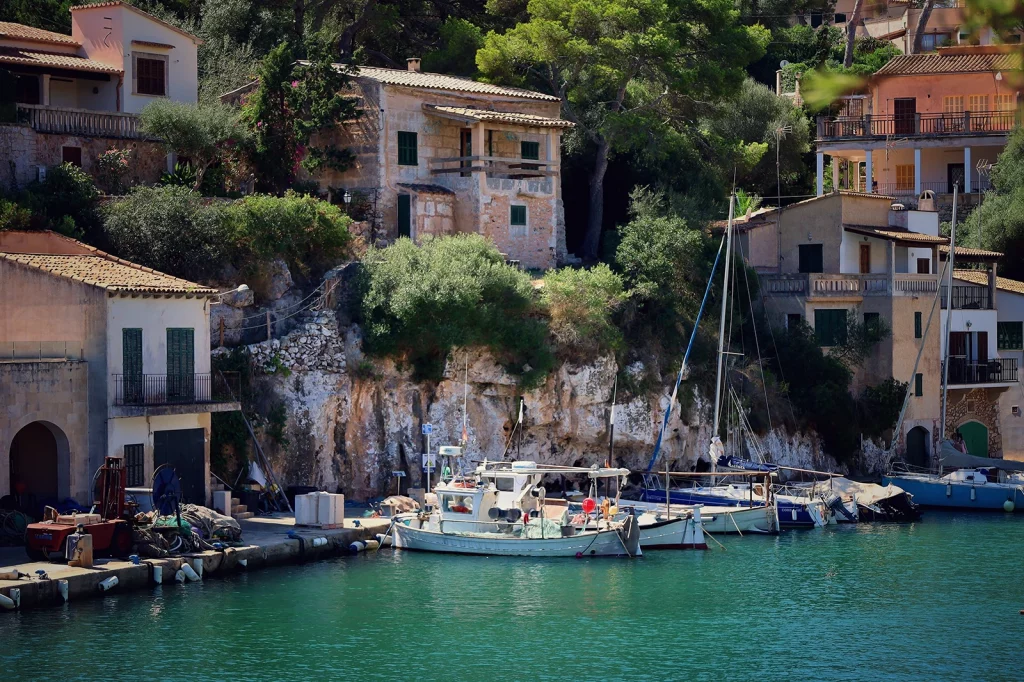
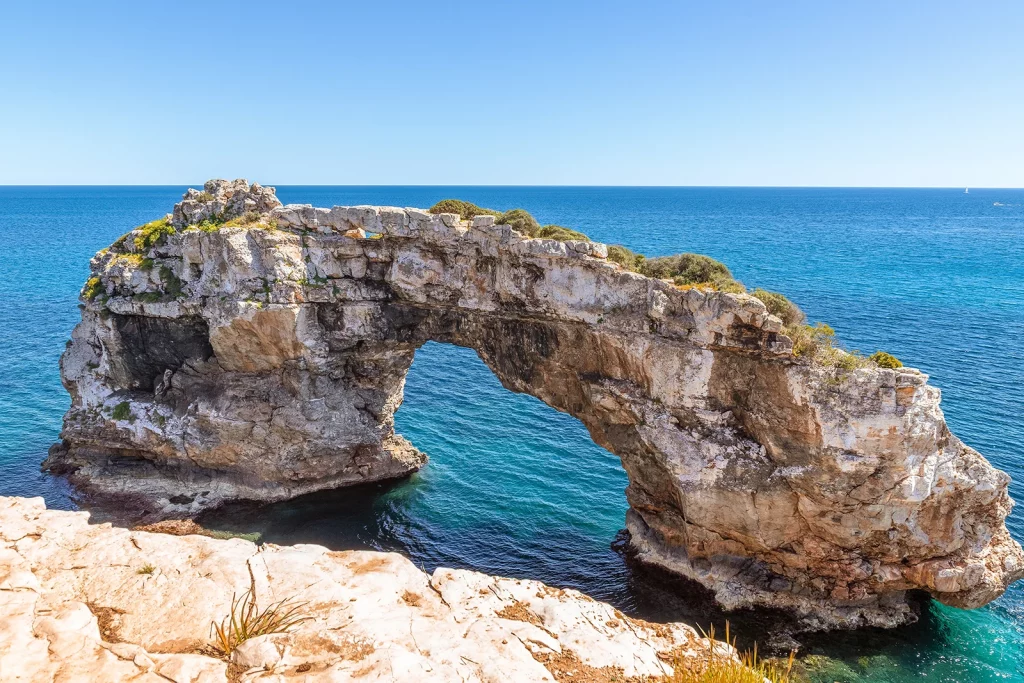
For a more characterful south-east detour, Cala Figuera deserves a mention — not to be confused with the Cala Figuera cove on the Formentor peninsula in the north. The Santanyí version is the postcard fishing harbour: llaüts, boathouses, whitewashed walls, green shutters, rocky inlets and water so clear it looks almost staged. Nearby, Es Pontàs adds one of Mallorca’s most photogenic natural landmarks, a great stone arch rising from the sea between Cala Santanyí and Cala Llombards. Neither needs to become the whole trip, but both give the south-east a more textured identity than simply “another pretty beach”.
Where to stay in Mallorca
For a no-car luxury weekend, stay in Palma. Choose the old town, La Llotja, Sant Jaume, Santa Catalina or the seafront depending on whether you want historic atmosphere, restaurants, galleries, shopping or marina views.
For old Mediterranean glamour, stay around Deià, Valldemossa, Sóller or the broader Tramuntana. This is the Mallorca of fincas, stone terraces, literary associations, mountain light and private dinners.
For families and classic beach ease, look north: Port de Pollença, Alcúdia and Playa de Muro. These areas are more practical, especially with children, and still give access to Pollença old town, Formentor and the northern bays.
For rural luxury, choose an inland finca or restored estate around the Tramuntana edge, Artà, Alaró, Santanyí or the central plain. This version is less about chasing the coast and more about pool mornings, market towns, long lunches, olive oil, local wine, good linen and not moving every day.
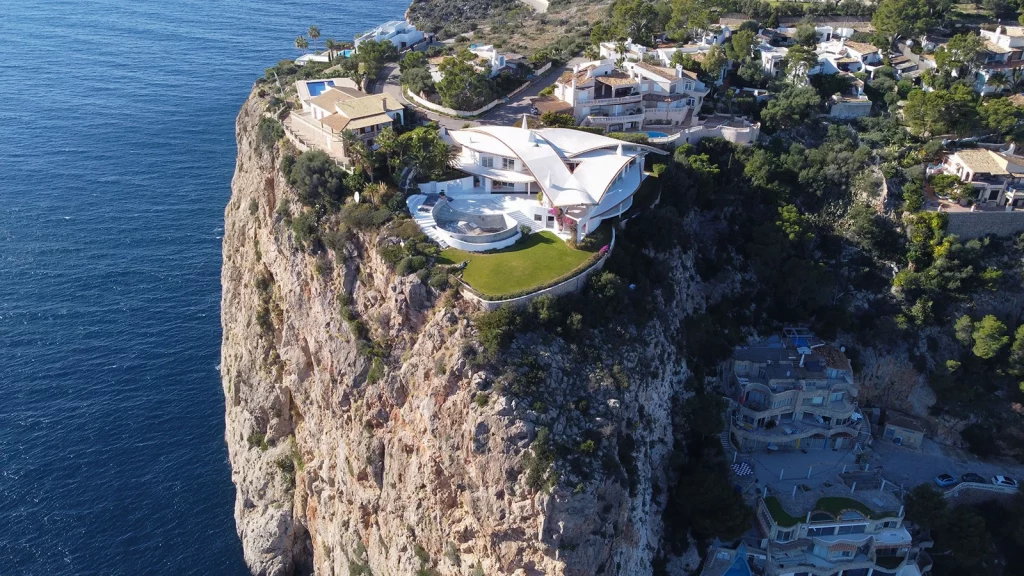
For yacht-and-marina energy, Palma, Puerto Portals and Port d’Andratx are the obvious names, though they should be used with care. Port d’Andratx is the more polished south-west answer: a natural harbour with fishing roots, yacht energy, hillside villas and a setting that feels far more composed than the island’s louder resort strips. For a boat-led day, the Illes Malgrats Marine Reserve off Santa Ponça adds the wilder counterpoint — rocky islets, clear water, sunset drama and a reminder that Mallorca’s luxury is often strongest when marina life and protected nature sit close together.
The south-west can feel polished and international, but it can also become the least subtle version of the island. Choose well.
Best luxury hotels in Mallorca by area
The best luxury hotels in Mallorca are not all trying to do the same thing. Palma gives you palace-style city hotels and rooftop glamour; the south-west gives you marinas, beach clubs and yacht energy; Deià and the Tramuntana offer old Mediterranean romance; Port de Sóller softens the mountains with harbour life; Formentor brings north-coast seclusion; and the south-east gives you a quieter cove-led version of Balearic luxury.
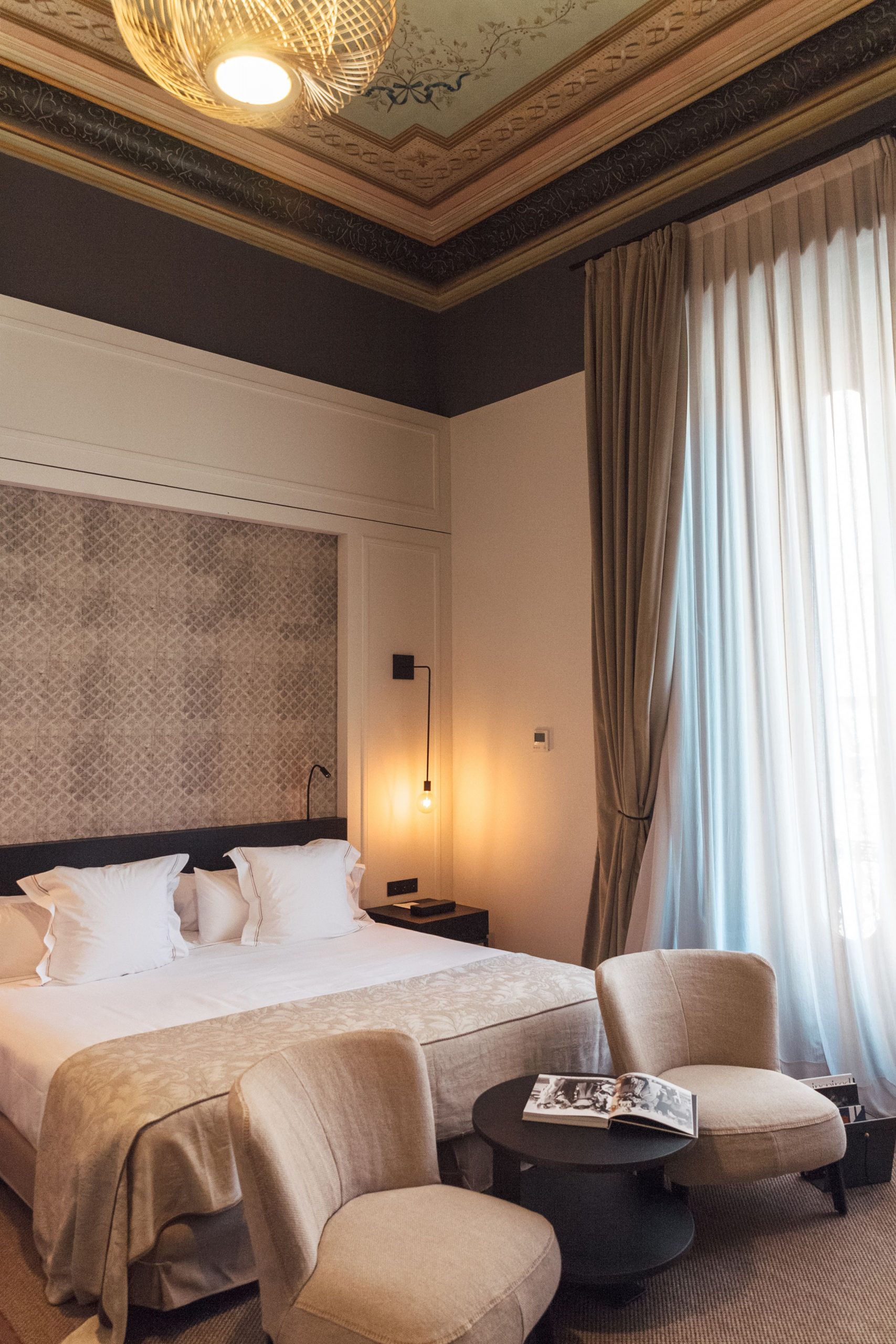
For Palma, Sant Francesc Hotel Singular is the polished old-town choice; near Marivent, Nixe Palace gives the royal-coast section a natural hotel link; around Puerto Portals, The Donna Portals suits the marina crowd; and for once-in-a-lifetime drama, Cap Rocat turns the Bay of Palma into a private fortress fantasy.
I
Mallorca luxury travel guide: smart answers before you book
What makes Mallorca the Balearics’ luxury island?
Mallorca is the Balearics’ luxury island because it has the widest range: Palma’s old-town hotels and marina life, Marivent’s royal summer connection, Deià and Valldemossa’s artistic mythology, the Serra de Tramuntana’s mountain estates, Port de Sóller’s harbour atmosphere, the south-west’s yacht culture and the south-east’s turquoise coves. Ibiza may feel sharper and Menorca quieter, but Mallorca has the deepest register.
What is the most luxurious part of Mallorca?
The most luxurious parts of Mallorca are Palma, the south-west coast and the Tramuntana. Palma gives you restaurants, galleries, rooftop hotels, shopping and marina access. The south-west gives you Puerto Portals, Port d’Andratx, Bendinat and Illetes. The Tramuntana gives you Deià, Valldemossa, Sóller, Fornalutx and the quieter estate version of Balearic luxury.
Where should you stay in Mallorca for luxury without a car?
Stay in Palma if you want a luxury Mallorca trip without a car. The old town, La Llotja, Sant Jaume, Santa Catalina and the seafront give you hotels, restaurants, shopping, galleries, cathedral walks, taxis and marina life without making the whole trip depend on parking. Port de Sóller can also work for a slower no-car stay, especially if you are happy to use the tram, taxis and organised excursions.
Is Port de Sóller luxury?
Port de Sóller can feel quietly luxurious, but not in the louder south-west sense. Its appeal is harbour life, mountain scenery, sea-view hotels, the old tram, sunset drinks, long lunches and the feeling of being held between the Serra de Tramuntana and the Mediterranean. It is one of Mallorca’s best answers for travellers who want beauty, comfort and atmosphere without too much theatre.
Where are Mallorca’s best luxury coves?
For turquoise coves and a more polished coastal mood, look at the south-east around Cala Santanyí, Cala Llombards, Cala d’Or, Mondragó and Cala Figuera, or the north-west around Cala Deià, Cala Tuent and the Port de Sóller coast. The smarter approach is not to chase the most overexposed beach, but to choose a cove that suits the day: swimming, lunch, boat access, photography, privacy or family ease.
When is the best time for a luxury Mallorca trip?
The best months for a luxury Mallorca trip are usually May, June, September and early October. July and August have the full summer energy, but also the highest pressure on beaches, roads, restaurants and villages. Spring and early autumn are better for Palma, the Tramuntana, cycling, walking, photography, long lunches and a more civilised version of the island.
What to wear in Mallorca
Mallorca is relaxed, but the better parts of the island are not careless.
Palma, Deià, Port de Sóller, Puerto Portals and the smarter rural hotels all reward a little polish. Think linen, silk, cotton poplin, leather sandals, good sunglasses, a proper hat, a dress that works from lunch to sunset, swimwear that flatters rather than merely exposes, and evening pieces that feel effortless rather than over-planned.
For men, linen shirts, tailored shorts, neutral swim shorts, loafers, espadrilles and one lightweight jacket will cover most situations. Mallorca is not Marbella, and that is part of the appeal. The style is less glossy, less loud, more old Mediterranean.
For women, swimwear should depend on the setting. A rocky cove needs practical sandals and a secure bag. A hotel pool in Deià can take a more elegant one-piece. A Palma rooftop wants something that works under a linen shirt or wide-leg trousers. A family beach day at Playa de Muro is not the same wardrobe as a yacht lunch off Port d’Andratx.
For more on flattering swimwear, colours and silhouettes, see Riviera Ready’s guide to Swimwear Fit for a Siren.
Mallorca without the worst crowds
Mallorca is not anti-tourist. It is increasingly anti-careless tourism.
That difference matters. The island has benefited from tourism for decades, but residents have also pushed back against housing pressure, congestion, noise, short-term rental saturation and the feeling that everyday life is being reshaped around visitors.
Luxury travellers should understand this better than anyone. Paying more does not automatically make a trip more responsible. Sometimes it simply makes the damage more expensive.
The smarter approach is simple. Travel outside the most compressed weeks where possible. April to early June and late September to October are often the best months for Palma, mountain villages, cycling, walking, restaurants, photography and civilised beach days.
Use public transport or transfers where they make more sense than a hire car. Formentor is the obvious example: summer access restrictions exist because the peninsula cannot absorb unlimited private traffic.
Book legal accommodation. Spend money with local restaurants, producers, guides and hotels. Do not geotag fragile coves in real time. Do not treat villages as sets. Do not fly drones casually over people, protected areas or busy beaches. Do not assume that because a place is beautiful, it can cope with endless attention.
The new luxury is not just access. It is restraint.
The Riviera Ready Mallorca itinerary
For 48 hours, do Palma properly.
Stay in the old town. Visit La Seu, walk the courtyards and side streets, go to Es Baluard or Fundació Miró Mallorca, shop around Passeig del Born and Jaume III, then book one strong dinner. On the final morning, choose either Portixol, Bellver Castle or the historic train to Sóller if timings allow.
For five days, split the trip.
Spend two nights in Palma and three in the Tramuntana or the north. Use the city first: cathedral, galleries, shopping, marina, restaurants. Then move to Sóller, Deià, Valldemossa, Fornalutx or Pollença. Add one proper beach day, one village-and-walk day, and one long lunch that is not squeezed between sightseeing stops.
For a week, stop chasing the whole island.
Choose one strong base and one contrast. Palma plus Sóller works. Palma plus Deià works. Palma plus Pollença works. A Tramuntana finca plus two nights in the capital works. A north-coast family base with one Palma day also works.
For the slow luxury version, stay in a restored finca or mountain hotel and let the trip be shaped by light rather than logistics. Morning swim. Late breakfast. One village. One walk. One terrace. One sunset. Repeat.
That is when Mallorca stops being a destination and becomes a rhythm.
Riviera Ready Intelligence
Mallorca works best when you choose a mood before you choose a hotel.
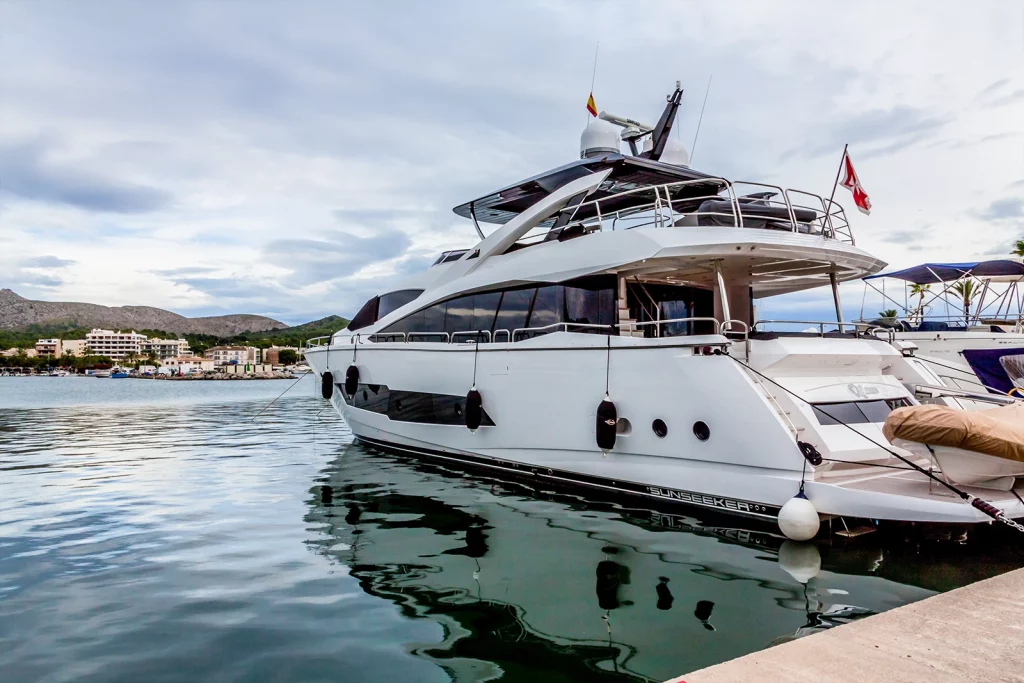
For city glamour, choose Palma. For royal, yacht and marina energy, look at Palma, Puerto Portals and Port d’Andratx, but keep the tone discreet. For literary and cinematic atmosphere, choose Deià, Valldemossa or Sóller. For family ease, choose the north. For deep rural luxury, choose a restored finca or estate.
Do not hire a car automatically. Palma is better without one. The mountains may need one, but not every day. Some summer routes, including Formentor, are increasingly managed for a reason.
Book ahead for Palma rooftops, Deià restaurants, boutique Tramuntana hotels, cathedral visits, strong beach clubs and any serious boat day.
Expect the sustainable tourism tax and treat it as part of visiting the Balearics, not as an irritating surprise.
If travelling in peak summer, plan mornings and evenings properly. Midday is for lunch, shade, pool or siesta, not fighting for parking at a micro-cove.
Vegetarian and plant-forward travellers should do well, especially in Palma and better rural hotels. Mallorca’s produce culture — citrus, almonds, olive oil, tomatoes, figs, vegetables, herbs and local markets — gives the island a natural advantage.
For photography and reels, avoid the obvious copycat shots. Palma at first light, La Seu from Parc de la Mar, the Sóller tram, Valldemossa before the crowds, Sa Foradada at sunset, Port de Sóller in the morning and dry-stone terraces in the Tramuntana will say far more about the island than another overcrowded cove.
The most luxurious thing you can do in Mallorca is not to rush it.
Further Reading
Riviera Ready Balearic Islands Guide
Where to Stay in Mallorca: Best Areas for Every Trip
Where to Stay in Ibiza: The Balearic Guide
Swimwear Fit for a Siren: The Riviera Ready Guide to Bikinis, One-Pieces, Colours and Confidence
UNESCO: Cultural Landscape of the Serra de Tramuntana
Visit Palma: Official Tourism Guide
Cathedral of Mallorca: Official Visits and Tickets
Copa del Rey MAPFRE: Official Regatta Site
Son Bunyola Hotel & Villas: Virgin Limited Edition
Balearic Islands Sustainable Tourism Tax Calculator